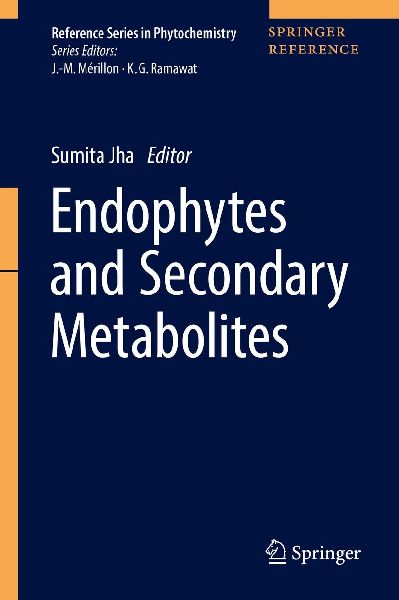
Buch-OWLOnline-Buchhandel

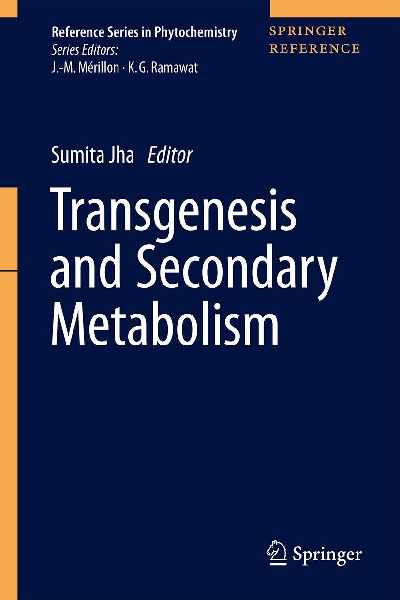
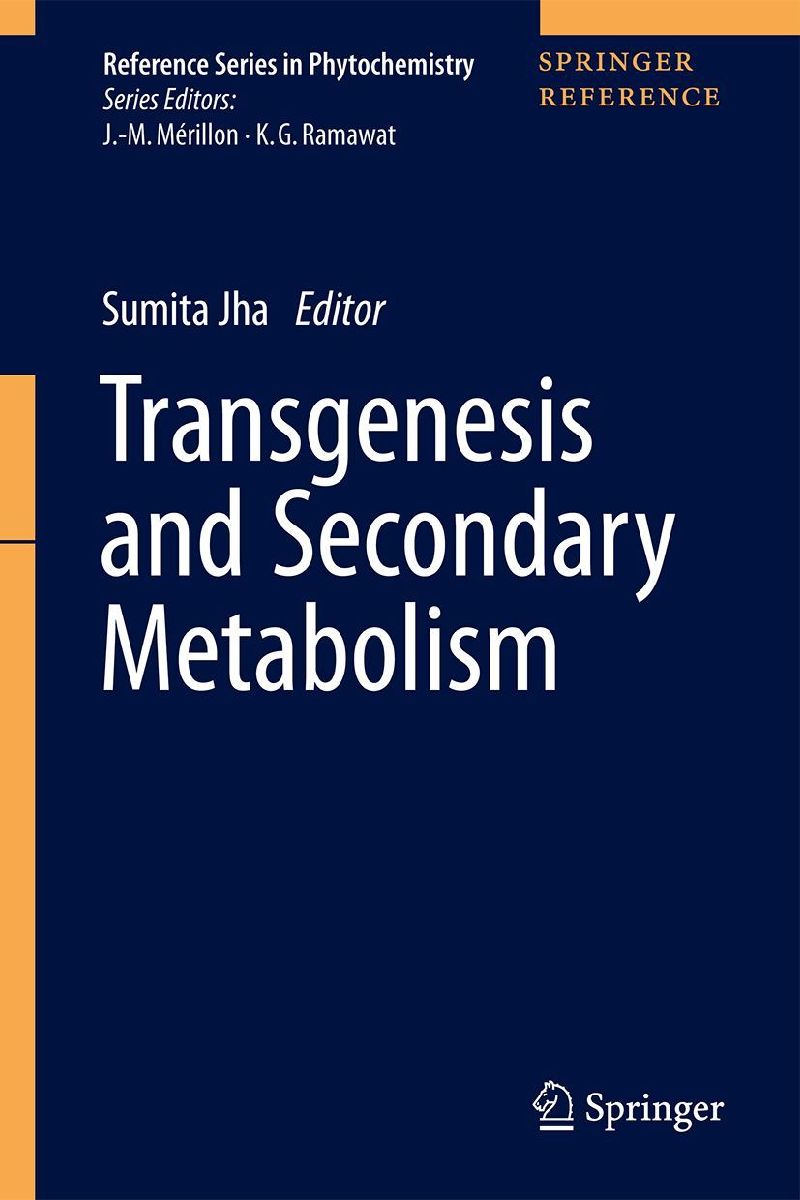
Transgenesis and Secondary Metabolism

von Sumita Jha (Hrsg.)

Herausgegeben von: Sumita Jha

Aus der Reihe Reference Series in Phytochemistry

Einband
Gebunden
Seiten
668
Sprache
Englisch
Erschienen
Mai 2017
Verlag
Springer

Buchbeschreibung

This handbook provides comprehensive reference information on the efficient production of secondary metabolites from plants by transgenesis and other genetic manipulation strategies.

It reviews and summarizes selected important case studies in genetic methods applied to enhance the production of a given metabolite or a group of related or derived compounds.

Ganze Beschreibung lesenWeniger anzeigen

Readers will find reference information on a multitude of techniques and methods, including traditional breeding and screening; over-expression of genes encoding key enzymes; functional genomics approaches; metabolic engineering of the relevant biosynthetic pathways; indirect genetic approaches to improve metabolite production, including Agrobacterium mediated transformations.

Furthermore, combinatorial biochemistry approaches to engineer secondary metabolic pathways are summarized, which can offer access to new structures or to the design of novel compounds. Since many commercially valuablesubstances are still extracted from plants, being largely inaccessible to efficient modern laboratory synthesis methods, this book provides a valuable resource of information for biotechnological approaches that can help to find alternative and more efficient methods for the production of natural secondary metabolites.

Thus adjusted production methods, with the help of tailored plant systems, can potentially help to release the stress on plants, which are currently suffering from extensive human harvesting, and to conserve global biodiversity. Readers will find comprehensive reference information on plant genetic manipulation toward more efficient synthesis, accumulation and production of target secondary metabolites.

The handbook will appeal to researchers and professionals, but also graduate students and scholars working in the fields of biotechnology, genetic engineering, medicinal plant research, pharmacy, and phytochemistry.

Inhaltsverzeichnis

  • Part I General Aspects of Transgenesis and Secondary Metabolism: DNA Transfer to Plants by Agrobacterium rhizogenes: A Model for Genetic Communication Between Species and Biospheres
  • Secondary Metabolism and the Rationale for Systems Manipulation
  • Plant Cell Cultures as Producers of Secondary Metabolites: Podophyllum Lignans as a Model
  • Secondary Metabolite Production in Transformed Cultures
  • Antimalarial Compound Synthesis from Transgenic Cultures
  • Evaluation of Agrobacterium tumefaciens Usefulness for the Transformation of Sage (Salvia Officinalis L.)
  • Ruta Graveolens: Phytochemistry, Pharmacology and Biotechnology
  • Secondary Metabolite Profile of Transgenic Centaury (Centaurium erythraea Rafn.) Plants, Potential Producers of Anticancer Compounds
Ganzes Inhaltsverzeichnis anzeigen (25 Einträge)Weniger anzeigen
  • Syzygium cumini (L.) Skeels: Cardiometabolic Properties and Potential Tissue Culture-Based Improvement of Secondary Metabolites Production
  • Part II Hairy roots and Secondary Metabolism: Secondary Products from Plant Cell Cultures - Early Experiences with Agrobacterium rhizogenes-transformed Hairy Roots
  • Secondary Metabolite Production in Transgenic Hairy Root Cultures of Cucurbits
  • "Hairy Root" Technology: An Emerging Arena for Heterologous Expression of Biosynthetic Pathway Genes in Medicinal Plants
  • Agrobacterium rhizogenes -Mediated Transformation in Medicinal Plants: Genetic Stability in Long Term Culture
  • Biotransformation Through Hairy Roots: Perspectives, Outcomes, and Major Challenges
  • Part III Metabolic Engineering: Metabolic Engineering of Lignan Biosynthesis Pathways for the Production of Transgenic Plant-Based Foods
  • The Elucidation and Metabolic Engineering of Terpenoid Indole Alkaloid Pathway in Catharanthus roseus Hairy Roots
  • Pathway Modulation of Medicinal and Aromatic Plants Through Metabolic Engineering Using Agrobacterium tumefaciens
  • Metabolic Engineering for Improving the Production of Taxol
  • Metabolic Engineering of Phenyl Propanoids in Plants
  • Part IV Metabolic Phytochemistry and Functional Analysis: Metabolic Phytochemistry-Based Approaches for Studying Secondary Metabolism Using Transformed Root Culture Systems
  • Functional Analysis and the Role of Members of SGT Gene Family of Withania somnifera
  • Part V Applications and Future Prospects: Phytochemicals of Nematode-resistant Transgenic Plants¿
  • Plant Molecular Pharming
  • Biotechnological Approaches for Bioremediation: In Vitro Hairy Root Culture
  • Genetic Manipulation and Its Contribution to Pharmaceuticals: Past and Future Perspectives.--

Details

Erscheinungstermin
Mai 2017
Kategorie
Fremdsprachige Bücher
Einband
Gebunden
Seiten
668
Sprache
Englisch
Verlag
Springer
Reihe
Reference Series in Phytochemistry
Format
24,1 × 16,0 cm
Dicke
3,9 cm
Gewicht
1.226 g
EAN / ISBN-13
9783319286686
Maßstabsgetreu: Deckel und Buchrücken neben einer Hand (18 cm).

Über Sumita Jha (Hrsg.)

Prof. Dr. Sumita Jha is Professor in Botany in the Centre of Advanced Study, Department of Botany of Calcutta University in India. She obtained her B.Sc. in Botany with Honours from the Lady Brabourne College in 1973.

Mehr über Sumita Jha (Hrsg.)Weniger anzeigen

She then continued at Calcutta University, where she obtained her M.Sc. in 1975 and PhD in 1981 in Botany. Sumitha Jha can look back on over 35 years of research experience in the fields of genetics and plant biotechnology. Her work has been honored with several awards during all stages of her career, from e.g. the "Science Academy Medal for Young Scientist" in 1983, to her election as Fellow of The National Academy of Sciences, India in 2008. Prof. Jha has held positions at Calcutta University as University Lecturer, Reader, and then Professor in Botany and was visiting scientist e.g. in France and UK. She served as Head of the Department of Genetics and of the Department of Botany at her University.

Versand und Rückgabe

Standardversand: 1 bis 3 Werktage, 3,99 €, kostenlos ab 35 €

Liefergebiet: Deutschland

Rücksendung: 14 Tage Widerrufsrecht. Bei einem Widerruf tragen Sie die Kosten der Rücksendung. Bei einer Falschlieferung oder einem Fehler von uns erstatten wir Ihnen das Rückporto. Den Widerruf erklären Sie über den Knopf „Vertrag widerrufen“ im Fuß der Seite.

Hersteller und ProduktsicherheitSpringer Nature Customer Service Center GmbH
Springer Nature Customer Service Center GmbH
Europaplatz 3
69115 Heidelberg
Deutschland
ProductSafety@springernature.com

Mehr von Sumita Jha

Mehr aus der Reihe Reference Series in Phytochemistry

Ähnliche Titel

Bewertungen

Zu diesem Titel gibt es noch keine Bewertung. Bewerten kann, wer ihn bei uns gekauft hat.
So prüfen wir Bewertungen
Eine Bewertung kann bei uns nur abgeben, wer den Titel über sein Kundenkonto bei uns gekauft hat. Jede Bewertung ist fest mit der zugehörigen Bestellung verknüpft; anders kommt sie technisch gar nicht zustande. Deshalb trägt jede angezeigte Bewertung den Hinweis „Verifizierter Kauf". Wir zeigen positive wie negative Bewertungen und löschen nur bei Rechtsverstößen. Für Bewertungen gibt es keine Gegenleistung.
213,99 €Voraussichtlich 4. bis 8. Dez.

Inhalte ab 18

Cover von Titeln für Erwachsene, etwa erotische Romane, Manga oder Comics, bleiben unscharf, bis Sie bestätigen. Die Bestätigung gilt für alle Seiten und Tabs, bis Sie den Browser schließen.

Zurück zum Katalog