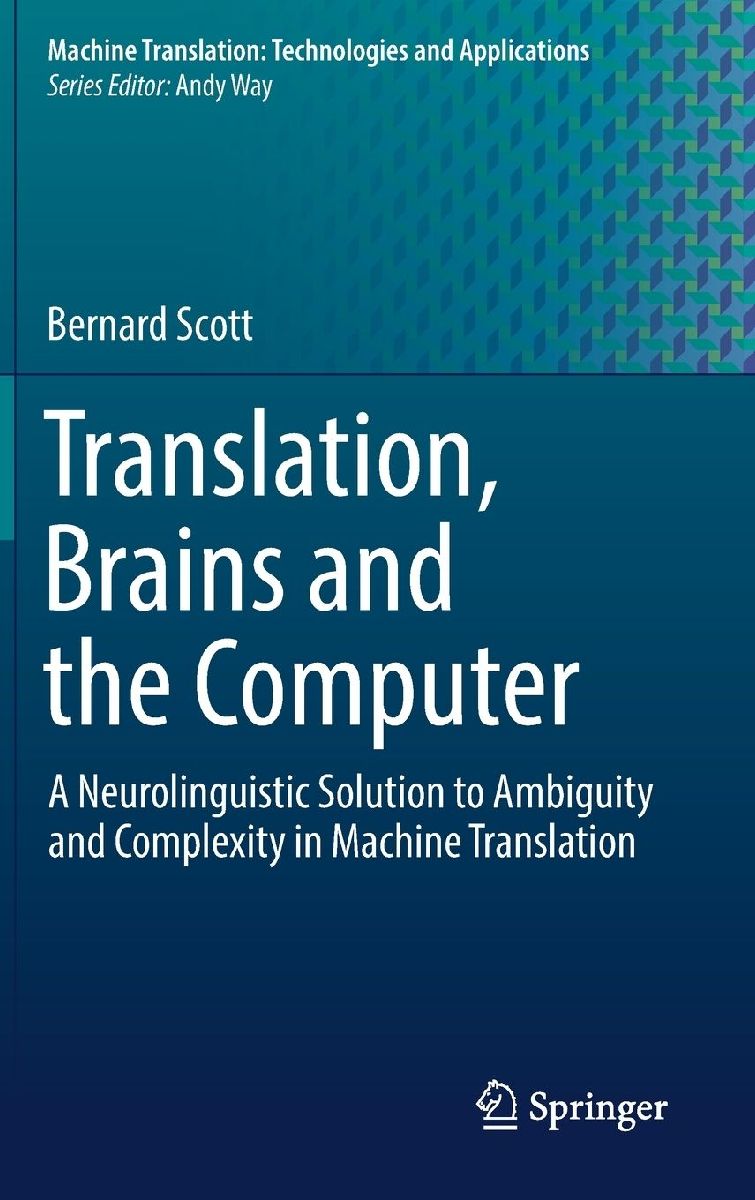
Translation, Brains and the Computer
A Neurolinguistic Solution to Ambiguity and Complexity in Machine Translation
von Bernard Scott
Aus der Reihe Machine Translation: Technologies and Applications
- Einband
- Gebunden
- Seiten
- 260
- Sprache
- Englisch
- Erschienen
- Juni 2018
- Verlag
- Springer
Buchbeschreibung
Addresses fundamental issues to solve the classic problems with machine translation
Recounts the little known background of early events affecting the history of machine translation
Identifies complexity as principal reason why machine translation has had limited success Illustrates problems of ambiguity and complexity in various present-day machine translation models, rule-based (RBMT), statistical (SMT) and neural MT (NMT)
Inhaltsverzeichnis
- 1 Introduction
- 2 Background
- Logos Model Beginnings
- Advent of Statistical MT
- Overview of Logos Model Translation Process
- Psycholinguistic and Neurolinguistic Assumptions
- On Language and Grammar
- Conclusion
Ganzes Inhaltsverzeichnis anzeigen (54 Einträge)Weniger anzeigen
- 3 - Language and Ambiguity: Psycholinguistic Perspectives
- Levels of Ambiguity
- Language Acquisition and Translation
- Psycholinguistic Bases of Language Skills
- Practical Implications for Machine Translation
- Psycholinguistics in a Machine
- Conclusion
- 4- Language and Complexity: Neurolinguistic Perspectives
- Cognitive Complexity
- A Role for Semantic Abstraction
- Connectionism and Brain Simulation
- Logos Model as a Neural Network
- Language Processing in the Brain
- MT Performance and Underlying Competence
- Conclusion
- 5 - Syntax and Semantics: Dichotomy or Integration?
- Syntax versus Semantics: Is There a Third, Semantico- Syntactic Perspective?
- Recent Views of the Cerebral Process
- Syntax and Semantics: How Do They Relate?
- Conclusion
- 6 -Logos Model: Design and Performance
- The Translation Problem
- How Do You Represent Natural Language?
- How Do You Store Linguistic Knowledge?
- How Do You Apply Stored Knowledge To The Input Stream?
- How do you Effect Target Transfer and Generation?
- How Do You Deal with Complexity Issues?
- Conclusion
- 7 - Some limits on Translation Quality
- First Example
- Second Example
- Other Translation Examples
- Balancing the Picture
- Conclusion
- 8 - Deep Learning MT and Logos Model
- Points of Similarity and Differences
- Deep Learning, Logos Model and the Brain
- On Learning
- The Hippocampus Again
- Conclusion
- Part II
- The SAL Representation Language
- SAL Nouns
- SAL Verbs
- SAL Adjectives
- SAL Adverbs
Details
- Erscheinungstermin
- Juni 2018
- Kategorie
- Fremdsprachige Bücher
- Einband
- Gebunden
- Seiten
- 260
- Sprache
- Englisch
- Verlag
- Springer
- Reihe
- Machine Translation: Technologies and Applications
- Format
- 24,1 × 16,0 cm
- Dicke
- 2,0 cm
- Gewicht
- 507 g
- EAN / ISBN-13
- 9783319766287
Versand und Rückgabe
Standardversand: 1 bis 3 Werktage, 3,99 €, kostenlos ab 35 €
Liefergebiet: Deutschland
Rücksendung: 14 Tage Widerrufsrecht. Bei einem Widerruf tragen Sie die Kosten der Rücksendung. Bei einer Falschlieferung oder einem Fehler von uns erstatten wir Ihnen das Rückporto. Den Widerruf erklären Sie über den Knopf „Vertrag widerrufen“ im Fuß der Seite.
Hersteller und ProduktsicherheitSpringer Nature Customer Service Center GmbH
Springer Nature Customer Service Center GmbH
Europaplatz 3
69115 Heidelberg
Deutschland
ProductSafety@springernature.com
Mehr von Bernard Scott


Mehr aus der Reihe Machine Translation: Technologies and Applications



Towards Responsible Machine Translation
Helena Moniz (Hrsg.)
Gebunden, Englisch, 2 Ausgaben
ab 160,49 €

Explorations in Empirical Translation Process Research
Michael Carl (Hrsg.)
Kartoniert, Englisch, 2 Ausgaben
ab 149,79 €
Bewertungen
Zu diesem Titel gibt es noch keine Bewertung. Bewerten kann, wer ihn bei uns gekauft hat.
So prüfen wir Bewertungen
Eine Bewertung kann bei uns nur abgeben, wer den Titel über sein Kundenkonto bei uns gekauft hat. Jede Bewertung ist fest mit der zugehörigen Bestellung verknüpft; anders kommt sie technisch gar nicht zustande. Deshalb trägt jede angezeigte Bewertung den Hinweis „Verifizierter Kauf". Wir zeigen positive wie negative Bewertungen und löschen nur bei Rechtsverstößen. Für Bewertungen gibt es keine Gegenleistung.
149,79 €Voraussichtlich 4. bis 8. Dez.