Transport in Plants II
Part A Cells
Herausgegeben von: U. Lüttge, Herausgegeben von: M. G. Pitman
- Einband
- Kartoniert
- Seiten
- 440
- Sprache
- Englisch
- Erschienen
- Dezember 2011
- Verlag
- Springer

Buchbeschreibung
As plant physiology increased steadily in the latter half of the 19th century, problems of absorption and transport of water and of mineral nutrients and problems of the passage of metabolites from one cell to another were investigated, especially in Germany. JUSTUS VON LIEBIG, who was born in Darmstadt in 1803, founded agricultural chemistry and developed the techniques of mineral nutrition in agricul ture during the 70 years of his life.
Ganze Beschreibung lesenWeniger anzeigen
The discovery of plasmolysis by NAGEL! (1851), the investigation of permeability problems of artificial membranes by TRAUBE (1867) and the classical work on osmosis by PFEFFER (1877) laid the foundations for our understanding of soluble substances and osmosis in cell growth and cell mechanisms. Since living membranes were responsible for controlling both water movement and the substances in solution, "permeability" became a major topic for investigation and speculation.
The problems then discussed under that heading included passive permeation by diffusion, Donnan equilibrium adjustments, active transport processes and antagonism between ions. In that era, when organelle isolation by differential centrifugation was unknown and the electron microscope had not been invented, the number of cell membranes, their thickness and their composition, were matters for conjecture.
The nature of cell surface membranes was deduced with remarkable accuracy from the reactions of cells to substances in solution. In 1895, OVERTON, in U. S. A. , published the hypothesis that membranes were probably lipid in nature because of the greater penetration by substances with higher fat solubility.
Inhaltsverzeichnis
- of Part A
- I. Theoretical and Biophysical Approaches
- 1. The Structure of Biological Membranes
- 2. Water Relations of Plant Cells
- 3. Membrane Transport: Theoretical Background
- 4. Electrical Properties of Plant Cells: Methods and Findings
- 5. Measurement of Fluxes across Membranes
- II. Particular Cell Systems
Ganzes Inhaltsverzeichnis anzeigen (20 Einträge)Weniger anzeigen
- 6. Transport in Algal Cells
- 7. Transport in Fungal Cells
- 8. Transport in Cells of Storage Tissues
- III. Regulation, Metabolism and Transport
- 9. Transport and Energy
- 10. ATPases Associated with Membranes of Plant Cells
- 11. Negative Feedback Regulation of Transport in Cells. The Maintenance of Turgor, Volume and Nutrient Supply
- 12. H+ Transport and Regulation of Cell pH
- 13. Ion Absorption and Carbon Metabolism in Cells of Higher Plants
- Author Index (Part A)
- Symbols, Units, and Abbreviations
- Subject Index (Part A and B) (after p. 400)
Details
- Erscheinungstermin
- Dezember 2011
- Kategorie
- Fremdsprachige Bücher
- Einband
- Kartoniert
- Seiten
- 440
- Sprache
- Englisch
- Verlag
- Springer
- Format
- 24,4 × 17,0 cm
- Dicke
- 2,4 cm
- Gewicht
- 754 g
- EAN / ISBN-13
- 9783642662294
Versand und Rückgabe
Standardversand: 1 bis 3 Werktage, 3,99 €, kostenlos ab 35 €
Liefergebiet: Deutschland
Rücksendung: 14 Tage Widerrufsrecht. Bei einem Widerruf tragen Sie die Kosten der Rücksendung. Bei einer Falschlieferung oder einem Fehler von uns erstatten wir Ihnen das Rückporto. Den Widerruf erklären Sie über den Knopf „Vertrag widerrufen“ im Fuß der Seite.
Hersteller und ProduktsicherheitSpringer Nature Customer Service Center GmbH
Springer Nature Customer Service Center GmbH
Europaplatz 3
69115 Heidelberg
Deutschland
ProductSafety@springernature.com
Mehr von U. Lüttge




Ähnliche Titel

Molecular and Biotechnological Tools for Plant Disease Management
Jen-Tsung Chen (Hrsg.)
Kartoniert, Englisch, 2 Ausgaben
ab 235,39 €

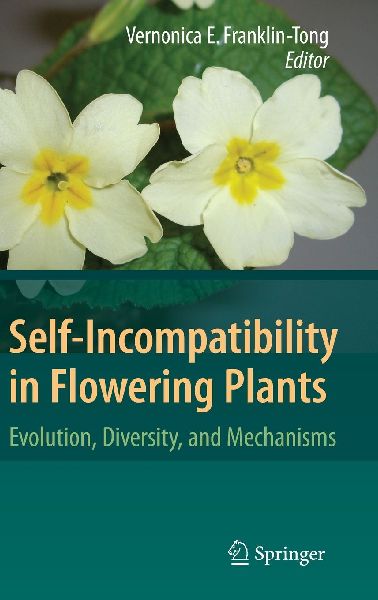
Self-Incompatibility in Flowering Plants
Vernonica E. Franklin-Tong (Hrsg.)
Gebunden, Englisch, 2 Ausgaben
ab 160,49 €
Phosphorus in Agriculture: 100 % Zero
Ewald Schnug (Hrsg.)
Kartoniert, Englisch, 2 Ausgaben
ab 117,69 €
Bewertungen
Zu diesem Titel gibt es noch keine Bewertung. Bewerten kann, wer ihn bei uns gekauft hat.
So prüfen wir Bewertungen
Eine Bewertung kann bei uns nur abgeben, wer den Titel über sein Kundenkonto bei uns gekauft hat. Jede Bewertung ist fest mit der zugehörigen Bestellung verknüpft; anders kommt sie technisch gar nicht zustande. Deshalb trägt jede angezeigte Bewertung den Hinweis „Verifizierter Kauf". Wir zeigen positive wie negative Bewertungen und löschen nur bei Rechtsverstößen. Für Bewertungen gibt es keine Gegenleistung.
106,99 €Voraussichtlich 2. bis 4. Dez.