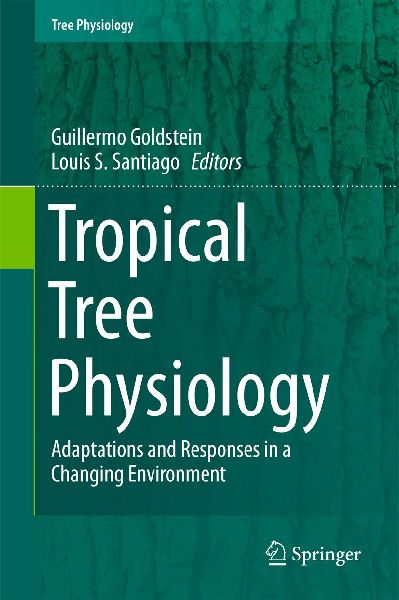
Tropical Tree Physiology
Adaptations and Responses in a Changing Environment
von Guillermo Goldstein (Hrsg.)
Herausgegeben von: Guillermo Goldstein, Herausgegeben von: Louis S. Santiago
Aus der Reihe Tree Physiology
- Einband
- Gebunden
- Seiten
- 488
- Sprache
- Englisch
- Erschienen
- März 2016
- Verlag
- Springer
Buchbeschreibung
This book presents the latest information on tropical tree physiology, making it a valuable research tool for a wide variety of researchers.
It is also of general interest to ecologists (e.g. Ecological Society of America; > 3000 or 4000 members at annual meeting), physiologists (e.g. American Society of Plant Biologists; > 2,000 members at annual meeting), and tropical biologists (e.g. Association for Tropical Biology and Conservation, ATBC; > 500 members at annual meeting).
Ganze Beschreibung lesenWeniger anzeigen
(American Geophysical Union(AGU), > 20000 members at annual meeting).
Since plant physiology is taught at every university that offers a life sciences, forestry or agricultural program, and physiology is a focus at research institutes and agencies worldwide, the book is a must-have for university and research institution libraries.
Inhaltsverzeichnis
- Physiology and life history traits of unique arborescent tropical growth forms
- Hemi epiphytic trees: Ficus as a model system for understanding hemiepiphytism
- Drought deciduous trees e.g. limestone outcrops in China and Brazil and trees from deciduous tropical forests including dry forests from the Yucatan Peninsula and Puerto Rico. What is unique about these trees?- Flood tolerant trees: many areas of lowland rainforest remain flooded for several months and the water sometimes can cover all the trees
- Stem succulent trees (baobab and other similar stem succulent trees)
- Palms
- Mangroves
- Lianas
- Arborescent tree forms near treeline
- Process oriented chapters Hydraulic architecture and water transport Nutrient relations Carbon assimilation, photoinhibition, shade tolerance Tree ring chronologies, global climate change Different spatial and temporal scales
Details
- Erscheinungstermin
- März 2016
- Kategorie
- Fremdsprachige Bücher
- Einband
- Gebunden
- Seiten
- 488
- Sprache
- Englisch
- Verlag
- Springer
- Reihe
- Tree Physiology
- Format
- 24,1 × 16,0 cm
- Dicke
- 3,2 cm
- Gewicht
- 841 g
- EAN / ISBN-13
- 9783319274201
Über Guillermo Goldstein (Hrsg.)
The editors of this book are renowned scientists, the corresponding editor is the best in the field.
Versand und Rückgabe
Standardversand: 1 bis 3 Werktage, 3,99 €, kostenlos ab 35 €
Liefergebiet: Deutschland
Rücksendung: 14 Tage Widerrufsrecht. Bei einem Widerruf tragen Sie die Kosten der Rücksendung. Bei einer Falschlieferung oder einem Fehler von uns erstatten wir Ihnen das Rückporto. Den Widerruf erklären Sie über den Knopf „Vertrag widerrufen“ im Fuß der Seite.
Hersteller und ProduktsicherheitSpringer Nature Customer Service Center GmbH
Springer Nature Customer Service Center GmbH
Europaplatz 3
69115 Heidelberg
Deutschland
ProductSafety@springernature.com
Mehr aus der Reihe Tree Physiology

Oaks Physiological Ecology. Exploring the Functional Diversity of Genus Quercus L.
Eustaquio Gil-Pelegrín (Hrsg.)
Gebunden, Englisch, 2 Ausgaben
ab 353,09 €
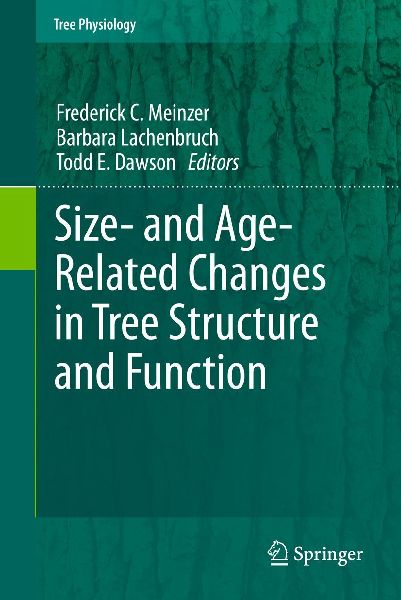
Size- and Age-Related Changes in Tree Structure and Function
Frederick C. Meinzer (Hrsg.)
Gebunden, Englisch, 2 Ausgaben
ab 299,59 €
Ähnliche Titel



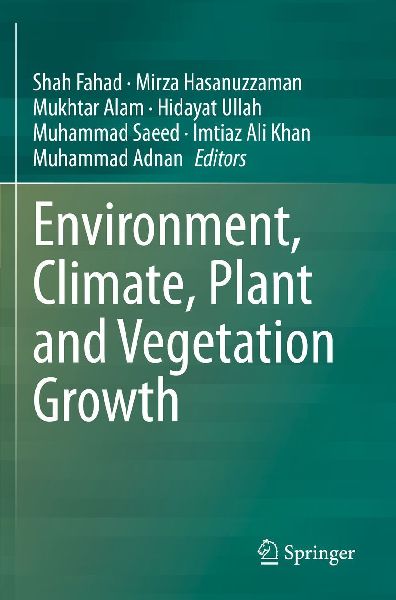
Environment, Climate, Plant and Vegetation Growth
Shah Fahad (Hrsg.)
Kartoniert, Englisch, 2 Ausgaben
ab 139,09 €
Bewertungen
Zu diesem Titel gibt es noch keine Bewertung. Bewerten kann, wer ihn bei uns gekauft hat.
So prüfen wir Bewertungen
Eine Bewertung kann bei uns nur abgeben, wer den Titel über sein Kundenkonto bei uns gekauft hat. Jede Bewertung ist fest mit der zugehörigen Bestellung verknüpft; anders kommt sie technisch gar nicht zustande. Deshalb trägt jede angezeigte Bewertung den Hinweis „Verifizierter Kauf". Wir zeigen positive wie negative Bewertungen und löschen nur bei Rechtsverstößen. Für Bewertungen gibt es keine Gegenleistung.
235,39 €Voraussichtlich 4. bis 8. Dez.