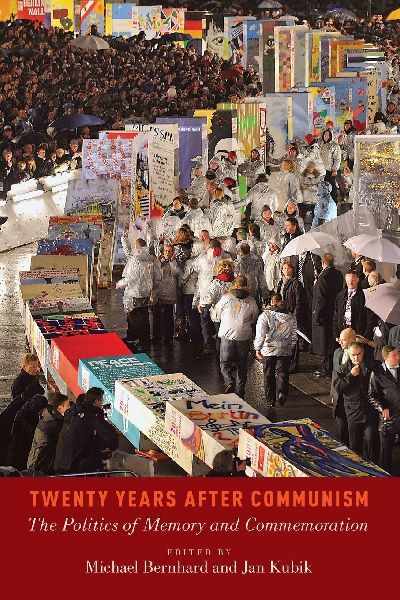
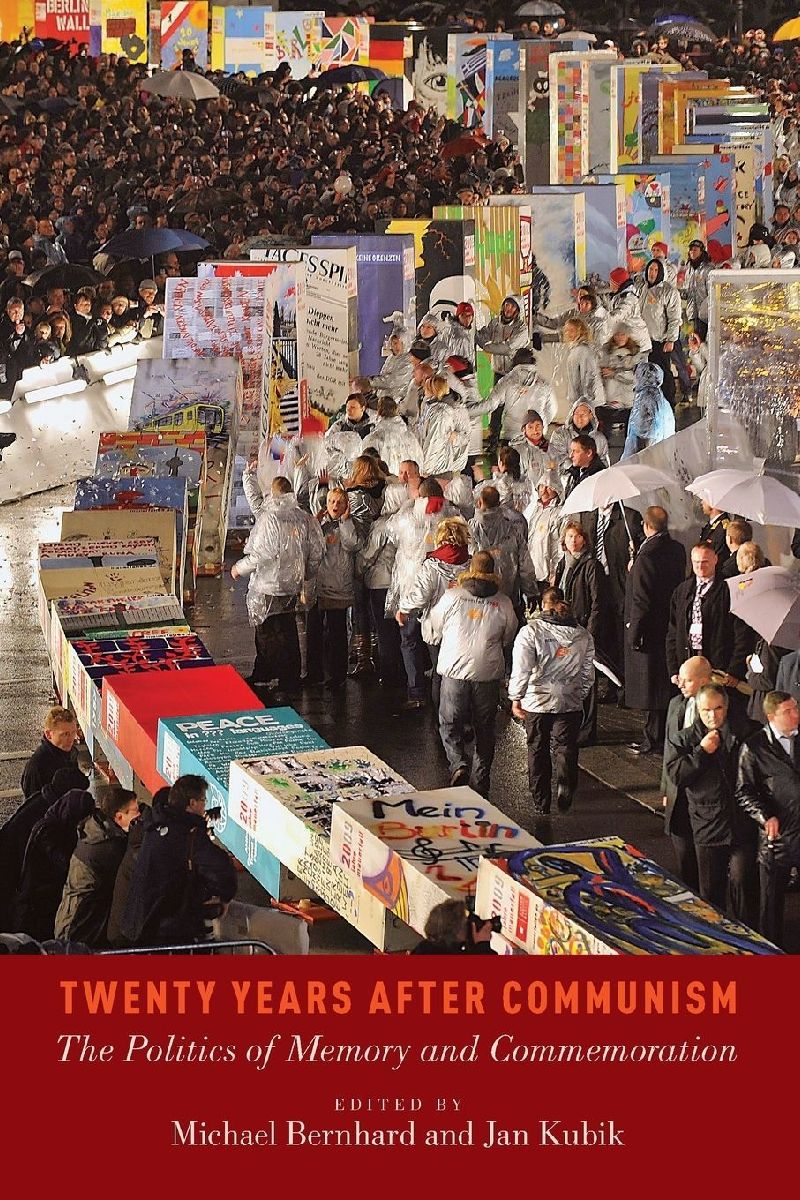
Twenty Years After Communism
The Politics of Memory and Commemoration
Herausgegeben von: Michael Bernhard, Herausgegeben von: Jan Kubik
- Einband
- Kartoniert
- Seiten
- 384
- Sprache
- Englisch
- Erschienen
- Juli 2014
- Verlag
- Oxford University Press
Buchbeschreibung
While the fall of the Berlin Wall is positively commemorated in the West, the intervening years have shown that the former Soviet Bloc has a more complicated view of its legacy.
In post-communist Eastern Europe, the way people remember state socialism is closely intertwined with the manner in which they envision historical justice.
Ganze Beschreibung lesenWeniger anzeigen
Twenty Years After Communism is concerned with the explosion of a politics of memory triggered by the fall of state socialism in Eastern Europe, and it takes a comparative look at the ways that communism and its demise have been commemorated (or not commemorated) by major political actors across the region.
The book is built on three premises. The first is that political actors always strive to come to terms with the history of their communities in order to generate a sense of order in their personal and collective lives. Second, new leaders sometimes find it advantageous to mete out justice on the politicians of abolished regimes, and whether and how they do so depends heavily on their interpretation and assessment of the collective past.
Finally, remembering the past, particularly collectively, is always a political process, thus the politics of memory and commemoration needs to be studied as an integral part of the establishment of new collective identities and new principles of political legitimacy. Each chapter takes a detailed look at the commemorative ceremony of a different country of the former Soviet Bloc.
Collectively the book looks at patterns of extrication from state socialism, patterns of ethnic and class conflict, the strategies of communist successor parties, and the cultural traditions of a given country that influence the way official collective memory is constructed.
Twenty Years After Communism develops a new analytical and explanatory framework that helps readers to understand the utility of historical memory as an important and understudied part of democratization.
Inhaltsverzeichnis
- List of Figures and Tables
- List of Pictures
- Acknowledgments
- Contributor list
- Introduction -- Michael Bernhard and Jan Kubik
- Chapter 1: A Theory of the Politics of Memory - Jan Kubik and Michael Bernhard
- Part I: Fractured Memory Regimes
- Chapter 2: Revolutionary Road: 1956 and the Fracturing of Hungarian Historical Memory - Anna Seleny
Ganzes Inhaltsverzeichnis anzeigen (24 Einträge)Weniger anzeigen
- Chapter 3: Roundtable Discord: The Contested Legacy of 1989 in Poland - Michael Bernhard and Jan Kubik
- Chapter 4: Romania Twenty Years after 1989: The Bizarre Echoes of a Contested Revolution - Grigore Pop-Eleches
- Chapter 5: I Ignored Your Revolution, but You Forgot My Anniversary: Party Competition in Slovakia and the Construction of Recollection - Carol Skalnik Leff, Kevin Deegan-Krause, and Sharon L. Wolchik
- Chapter 6: Remembering the Revolution: Contested Pasts in the Baltic Countries - Daina S. Eglitis and Laura Ardava
- Chapter 7: Memories of the Past and Visions of the Future: Remembering the Soviet Era and its End in Ukraine - Oxana Shevel
- Part II: Pillarized Memory Regimes
- Chapter 8: Remembering, Not Commemorating, 1989: The 20-Year Anniversary of the Velvet Revolution in the Czech Republic - Conor O'Dwyer
- Part III: Unified Memory Regimes
- Chapter 9: Making Room for November 9, 1989? The Fall of the Berlin Wall in German Politics and Memory - David Art
- Chapter 10: The Inescapable Past: The Politics of Memory in Postcommunist Bulgaria - Venelin I. Ganev
- Chapter 11: Lives of Others: Commemorating 1989 in the Former Yugoslavia - Aida A. Hozi?
- Part IV: Conclusions
- The Politics and Culture of Memory Regimes: A Comparative Analysis - Michael Bernhard and Jan Kubik
- Appendices
- Bibliography
- Index
Details
- Erscheinungstermin
- Juli 2014
- Kategorie
- Fremdsprachige Bücher
- Einband
- Kartoniert
- Seiten
- 384
- Sprache
- Englisch
- Verlag
- Oxford University Press
- Format
- 23,4 × 15,6 cm
- Dicke
- 2,3 cm
- Gewicht
- 652 g
- EAN / ISBN-13
- 9780199375141
Über Michael Bernhard (Hrsg.)
Michael Bernhard is Raymond and Miriam Ehrlich Chair of Political Science at the University of Florida. Jan Kubik is Professor and Chair of Political Science at Rutgers University.
Versand und Rückgabe
Standardversand: 1 bis 3 Werktage, 3,99 €, kostenlos ab 35 €
Liefergebiet: Deutschland
Rücksendung: 14 Tage Widerrufsrecht. Bei einem Widerruf tragen Sie die Kosten der Rücksendung. Bei einer Falschlieferung oder einem Fehler von uns erstatten wir Ihnen das Rückporto. Den Widerruf erklären Sie über den Knopf „Vertrag widerrufen“ im Fuß der Seite.
Hersteller und ProduktsicherheitOxford University Press
Oxford University Press
Europaallee 1
36244 Bad Hersfeld
Deutschland
gpsr@libri.de
Verantwortliche Person in der EU
Libri GmbHEuropaallee 1
36244 Bad Hersfeld
Deutschland
gpsr@libri.de
Mehr von Michael Bernhard

Ähnliche Titel


Bewertungen
Zu diesem Titel gibt es noch keine Bewertung. Bewerten kann, wer ihn bei uns gekauft hat.
So prüfen wir Bewertungen
Eine Bewertung kann bei uns nur abgeben, wer den Titel über sein Kundenkonto bei uns gekauft hat. Jede Bewertung ist fest mit der zugehörigen Bestellung verknüpft; anders kommt sie technisch gar nicht zustande. Deshalb trägt jede angezeigte Bewertung den Hinweis „Verifizierter Kauf". Wir zeigen positive wie negative Bewertungen und löschen nur bei Rechtsverstößen. Für Bewertungen gibt es keine Gegenleistung.
85,50 €Voraussichtlich 3. bis 7. Dez.