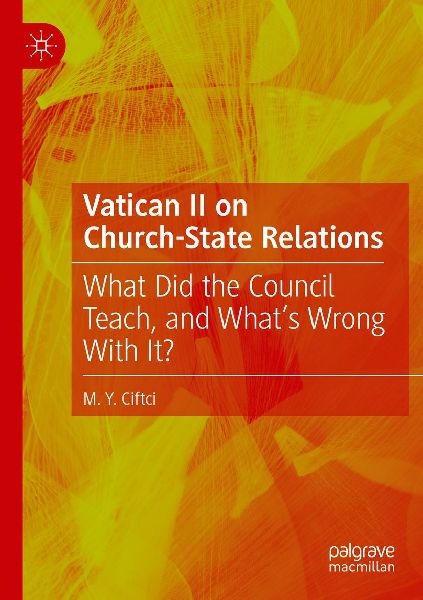
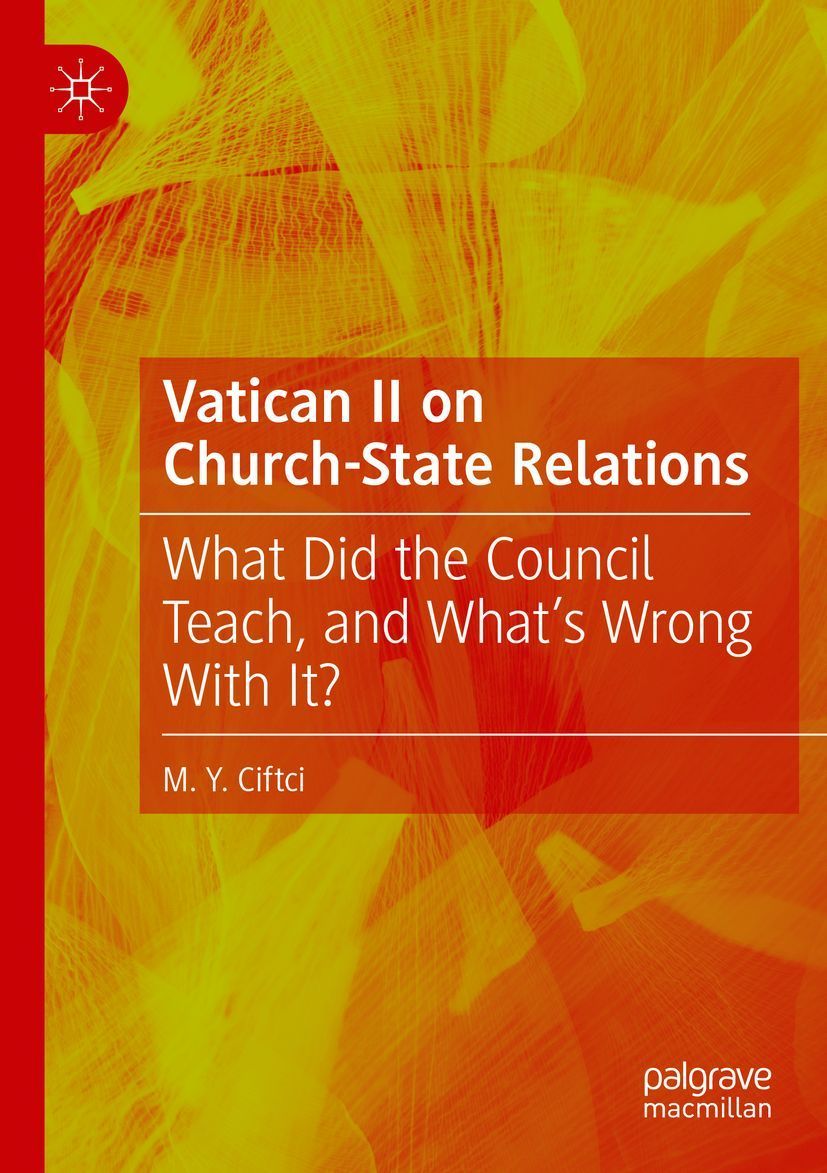
Vatican II on Church-State Relations
What Did the Council Teach, and What's Wrong With It?
von M. Y. Ciftci
- Einband
- Kartoniert
- Seiten
- 280
- Sprache
- Englisch
- Erschienen
- April 2025
- Verlag
- Springer
Buchbeschreibung
Should religion and politics be kept apart?
What should be the relationship between the church and the state? M.Y. Ciftci answers these questions by studying the most important event in the recent history of the Catholic Church: The Second Vatican Council (1962-65).The book provides a new interpretation of the Council's teaching on church-state relations to better appreciate its flaws and need for reform.
Ganze Beschreibung lesenWeniger anzeigen
By paying attention to the (often overlooked) importance given by the Council to the lay apostolate, it reveals how the Council did not reform, as is often thought, but retained a flawed conception of the laity's role in politics. It then proposes a new framework for understanding church-state relations using the ressourcement method of returning to scripture and tradition, and by a critical dialogue with Oliver O'Donovan and various Protestant biblical scholars of the Powers in the New Testament.
Ciftci shows how fruitful an self-consciously ecumenical approach can be for political theology. As most ressourcement theologians have overlooked political issues, and since ecumenical theology rarely touches on issues of church-state relations, this work makes an original contribution to the ressourcement project and to ecumenism.
Inhaltsverzeichnis
- Part One - What Did the Council Teach and What's Wrong with It?
- Chapter One: Why Study Vatican II on Church-State Relations?
- Chapter Two: Survey of Conciliar Documents on Ecclesiology and the Lay Apostolate in Politics
- chapter Three: Defining the Debate in Political Theology
- 3.1 Introduction
- 3.2 Two ways of classifying political theology to be rejected
- 3.3 A qualified acceptance of an alternative classification
- Chapter Four: Reading DH through the Lens of Ecclesial Ethics
Ganzes Inhaltsverzeichnis anzeigen (49 Einträge)Weniger anzeigen
- 4.1 Introduction
- 4.2 'Not Late Enough: The Divided Mind of Dignitatis Humanae Personae'
- 4.3 Distinguishing the arguments that are distinctive to ecclesial ethics
- 4.4 First argument: DH's distinctions between nature-grace, reason-revelation
- 4.5 Second argument: distinction between religion and politics
- Chapter Five: Reading LG, AA, and GS through the Lens of Ecclesial Ethics
- 5.1 Introduction
- 5.2 The structure of Cavanaugh's argument
- 5.3 The problematic ecclesiology underlying Catholic Action
- 5.4 The elusive presence of Vatican II in Cavanaugh's thought
- 5.5 The critique of the Dogmatic Constitution on the Church
- 5.6 The critique of the Decree on the Lay Apostolate
- 5.7 The critique of the Pastoral Constitution on the Church in the Modern World
- 5.8 Summary of critique
- Chapter Six: A Critique of Hauerwas and Cavanaugh
- 6.1 Why Hauerwas and Cavanaugh are not sectarians
- 6.2 The modern state as an irredeemable foe
- 6.3 The church as a contrast society
- 6.4 Conclusion
- Part Two - How Can the Church's Teaching be Corrected?
- Chapter Seven: Methodological Introduction
- Chapter Eight: Powers and Principalities in the New Testament
- 8.1 Introduction
- 8.2 Scholarship on the Powers
- 8.3 The Powers: Created, fallen, defeated
- 8.4 Political authority as one of the Powers
- 8.5 Oliver O'Donovan on the Powers and political authority
- 8.6 Conclusion
- Chapter Nine: Deliverance from the Powers in the church
- 9.1 The sacramental shape of the church
- 9.2 Baptism
- 9.3 Eucharist
- 9.4 Participating in the threefold office: Prophet, Priest, King
- 9.5 Ordained ministry
- Chapter Ten: Learning from the Ambiguous Legacy of Christendom
- 10.1 Bearing witness before the Powers
- 10.2 Mission leading to martyrdom or mutual service
- 10.3 From Two Cities to Two Swords
- 10.4 The Gospel's impact on political authorities
- Chapter Eleven - Conclusion
- Bibliography
Details
- Erscheinungstermin
- April 2025
- Kategorie
- Fremdsprachige Bücher
- Einband
- Kartoniert
- Seiten
- 280
- Sprache
- Englisch
- Verlag
- Springer
- Format
- 21,0 × 14,8 cm
- Dicke
- 1,6 cm
- Gewicht
- 366 g
- EAN / ISBN-13
- 9783031567087
Über M. Y. Ciftci
M. Y. Ciftci is Public Bioethics Fellow at the Anscombe Bioethics Centre. He was previously Etienne Gilson Postdoctoral Fellow at the University of Toronto. He has a DPhil from the University of Oxford.
Versand und Rückgabe
Standardversand: 1 bis 3 Werktage, 3,99 €, kostenlos ab 35 €
Liefergebiet: Deutschland
Rücksendung: 14 Tage Widerrufsrecht. Bei einem Widerruf tragen Sie die Kosten der Rücksendung. Bei einer Falschlieferung oder einem Fehler von uns erstatten wir Ihnen das Rückporto. Den Widerruf erklären Sie über den Knopf „Vertrag widerrufen“ im Fuß der Seite.
Hersteller und ProduktsicherheitSpringer Nature Customer Service Center GmbH
Springer Nature Customer Service Center GmbH
Europaplatz 3
69115 Heidelberg
Deutschland
ProductSafety@springernature.com
Ähnliche Titel
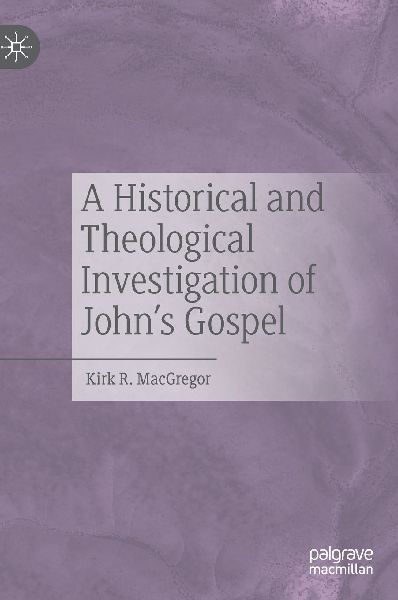
A Historical and Theological Investigation of John's Gospel
Kirk R. MacGregor
Gebunden, Englisch, 2 Ausgaben
ab 128,39 €
Bewertungen
Zu diesem Titel gibt es noch keine Bewertung. Bewerten kann, wer ihn bei uns gekauft hat.
So prüfen wir Bewertungen
Eine Bewertung kann bei uns nur abgeben, wer den Titel über sein Kundenkonto bei uns gekauft hat. Jede Bewertung ist fest mit der zugehörigen Bestellung verknüpft; anders kommt sie technisch gar nicht zustande. Deshalb trägt jede angezeigte Bewertung den Hinweis „Verifizierter Kauf". Wir zeigen positive wie negative Bewertungen und löschen nur bei Rechtsverstößen. Für Bewertungen gibt es keine Gegenleistung.
160,49 €Voraussichtlich 1. bis 3. Dez.