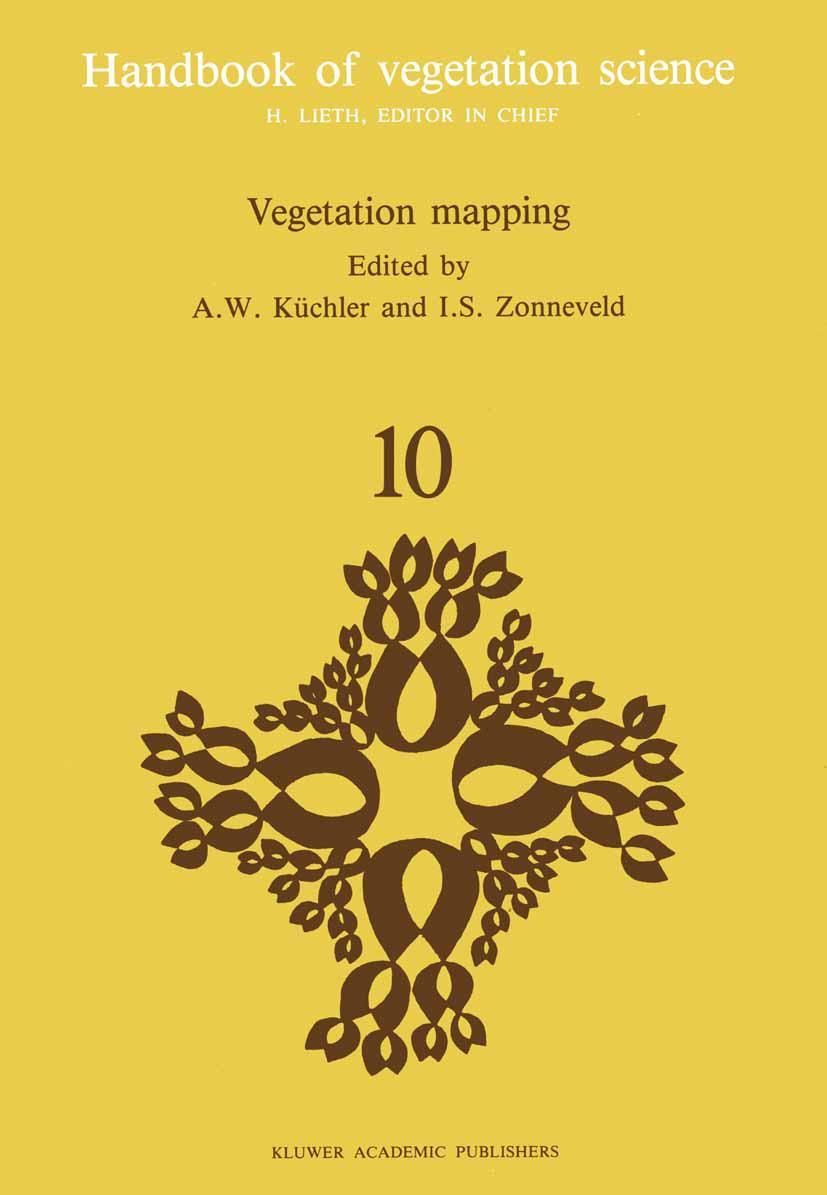
Vegetation mapping
von A. W. Küchler und I. S. Zonneveld
Aus der Reihe Handbook of Vegetation Science
- Einband
- Kartoniert
- Seiten
- 648
- Sprache
- Englisch
- Erschienen
- Februar 2012
- Verlag
- Springer
Buchbeschreibung
A. W. KOCHLER The intimate intercourse between two or more 2. vegetation maps are scientific tools for ana fields of knowledge often bears interesting and lyzing the environment and the relation valuable fruit.
Vegetation maps are such fruit, ships between vegetation and the site on resulting from the union of botany and geogra which it occurs. This helps to explain the phy.
Ganze Beschreibung lesenWeniger anzeigen
The work of botanists can be comprehen distribution of plant communities on the sive only if it includes a consideration of plants basis of the physical and chemical features in space, i. e. in different types of landscapes. At of the landscape.
On the other hand, plant this point, the work of geographers becomes communities allow conclusions on the natu important through their development of maps re of the environment; as tools to determine and to analyze distribu 3. vegetation maps are valuable standards of tions in space. Our highly developed knowledge reference for observing and measuring of vegetation is matched by the refinement of changes in the vegetation, their direction cartographic techniques, and maps can now be and their speed, i. e. the rate of change.
This is important because the character ofvegeta made that will show the extent and geographical distribution of vegetation anywhere on the sur tion is dynamic and is increasingly affected face of our planet with a remarkable degree of by man; accuracy. 4.
Inhaltsverzeichnis
- A. Introduction
- 1. Preface
- 2. Historical Sketch
- B. Basic Considerations
- 3. The nature of Vegetation
- 4. Composition and Structure of Vegetation
- 4A. Physiognomic and Structural Analysis of Vegetation
- 5. Floristic Analysis of Vegetation
Ganzes Inhaltsverzeichnis anzeigen (55 Einträge)Weniger anzeigen
- 6. The Classification of Vegetation
- 6A. Establishing a Floristic Classification
- 7. The Nature of the Environment
- C. Cartographic Considerations
- 8. Aspects of Maps
- 9. Boundaries, Transitions and Contínua
- 10. Patterns, Colors and Symbols
- 11. The Legend: Organizing the Map Content
- 11A. Examples of Vegetation Maps, their Legends and Ecological Diagrams
- 12. Language of Map Text
- 13. Other Technicalities
- 14. Automated Cartography and Electronic Geographic Information Systems
- D. Methods and Procedures of Mapping
- 15. General Considerations
- 16. Survey Approaches
- 16A. Low-level Aerial Survey Techniques
- 17. Sampling
- 18. Reflection, Absorption and Transmission of Light and Infrared Radiation through Plant Tissues
- 19. Observation Means and Platforms
- 19A. A Practical Application of Radar Imagery for Tropical Rain Forest Vegetation Mapping
- 20. Interpretation of Remote Sensing Images
- 21. Digital Image Processing Computer-aided Classification and Mapping
- 22. Mapping Herbaceous Vegetation
- 23. Mapping Dynamic Vegetation
- 24. Monitoring Vegetation and Surveying Dynamics
- 25. Mapping Land-use
- 26. Mapping the Potential Natural Vegetation
- 27. Compiling Small Scale Vegetation Maps from Source Maps
- E. Examples of Vegetation Mapping Schools
- 28. Küchler's Comprehensive Method
- 29. The ITC Method of Mapping Natural and Semi-natural Vegetation with appendix at A.H.M. Gils and W.v. Wijngaarden
- 30. Vegetation Mapping in Japan
- 31. The International Vegetation Map (Toulouse, France)
- 32. Other
- Contributions to Methodology
- F. Ecological Information in Vegetation and Related Landscape Maps
- 33. Ecological Vegetation Maps and their Interpretation
- 34. Landscape (Ecosystem) and Vegetation Maps, their Relation and Purpose
- G. The Application of Vegetation Maps
- 35. Introduction to the Application of Vegetation Maps
- 36. Environmental Indication
- 37. Basic Principles of Land Evaluation using Vegetation and other Attributes
- 38. Some Examples of Application
- H. Conclusion
- 39. The Outlook: Future Needs and Possibilities
- 40. The UNESCO Classification of Vegetation
- Colour Section
Details
- Erscheinungstermin
- Februar 2012
- Kategorie
- Fremdsprachige Bücher
- Einband
- Kartoniert
- Seiten
- 648
- Sprache
- Englisch
- Verlag
- Springer
- Reihe
- Handbook of Vegetation Science
- Format
- 26,0 × 19,5 cm
- Dicke
- 3,5 cm
- Gewicht
- 1.344 g
- EAN / ISBN-13
- 9789401078856
Versand und Rückgabe
Standardversand: 1 bis 3 Werktage, 3,99 €, kostenlos ab 35 €
Liefergebiet: Deutschland
Rücksendung: 14 Tage Widerrufsrecht. Bei einem Widerruf tragen Sie die Kosten der Rücksendung. Bei einer Falschlieferung oder einem Fehler von uns erstatten wir Ihnen das Rückporto. Den Widerruf erklären Sie über den Knopf „Vertrag widerrufen“ im Fuß der Seite.
Hersteller und ProduktsicherheitSpringer Nature Customer Service Center GmbH
Springer Nature Customer Service Center GmbH
Europaplatz 3
69115 Heidelberg
Deutschland
ProductSafety@springernature.com
Mehr aus der Reihe Handbook of Vegetation Science


Application of Vegetation Science to Grassland Husbandry
W. Krause (Hrsg.)
Kartoniert, Englisch, 2 Ausgaben
ab 53,49 €

Ähnliche Titel




Bewertungen
Zu diesem Titel gibt es noch keine Bewertung. Bewerten kann, wer ihn bei uns gekauft hat.
So prüfen wir Bewertungen
Eine Bewertung kann bei uns nur abgeben, wer den Titel über sein Kundenkonto bei uns gekauft hat. Jede Bewertung ist fest mit der zugehörigen Bestellung verknüpft; anders kommt sie technisch gar nicht zustande. Deshalb trägt jede angezeigte Bewertung den Hinweis „Verifizierter Kauf". Wir zeigen positive wie negative Bewertungen und löschen nur bei Rechtsverstößen. Für Bewertungen gibt es keine Gegenleistung.
106,99 €Voraussichtlich 1. bis 3. Dez.