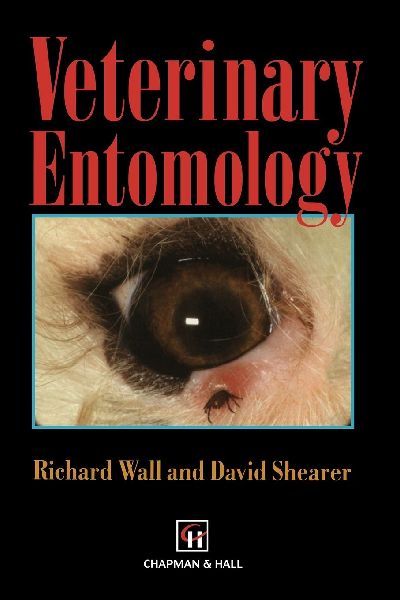
Veterinary Entomology
Arthropod Ectoparasites of Veterinary Importance
von R. Wall und D. Shearer
- Einband
- Kartoniert
- Seiten
- 456
- Sprache
- Englisch
- Erschienen
- Februar 1997
- Verlag
- Springer
Buchbeschreibung
Although usually treated as unified subject, in many respects the two components of what is broadly described as 'medical and veterinary is usual, the term entomology is entomology' are clearly distinct.
As used loosely here to refer to both insects and arachnids. In medical entomology blood-feeding Diptera are of paramount importance, primarily as vectors of pathogenic disease. Most existing textbooks reflect this bias.
Ganze Beschreibung lesenWeniger anzeigen
However, in veterinary entomology ectoparasites such as the mites, fleas or dipteran agents of myiasis assume far greater prominence and the most important effects of their parasitic activity may be mechanical damage, pruritus, blood loss, myiasis, hypersensitivity and dermatitis, in addition to vector-borne pathogenic disease.
Ectoparasite infestation of domestic and companion animals, therefore, has clinical consequences necessitating a distinct approach to diagnosis and control. The aim of this book is to introduce the behaviour, ecology, pathology and control of arthropod ectoparasites of domestic animals to students and practitioners of veterinary medicine, animal husbandry and applied biology.
Since the book is directed primarily at the non-entomologist, some simplification of a number of the more involved entomological issues has been deemed necessary to improve the book's logical structure and comprehensibility, and keep its length within limits. A reading list is presented at the end of each chapter to act as a stepping-stone into the specialist literature.
Inhaltsverzeichnis
- 1 The importance and diversity of arthropod ectoparasites
- 1.1 Introduction
- 1.2 Ectoparasite-host relationships
- 1.3 Ectoparasite damage
- 1.4 The evolution of ectoparasite-host relationships
- 1.5 A modern and growing problem
- 1.6 Arthropod structure and function
- 1.7 Patterns of arthropod development
Ganzes Inhaltsverzeichnis anzeigen (95 Einträge)Weniger anzeigen
- 1.8 The classification of diversity
- 1.9 The origins of arthropods
- 1.10 Living arthropod groups
- 1.11 Arthropod distributions
- 1.12 Further reading
- 2 Mites (Acari)
- 2.1 Introduction
- 2.2 Morphology
- 2.3 Life history
- 2.4 Pathology
- 2.5 Classification
- 2.6 Recognition of mites of veterinary importance
- 2.7 Astigmata
- 2.8 Prostigmata
- 2.9 Mesostigmata
- 2.10 Further reading
- 3 Ticks (Acari)
- 3.1 Introduction
- 3.2 Morphology
- 3.3 Life history
- 3.4 Pathology
- 3.5 Classification
- 3.6 Recognition of ticks of veterinary importance
- 3.7 Ixodidae
- 3.8 Argasidae
- 3.9 Further reading
- 4 Adult flies (Diptera)
- 4.1 Introduction
- 4.2 Morphology
- 4.3 Life history.-4.4 Pathology
- 4.5 Classification
- 4.6 Recognition of flies of veterinary importance
- 4.7 Cyclorrhapha
- 4.8 Brachycera
- 4.9 Nematocera
- 4.10 Other Diptera of veterinary interest
- 4.11 Further reading
- 5 Myiasis
- 5.1 Introduction
- 5.2 Morphology
- 5.3 Life history
- 5.4 Pathology
- 5.5 Classification
- 5.6 Recognition of dipterous agents of myiasis
- 5.7 Oestridae
- 5.8 Calliphoridae
- 5.9 Sarcophagidae
- 5.10 Further reading
- 6 Fleas (Siphonaptera)
- 6.1 Introduction
- 6.2 Morphology
- 6.3 Life history
- 6.4 Pathology
- 6.5 Classification
- 6.6 Recognition of fleas of veterinary importance
- 6.7 Pulicidae
- 6.8 Ceratophyllidae
- 6.9 Flea species of minor veterinary interest
- 6.10 Further reading
- 7 Lice (Phthiraptara)
- 7.1 Introduction
- 7.2 Morphology
- 7.3 Life history
- 7.4 Pathology
- 7.5 Classification
- 7.6 Recognition of lice of veterinary importance
- 7.7 Amblycera
- 7.8 Ischnocera
- 7.9 Anoplura
- 7.10 Further reading
- 8 The control and treatment of ectoparasite infestation
- 8.1 Introduction
- 8.2 Diagnosis of ectoparasite infestation
- 8.3 The chemical control of ectoparasites
- 8.4 Mode of ectoparasiticide application
- 8.5 Problems with chemical control
- 8.6 Non-chemical control of ectoparasites
- 8.7 Cattle
- 8.8 Sheep
- 8.9 Horses
- 8.10 Pigs
- 8.11 Goats
- 8.12 Dogs
- 8.13 Cats
- 8.14 Small mammals
- 8.15 Birds
- 8.16 Further reading
Details
- Erscheinungstermin
- Februar 1997
- Kategorie
- Fremdsprachige Bücher
- Einband
- Kartoniert
- Seiten
- 456
- Sprache
- Englisch
- Verlag
- Springer
- Format
- 23,5 × 15,5 cm
- Dicke
- 2,5 cm
- Gewicht
- 686 g
- EAN / ISBN-13
- 9780412615108
Versand und Rückgabe
Standardversand: 1 bis 3 Werktage, 3,99 €, kostenlos ab 35 €
Liefergebiet: Deutschland
Rücksendung: 14 Tage Widerrufsrecht. Bei einem Widerruf tragen Sie die Kosten der Rücksendung. Bei einer Falschlieferung oder einem Fehler von uns erstatten wir Ihnen das Rückporto. Den Widerruf erklären Sie über den Knopf „Vertrag widerrufen“ im Fuß der Seite.
Hersteller und ProduktsicherheitSpringer Nature Customer Service Center GmbH
Springer Nature Customer Service Center GmbH
Europaplatz 3
69115 Heidelberg
Deutschland
ProductSafety@springernature.com
Ähnliche Titel

Bewertungen
Zu diesem Titel gibt es noch keine Bewertung. Bewerten kann, wer ihn bei uns gekauft hat.
So prüfen wir Bewertungen
Eine Bewertung kann bei uns nur abgeben, wer den Titel über sein Kundenkonto bei uns gekauft hat. Jede Bewertung ist fest mit der zugehörigen Bestellung verknüpft; anders kommt sie technisch gar nicht zustande. Deshalb trägt jede angezeigte Bewertung den Hinweis „Verifizierter Kauf". Wir zeigen positive wie negative Bewertungen und löschen nur bei Rechtsverstößen. Für Bewertungen gibt es keine Gegenleistung.
106,99 €Voraussichtlich 1. bis 3. Dez.