Understanding Recruitment to Organized Crime and Terrorism
David Weisburd (Hrsg.)
Gebunden, Englisch, 2 Ausgaben
ab 139,09 €
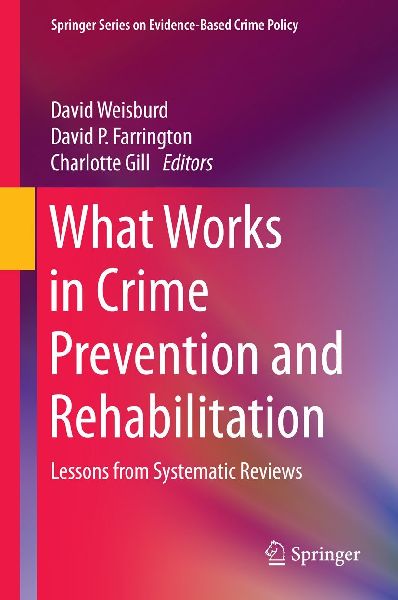
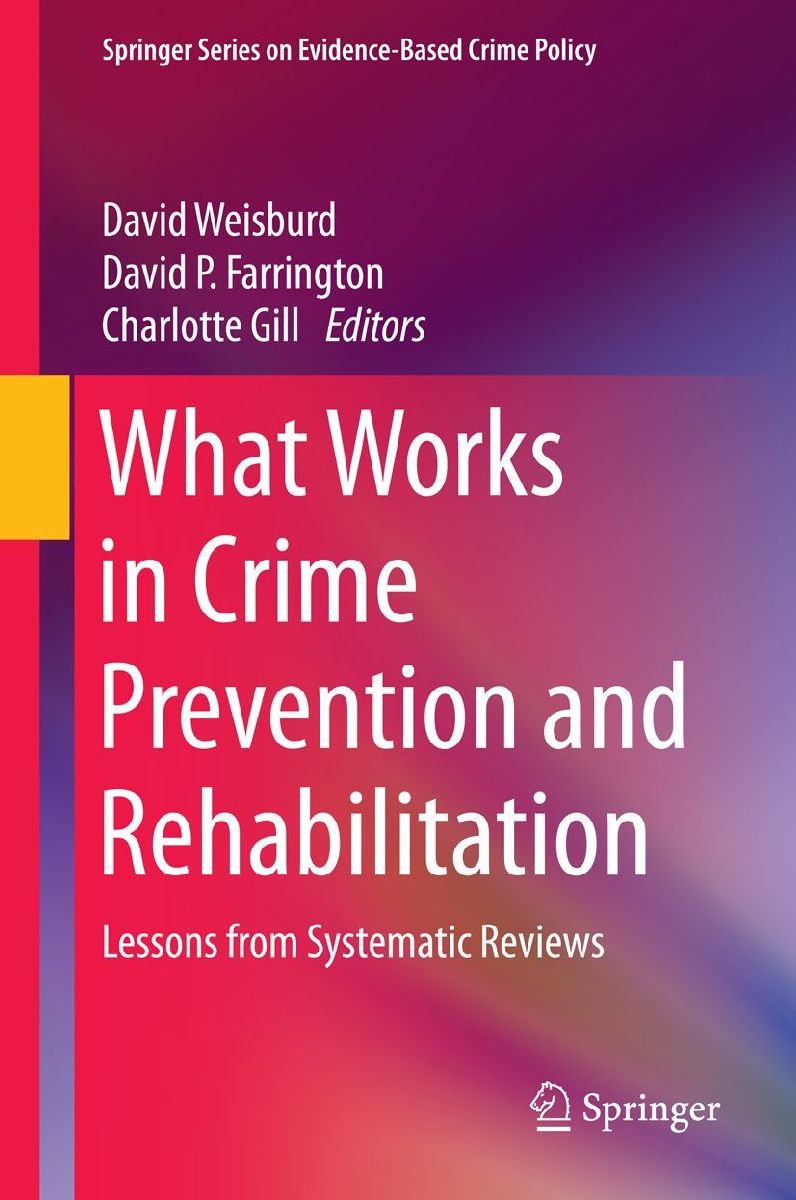
Lessons from Systematic Reviews
Herausgegeben von: David Weisburd, Herausgegeben von: David P. Farrington, Herausgegeben von: Charlotte Gill
Aus der Reihe Springer Series on Evidence-Based Crime Policy
This ambitious volume brings together and assesses all major systematic reviews of the effectiveness of criminological interventions, to draw broad conclusions about what works in policing, corrections, developmental prevention, situational prevention, drug abuse treatments, sentencing and deterrence, and communities.
Systematic reviews aim to minimize any possible bias in drawing conclusions by stating explicit criteria for inclusion and exclusion of studies, by conducting extensive and wide-ranging searches for possibly eligible studies, and by making all stages of the review explicit and transparent so that the methods can be checked and replicated.
Over a decade ago, a concerted effort was made by members of the criminology community, including the Editors and contributors of this volume, to bring the practice of systematic reviews to the study of Criminology, providing replicable, evidence-based data to answer key questions about the study of crime causation, detection, and prevention.
Now, the pioneers in this effort present a comprehensive stock-taking of what has been learned in the past decade of systematic reviews in criminology. Much has been discovered about the effectiveness of (for example) boot camps, "hot spots" policing, closed-circuit television surveillance, neighborhood watch, anti-bullying programs in schools, early parenting programs, drug treatment programs, and other key topics.
This volume will be of interest to researchers in criminology and criminal justice, as well as in related fields such as public health and forensic science, with important implications for policy-makers and practitioners. Decisively showing that the "nothing works" era is over, this volume takes stock of what we know, and still need to know, to prevent crime.
I plan to keep this book close at hand and to use it often! Francis T. Cullen, Distinguished Research Professor Emeritus, University of Cincinnati At a time when there is a broad commitment to bringing science to the front lines of practice, this book should be on the reading list of both policymakers and scholars.
Laurie O. Robinson, Clarence J. Robinson Professor of Criminology, Law Society, George Mason University and former Assistant Attorney General of the U.S. Department of Justice
David Weisburd is Distinguished Professor of Criminology, Law and Society at George Mason University and Executive Director of the Center for Evidence-Based Crime Policy. He is also the Walter E.
Meyer Professor of Law and Criminal Justice at the Hebrew University in Jerusalem and Chief Science Adviser at the Police Foundation in Washington DC. Professor He is the 2010 recipient of the Stockholm Prize in Criminology and received the Sutherland Award for contributions to criminology from the American Society of Criminology in 2014. In 2014 he also received he Robert Boruch Award for distinctive contributions to research that influences public policy of the Campbell Collaboration. David P. Farrington is Emeritus Professor of Psychological Criminology in the Institute of Criminology, Cambridge University. He received the Stockholm Prize in Criminology in 2013. He is Chair of the American Society of Criminology Division of Developmental and Life-Course Criminology. His major research interest is in developmental criminology, and he is Director of the Cambridge Study in Delinquent Development, a prospective longitudinal survey of over 400 London males from age 8 to age 56. In addition to over 650 published journal articles and book chapters on criminological and psychological topics, he has published nearly 100 books, monographs and government reports. Charlotte Gill is assistant professor of criminology, law and society and deputy director of the Center for Evidence-Based Crime Policy at George Mason University. Her research interests include community-based crime prevention, community policing, place-based criminology, program evaluation, and research synthesis. She has been involved in randomized controlled trialsof restorative justice and low-intensity probation and is the coeditor and former managing editor of the Campbell Collaboration Crime and Justice Group. In 2012, she received the Academy of Experimental Criminology's Outstanding Young Scholar award.
Standardversand: 1 bis 3 Werktage, 3,99 €, kostenlos ab 35 €
Liefergebiet: Deutschland
Rücksendung: 14 Tage Widerrufsrecht. Bei einem Widerruf tragen Sie die Kosten der Rücksendung. Bei einer Falschlieferung oder einem Fehler von uns erstatten wir Ihnen das Rückporto. Den Widerruf erklären Sie über den Knopf „Vertrag widerrufen“ im Fuß der Seite.
David Weisburd (Hrsg.)
Gebunden, Englisch, 2 Ausgaben
ab 139,09 €
Faye S. Taxman
Gebunden, Englisch, 2 Ausgaben
ab 106,99 €
Zu diesem Titel gibt es noch keine Bewertung. Bewerten kann, wer ihn bei uns gekauft hat.