Why was the Church so Dominant in Medieval Society?
von James Pinnock
- Einband
- Kartoniert
- Seiten
- 24
- Sprache
- Englisch
- Erschienen
- Februar 2018
- Verlag
- GRIN Verlag
Buchbeschreibung
Essay from the year 2012 in the subject Theology - Historic Theology, Ecclesiastical History, grade: 76.0%, Durham University, language: English, abstract: A critical starting point for any historical scrutiny of the medieval church must begin with Colin Morris, whose foundational work argues that the years 1050 to 1250 witnessed "the supreme age of papal monarchy".
Ganze Beschreibung lesenWeniger anzeigen
Morris stands within a long historiographical tradition of medievalists who have argued for this prevailing perspective of the church in the medieval epoch as defined by its primacy, universality and supremacy over an ostensibly lay society. Underpinning this conception of the church is the novel and extensive reform movement that began during the pontificate of Gregory VII (1073-85), which articulated and firmly established the concept of a 'hierarchical church'.
This notion of the ecclesiastical hierarchy, elucidated by both contemporary writers and modern historians, arguably dominates our perspective of the medieval religious landscape, and part of the historian's task is therefore to reach a judgement as to what we understand by the ecclesia and societas in this period.
Arguably, our period is characterised by a divergence between ecclesiastical rhetoric and popular culture, most evident in the historical tradition which attributes to our period the birth of popular heresy in various forms. The rise of heresy, and the 'choice' inherent in its initial and continuing prevalence within medieval society, stands in clear contradistinction to the concepts of ecclesiastical hierarchy and papal authority advocated by the medieval church.
Indeed, whilst historians have recognised, and in many cases extolled, the conceptual legacy bequeathed by the Gregorian reform movement upon the ascendant medieval church, they have arguably overlooked, most pertinently in the case of heresy, the realities of "the universal episcopacy claimed by the pope".
Details
- Erscheinungstermin
- Februar 2018
- Kategorie
- Fremdsprachige Bücher
- Einband
- Kartoniert
- Seiten
- 24
- Sprache
- Englisch
- Verlag
- GRIN Verlag
- Format
- 21,0 × 14,8 cm
- Dicke
- 0,3 cm
- Gewicht
- 51 g
- EAN / ISBN-13
- 9783668648159
Versand und Rückgabe
Standardversand: 1 bis 3 Werktage, 3,99 €, kostenlos ab 35 €
Liefergebiet: Deutschland
Rücksendung: 14 Tage Widerrufsrecht. Bei einem Widerruf tragen Sie die Kosten der Rücksendung. Bei einer Falschlieferung oder einem Fehler von uns erstatten wir Ihnen das Rückporto. Den Widerruf erklären Sie über den Knopf „Vertrag widerrufen“ im Fuß der Seite.
Hersteller und ProduktsicherheitGRIN Publishing GmbH
Mehr von James Pinnock


Nazi Propaganda in Germany, 1939-45. Did the Campaigns Bolster or Undermine Popular Antisemitism?
James Pinnock
Kartoniert, Englisch
15,95 €

Why Did Arno Breker Decide to Collaborate with the Nazi Cultural Programme?
James Pinnock
Kartoniert, Englisch
15,95 €
Ähnliche Titel
On Prehistoric Traditions And Customs In Connection With Sun And Serpent Worship (1875)
John Samuel Phene
Kartoniert, Englisch
32,50 €
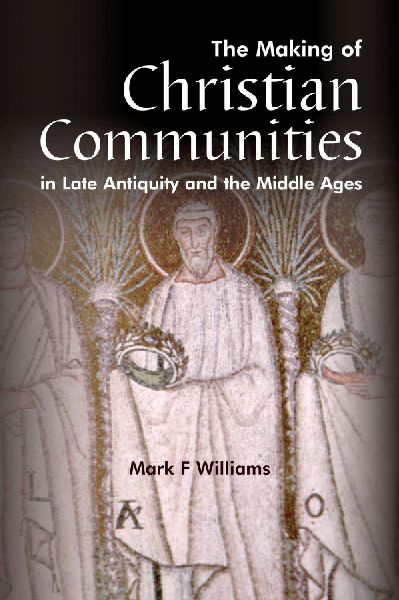
The Making Of Christian Communities in Late Antiquity and the Middle Ages
Mark F. Williams (Hrsg.)
Kartoniert, Englisch
35,60 €
Bewertungen
Zu diesem Titel gibt es noch keine Bewertung. Bewerten kann, wer ihn bei uns gekauft hat.
So prüfen wir Bewertungen
Eine Bewertung kann bei uns nur abgeben, wer den Titel über sein Kundenkonto bei uns gekauft hat. Jede Bewertung ist fest mit der zugehörigen Bestellung verknüpft; anders kommt sie technisch gar nicht zustande. Deshalb trägt jede angezeigte Bewertung den Hinweis „Verifizierter Kauf". Wir zeigen positive wie negative Bewertungen und löschen nur bei Rechtsverstößen. Für Bewertungen gibt es keine Gegenleistung.
17,95 €Voraussichtlich 2. bis 4. Dez.