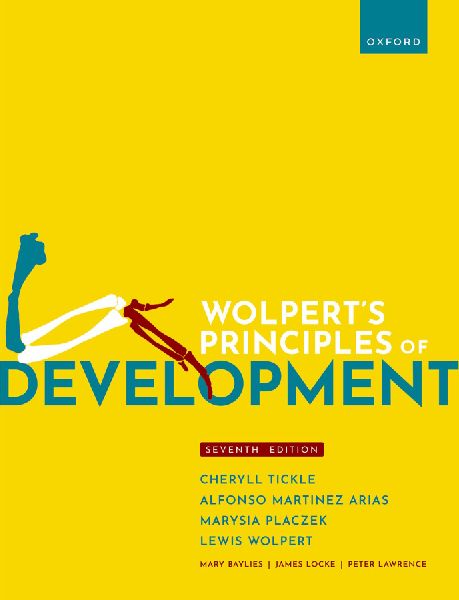
Wolpert's Principles of Development
von Cheryll Tickle, Alfonso Martinez Arias, Marysia Placzek und 1 weitere
- Einband
- Kartoniert
- Seiten
- 800
- Sprache
- Englisch
- Erschienen
- April 2025
- Verlag
- Oxford University Press
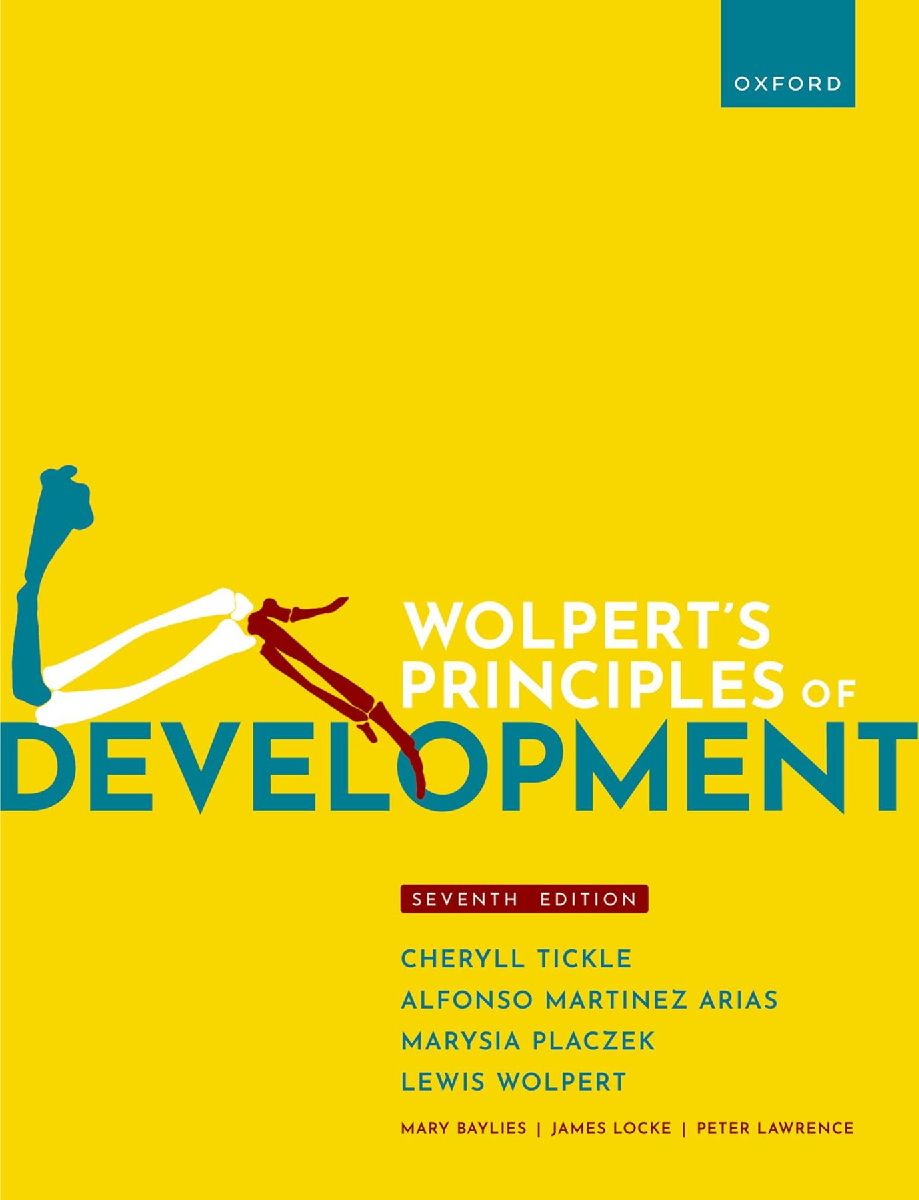
Buchbeschreibung
Wolpert's Principles of Development, the latest edition of the prize-winning textbook, opens up the fascinating field of developmental biology to undergraduates studying biology, medicine, and veterinary science.
By focusing on the underlying processes shared by diverse organisms, the textbook lays the foundation for a deep understanding.
Ganze Beschreibung lesenWeniger anzeigen
Key features - An emphasis throughout on the underlying principles - which underpin the commonalities between different organisms and their development - enables students to get a clear sense of the 'big picture' of the subject. - Custom-drawn artwork and integrated animations and videos help to make the visualisation of processes and mechanisms in this challenging subject as straightforward as possible. - Medical Boxes explore key developmental diseases and explain how developmental biology furthers our understanding human health and disease.
Further experimental detail, including Experimental Boxes, from both classic and current research, demonstrates 'how we know what we know'. - Also available as an e-book enhanced with learning objectives, self-assessment interactive quizzes and multi-media content to offer a fully immersive experience and extra learning support.
New to this edition - Chapter 7, a new chapter on Embryonic stem cells, embryo models, and regenerative medicine, to ensure the book's coverage stays up to date with this very active area of developmental biology research. - Chapters 3 and 4 on vertebrate development have been restructured and updated, especially in relation to mouse development, to ensure major concepts and principles are explained with recent supporting experimental evidence. - Chapter 10 on the nervous system has been completely revised and updated, with more emphasis on neural tube patterning. - Chapter 14, which covers nematodes and sea urchins, now appears online as part of the ebook. - There are more examples of the use of CRISPR to address problems like sickle cell disease (Ch6), and evolution of limbs from fins (Ch13). - Examples of single-cell RNA sequencing can be found throughout the book (Ch3, Ch6, Ch7, Ch10, Ch11, Ch12). - Smaller revisions, updates, and new figures have been included throughout.
Digital formats and resources The seventh edition is available for students and institutions to purchase in a variety of formats: the e-book and Science Trove offer a mobile experience and convenient access along with interactive self-test questions, videos, flashcards, supplementary materials, functionality tools, navigation features and links that offer extra learning support. For more information about e-books, please visit www.oxfordtextbooks.co.uk/ebooks
Inhaltsverzeichnis
- 1: History and basic concepts-
- 2: Development of the Drosophila body plan-
- 3: Vertebrate development I: Establishing the body plan-
- 4: Vertebrate development II: completing the body plan-
- 5: Morphogenesis: change in form in the early embryo-
- 6: Cell differentiation and stem cells-
- 7: Embryonic stem cells, embryo models, and regenerative medicine-
- 8: Germ cells, fertilization, and sex determination-
Ganzes Inhaltsverzeichnis anzeigen (13 Einträge)Weniger anzeigen
- 9: Organogenesis-
- 10: Development of the nervous system-
- 11: Growth, post-embryonic development, and regeneration-
- 12: Plant development-
- 13: Evolution and development
Details
- Erscheinungstermin
- April 2025
- Kategorie
- Fremdsprachige Bücher
- Einband
- Kartoniert
- Seiten
- 800
- Sprache
- Englisch
- Verlag
- Oxford University Press
- Format
- 20,5 × 26,9 cm
- Dicke
- 3,9 cm
- Gewicht
- 1.962 g
- EAN / ISBN-13
- 9780192896612
Über Cheryll Tickle
Cheryll Tickle, Emeritus Professor, University of Bath. Her research focused on how cells become organized in embryos using the developing chick limb as her main experimental model.
Mehr über Cheryll TickleWeniger anzeigen
She has lectured on developmental biology to biology undergraduates, also medical and dental students, and to scientists from a wide range of different backgrounds, including industry and veterinarians on continuing professional development courses Alfonso Martinez Arias, ICREA Research Professor at the Universitat Pompeu Fabra. His research makes use of Pluripotent Stem Cells to develop in vitro models of early mammalian development with a focus on the process of gastrulation. Before moving to the UPF he spent 35 years at the University of Cambridge (UK) where he did research and taught Developmental Biology in graduate and undergraduate courses.
Marysia Placzek, Professor at the University of Sheffield. Marysia is a neurobiologist who studies development of the vertebrate neural tube, with a particular focus on the hypothalamus. For the last 30 years she has combined research with undergraduate and postgraduate teaching, co-ordinating modules in basic and translational developmental biology.
Lewis Wolpert was Emeritus Professor of Biology as Applied to Medicine at University College London. He was an eminent developmental biologist whose ideas have had a profound and lasting impact on the way we think about development. He believed that, even though the development of different organisms seems to be overwhelmingly complex, there are general principles. His philosophy forms the basis of Principles of Development which was first published in 1998. Lewis also authored several books aimed at the general public including The Triumph of the Embryo and an influential book on depression Malignant Sadness based partly on his own experiences.
Contributors
Mary Baylies is a Professor at Weill Graduate School of Medical Sciences, Cornell University
James Locke is a Professor at the Sainsbury Laboratory, University of Cambridge
Peter Lawrence is an Emeritus Scientist at the MRC Laboratory of Molecular Biology, Cambridge
Eleanor Lawrence is a freelance science writer and editor
Matthew McClements is a Science Illustrator
Versand und Rückgabe
Standardversand: 1 bis 3 Werktage, 3,99 €, kostenlos ab 35 €
Versandbeginn: in der Regel am selben oder am nächsten Werktag
Liefergebiet: Deutschland
Rücksendung: 14 Tage Widerrufsrecht. Bei einem Widerruf tragen Sie die Kosten der Rücksendung. Bei einer Falschlieferung oder einem Fehler von uns erstatten wir Ihnen das Rückporto. Den Widerruf erklären Sie über den Knopf „Vertrag widerrufen“ im Fuß der Seite.
Hersteller und ProduktsicherheitOxford University Press
Oxford University Press
Europaallee 1
36244 Bad Hersfeld
Deutschland
gpsr@libri.de
Verantwortliche Person in der EU
Libri GmbHEuropaallee 1
36244 Bad Hersfeld
Deutschland
gpsr@libri.de
Ähnliche Titel

Bewertungen
Zu diesem Titel gibt es noch keine Bewertung. Bewerten kann, wer ihn bei uns gekauft hat.
So prüfen wir Bewertungen
Eine Bewertung kann bei uns nur abgeben, wer den Titel über sein Kundenkonto bei uns gekauft hat. Jede Bewertung ist fest mit der zugehörigen Bestellung verknüpft; anders kommt sie technisch gar nicht zustande. Deshalb trägt jede angezeigte Bewertung den Hinweis „Verifizierter Kauf". Wir zeigen positive wie negative Bewertungen und löschen nur bei Rechtsverstößen. Für Bewertungen gibt es keine Gegenleistung.
86,50 €Voraussichtlich 30. Nov. bis 2. Dez.