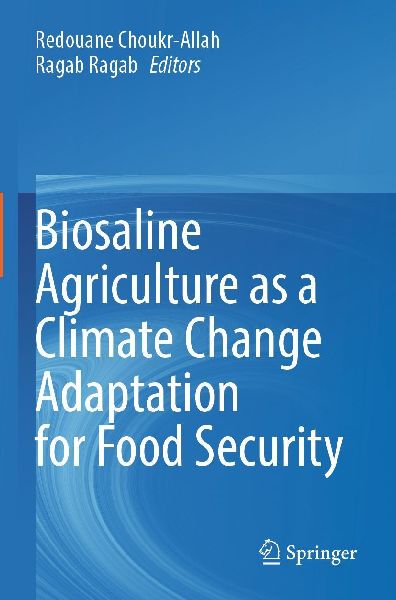
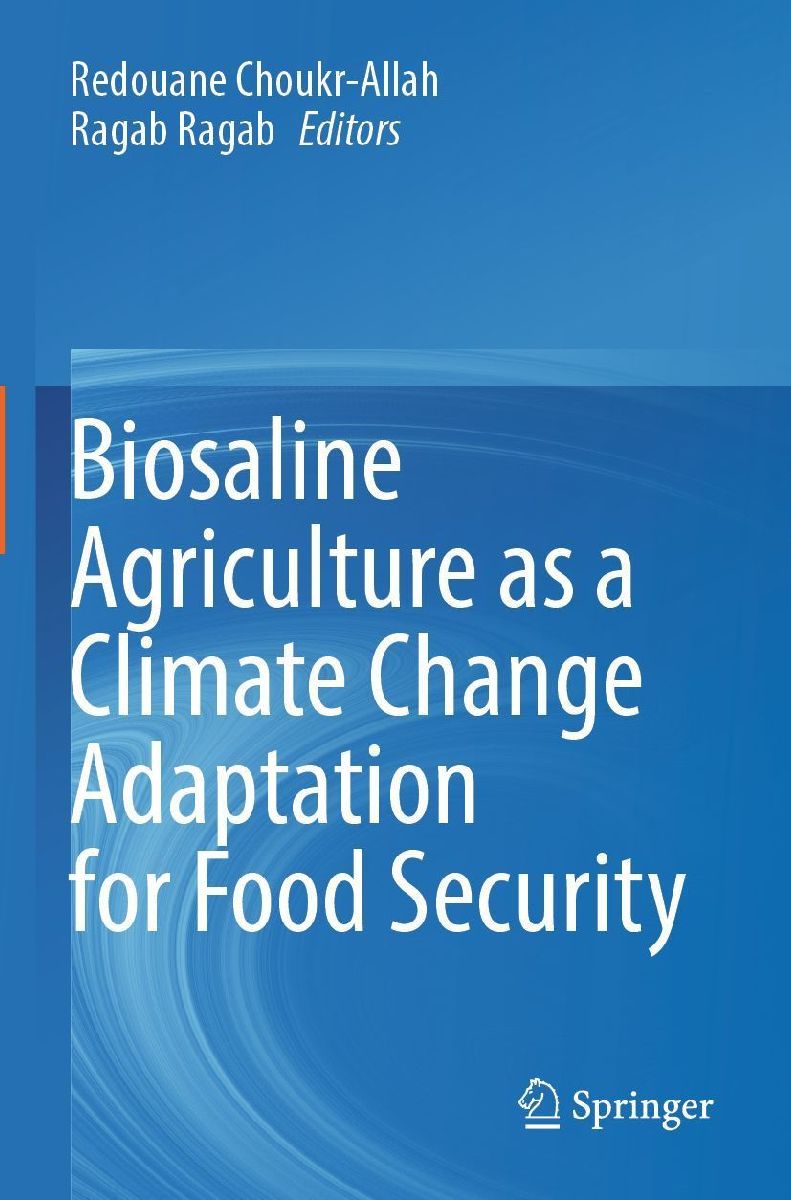
Biosaline Agriculture as a Climate Change Adaptation for Food Security
von Redouane Choukr-Allah (Hrsg.)
Herausgegeben von: Redouane Choukr-Allah, Herausgegeben von: Ragab Ragab
- Einband
- Kartoniert
- Seiten
- 444
- Sprache
- Englisch
- Erschienen
- März 2024
- Verlag
- Springer
Buchbeschreibung
Chapter 1. Introduction to the book.
Ganze Beschreibung lesenWeniger anzeigen
- Chapter 2. Best practices for saline and brackish water management.
- Chapter 2.1 Salt-affected soils and their management in the Middle East and North Africa (MENA) region: A holistic approach.
- Chapter 2.2 Innovation and practical experience of using saline water at farm level in Tunisia.
- Chapter 2.3 Soil and nutrient management under saline conditions.
- Chapter 2.4 Irrigation management under saline conditions in MENA and Sub-Saharian conditions: Lessons learned.
- Chapter 2.5 Irrigation Water Management under Salinity Conditions in Arid Regions.
- Chapter 2.6 Seed priming and Nano priming techniques as tools to alleviate osmotic stress in legumes.
- Chapter 3. Using saline water for conventional, nonconventional and forage crops.
- Chapter 3.1 Exploration and collection of quinoa's wild ancestor in Argentina.
- Chapter 3.2 Multilocality evaluation of alternative forage crops grown under salinity conditions in the south of Morocco.
- Chapter 3.3 Innovation and Practical Experience of Using Saline Water at the Farm Level in Tunisia.
- Chapter 4. Land management when irrigating with saline water.
- Chapter 4.1 Do cultivating methods improve crop yield under saline condition in semi-arid areas?.
- Chapter 4.2 Posphoypsum as potential amendment and fertilizer for crop nutrition and salt affected soils remediation.
- Chapter 5. The challenges faced when using of non-Conventional water in agriculture.
- Chapter 5.1 Status, Drivers and Suggested Management Scenarios of salt affected soils in Africa.
- Chapter 5.2 The use of nonconventional water resources in agriculture in the Gulf Cooperation Council Countries: Key challenges and opportunities for the use of treated wastewater.
- Chapter 6. Use of models as management tools.
- Chapter 6.1 SALTMED model as a tool for water, crop, field and N-fertilizers management.
- Chapter 7. Use of desalination technology to produce non-saline water for irrigation.
- Chapter 7.1 Is desalination for agriculture sustainable?.
- Chapter 7.2 The Technological Challenges of Desalination for Irrigation in Morocco.
Inhaltsverzeichnis
- Chapter 1. Introduction to the book
- Chapter 2. Best practices for saline and brackish water management
- Chapter 2.1 Salt-affected soils and their management in the Middle East and North Africa (MENA) region: A holistic approach
- Chapter 2.2 Innovation and practical experience of using saline water at farm level in Tunisia
- Chapter 2.3 Soil and nutrient management under saline conditions
- Chapter 2.4 Irrigation management under saline conditions in MENA and Sub-Saharian conditions: Lessons learned
- Chapter 2.5 Irrigation Water Management under Salinity Conditions in Arid Regions
- Chapter 2.6 Seed priming and Nano priming techniques as tools to alleviate osmotic stress in legumes
Ganzes Inhaltsverzeichnis anzeigen (23 Einträge)Weniger anzeigen
- Chapter 3. Using saline water for conventional, nonconventional and forage crops
- Chapter 3.1 Exploration and collection of quinoa's wild ancestor in Argentina
- Chapter 3.2 Multilocality evaluation of alternative forage crops grown under salinity conditions in the south of Morocco
- Chapter 3.3 Innovation and Practical Experience of Using Saline Water at the Farm Level in Tunisia
- Chapter 4. Land management when irrigating with saline water
- Chapter 4.1 Do cultivating methods improve crop yield under saline condition in semi-arid areas?
- Chapter 4.2 Posphoypsum as potential amendment and fertilizer for crop nutrition and salt affected soils remediation
- Chapter 5. The challenges faced when using of non-Conventional water in agriculture
- Chapter 5.1 Status, Drivers and Suggested Management Scenarios of salt affected soils in Africa
- Chapter 5.2 The use of nonconventional water resources in agriculture in the Gulf Cooperation Council Countries: Key challenges and opportunities for the use of treated wastewater
- Chapter 6. Use of models as management tools
- Chapter 6.1 SALTMED model as a tool for water, crop, field and N-fertilizers management
- Chapter 7. Use of desalination technology to produce non-saline water for irrigation
- Chapter 7.1 Is desalination for agriculture sustainable?
- Chapter 7.2 The Technological Challenges of Desalination for Irrigation in Morocco
Details
- Erscheinungstermin
- März 2024
- Kategorie
- Fremdsprachige Bücher
- Einband
- Kartoniert
- Seiten
- 444
- Sprache
- Englisch
- Verlag
- Springer
- Format
- 23,5 × 15,5 cm
- Dicke
- 2,4 cm
- Gewicht
- 668 g
- EAN / ISBN-13
- 9783031242816
Versand und Rückgabe
Standardversand: 1 bis 3 Werktage, 3,99 €, kostenlos ab 35 €
Liefergebiet: Deutschland
Rücksendung: 14 Tage Widerrufsrecht. Bei einem Widerruf tragen Sie die Kosten der Rücksendung. Bei einer Falschlieferung oder einem Fehler von uns erstatten wir Ihnen das Rückporto. Den Widerruf erklären Sie über den Knopf „Vertrag widerrufen“ im Fuß der Seite.
Hersteller und ProduktsicherheitSpringer Nature Customer Service Center GmbH
Springer Nature Customer Service Center GmbH
Europaplatz 3
69115 Heidelberg
Deutschland
ProductSafety@springernature.com
Ähnliche Titel

Agroecological Crop Protection
Jean-Philippe Deguine (Hrsg.)
Gebunden, Englisch, 2 Ausgaben
ab 171,19 €

Bewertungen
Zu diesem Titel gibt es noch keine Bewertung. Bewerten kann, wer ihn bei uns gekauft hat.
So prüfen wir Bewertungen
Eine Bewertung kann bei uns nur abgeben, wer den Titel über sein Kundenkonto bei uns gekauft hat. Jede Bewertung ist fest mit der zugehörigen Bestellung verknüpft; anders kommt sie technisch gar nicht zustande. Deshalb trägt jede angezeigte Bewertung den Hinweis „Verifizierter Kauf". Wir zeigen positive wie negative Bewertungen und löschen nur bei Rechtsverstößen. Für Bewertungen gibt es keine Gegenleistung.
192,59 €Voraussichtlich 2. bis 4. Dez.