Buch-OWLOnline-Buchhandel

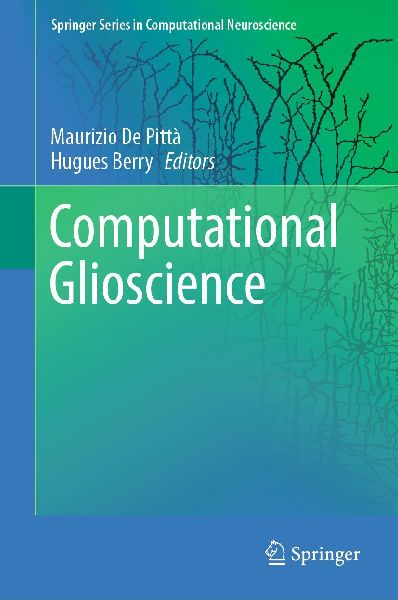
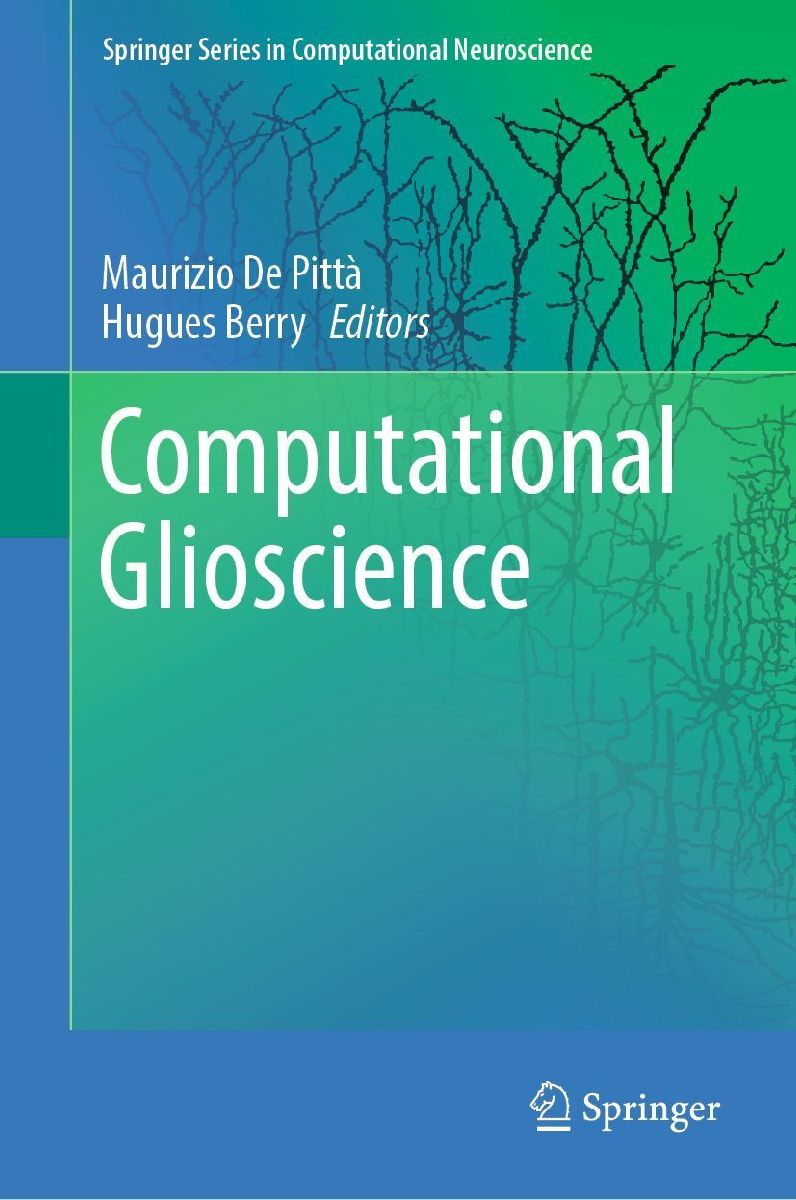
Computational Glioscience

von Maurizio de Pittà (Hrsg.)

Herausgegeben von: Maurizio de Pittà, Herausgegeben von: Hugues Berry

Aus der Reihe Springer Series in Computational Neuroscience

Einband
Gebunden
Seiten
524
Sprache
Englisch
Erschienen
Januar 2019
Verlag
Palgrave Macmillan

Buchbeschreibung

Over the last two decades, the recognition that astrocytes - the predominant type of cortical glial cells - could sense neighboring neuronal activity and release neuroactive agents, has been instrumental in the uncovering of many roles that these cells could play in brain processing and the storage of information.

Ganze Beschreibung lesenWeniger anzeigen

These findings initiated a conceptual revolution that leads to rethinking how brain communication works since they imply that information travels and is processed not just in the neuronal circuitry but in an expanded neuron-glial network. On the other hand the physiological need for astrocyte signaling in brain information processing and the modes of action of these cells in computational tasks remain largely undefined.

This is due, to a large extent, both to the lack of conclusive experimental evidence, and to a substantial lack of a theoretical framework to address modeling and characterization of the many possible astrocyte functions. This book that we propose aims at filling this gap, providing the first systematic computational approach to the complex, wide subject of neuron-glia interactions.

The organization of the book is unique insofar as it considers a selection of "hot topics" in glia research that ideally brings together both the novelty of the recent experimental findings in the field and the modelling challenge that they bear. A chapter written by experimentalists, possibly in collaboration with theoreticians, will introduce each topic.

The aim of this chapter, that we foresee less technical in its style than in conventional reviews, will be to provide a review as clear as possible, of what is "established" and what remains speculative (i.e. the open questions). Each topic will then be presented in its possible different aspects, by 2-3 chapters by theoreticians.

These chapters will be edited in order to provide a "priming" reference for modeling neuron-glia interactions, suitable both for the graduate student and the professional researcher.

Inhaltsverzeichnis

  • Part 1. Introduction
  • A Neuron-Glial perspective for computational neuroscience
  • Part 2. Calcium dynamics
  • Data-driven modelling of the inositol trisphosphate receptor and its role in calcium induced calcium release
  • Intracellular calcium dynamics: biophysical and simplified models
  • Modeling of stochastic Ca2+ signals
  • G protein-coupled receptor-mediated astrocytic Ca2+ signaling in astrocytes
  • Emergence of regular and complex calcium oscillations by inositol 1,4,5-trisphosphate signaling in astrocytes
Ganzes Inhaltsverzeichnis anzeigen (23 Einträge)Weniger anzeigen
  • Astrocyte networks and intercellular calcium propagation
  • Part 3. Tripartite Synapse and regulation of network activity
  • Tripartite synapses and regulation of synaptic plasticity
  • Purinergic signaling at tripartite synapses
  • Gliotransmitter exocytosis and its consequences on synaptic transmission
  • Computational models of pathophysiological glial activation in CNS disorders
  • Part 4. Homeostasis and Metabolic coupling
  • The role of astrocytes in neurotransmitter uptake and brain metabolism
  • Glutamate uptake
  • Astrocytic ion dynamics: Implications for potassium buffering and liquid flow
  • Constraint-Based Modeling of Metabolic Interactions in and between Astrocytes and Neurons
  • Part 5. Computational Tools to Analyze and Model Astrocyte Experiments
  • Computational models of astrocytes and astrocyte-neuron interactions: Characterization, reproducibility, and future perspectives
  • GECIquant: semi-automated detection and quantification of astrocyte intracellular Ca2+ signals monitored with GCaMP6f
  • Modeling neuron-glia interactions with the Brian 2.0 simulator

Details

Erscheinungstermin
Januar 2019
Kategorie
Fremdsprachige Bücher
Einband
Gebunden
Seiten
524
Sprache
Englisch
Verlag
Palgrave Macmillan
Reihe
Springer Series in Computational Neuroscience
Format
24,1 × 16,0 cm
Dicke
3,4 cm
Gewicht
894 g
EAN / ISBN-13
9783030008154
Maßstabsgetreu: Deckel und Buchrücken neben einer Hand (18 cm).
Versand und Rückgabe

Standardversand: 1 bis 3 Werktage, 3,99 €, kostenlos ab 35 €

Liefergebiet: Deutschland

Rücksendung: 14 Tage Widerrufsrecht. Bei einem Widerruf tragen Sie die Kosten der Rücksendung. Bei einer Falschlieferung oder einem Fehler von uns erstatten wir Ihnen das Rückporto. Den Widerruf erklären Sie über den Knopf „Vertrag widerrufen“ im Fuß der Seite.

Hersteller und ProduktsicherheitSpringer Nature Customer Service Center GmbH
Springer Nature Customer Service Center GmbH
Europaplatz 3
69115 Heidelberg
Deutschland
ProductSafety@springernature.com

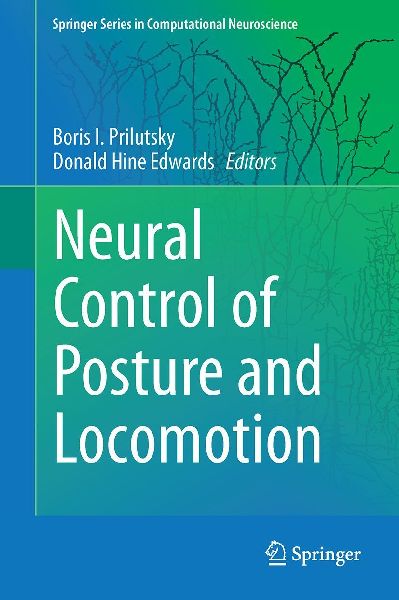
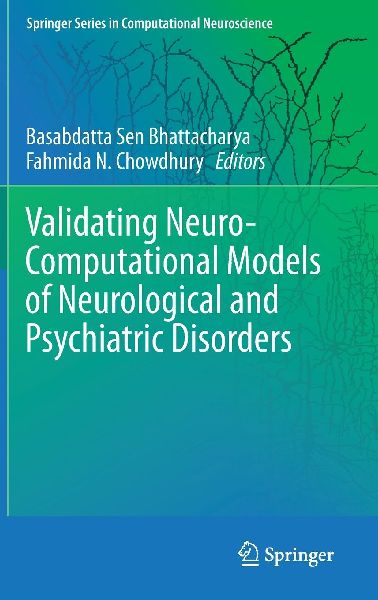
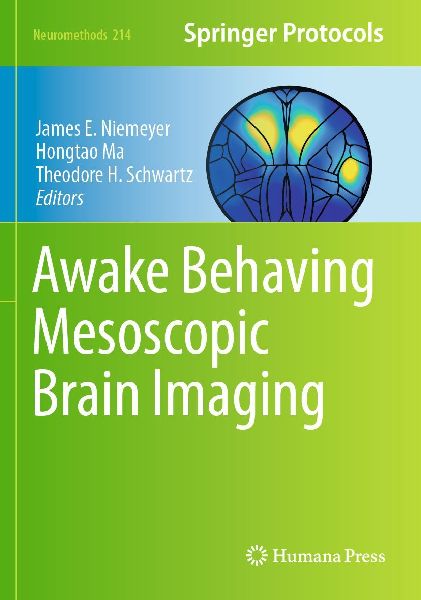
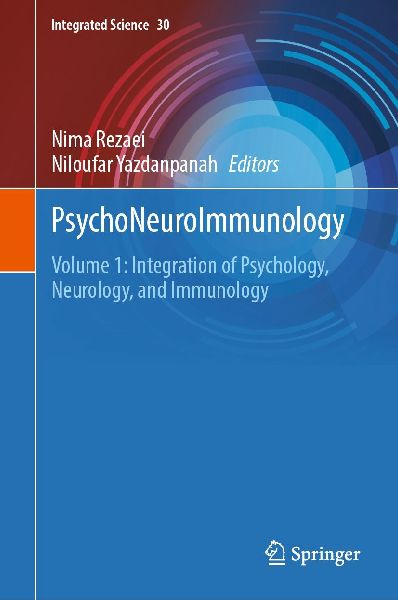
Mehr aus der Reihe Springer Series in Computational Neuroscience

Ähnliche Titel

Bewertungen

Zu diesem Titel gibt es noch keine Bewertung. Bewerten kann, wer ihn bei uns gekauft hat.
So prüfen wir Bewertungen
Eine Bewertung kann bei uns nur abgeben, wer den Titel über sein Kundenkonto bei uns gekauft hat. Jede Bewertung ist fest mit der zugehörigen Bestellung verknüpft; anders kommt sie technisch gar nicht zustande. Deshalb trägt jede angezeigte Bewertung den Hinweis „Verifizierter Kauf". Wir zeigen positive wie negative Bewertungen und löschen nur bei Rechtsverstößen. Für Bewertungen gibt es keine Gegenleistung.
192,59 €Voraussichtlich 4. bis 8. Dez.

Inhalte ab 18

Cover von Titeln für Erwachsene, etwa erotische Romane, Manga oder Comics, bleiben unscharf, bis Sie bestätigen. Die Bestätigung gilt für alle Seiten und Tabs, bis Sie den Browser schließen.

Zurück zum Katalog