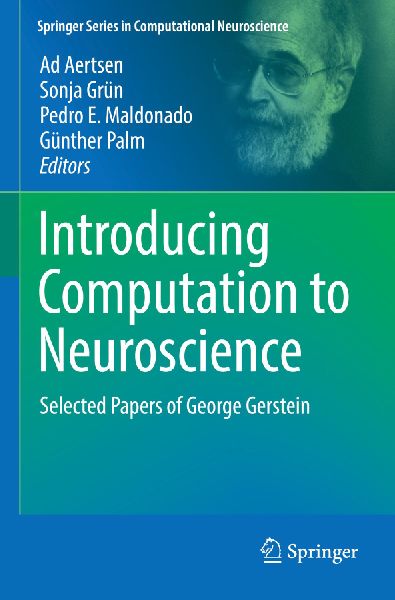
Introducing Computation to Neuroscience
Ad Aertsen (Hrsg.)
Kartoniert, Englisch, 2 Ausgaben
ab 165,84 €
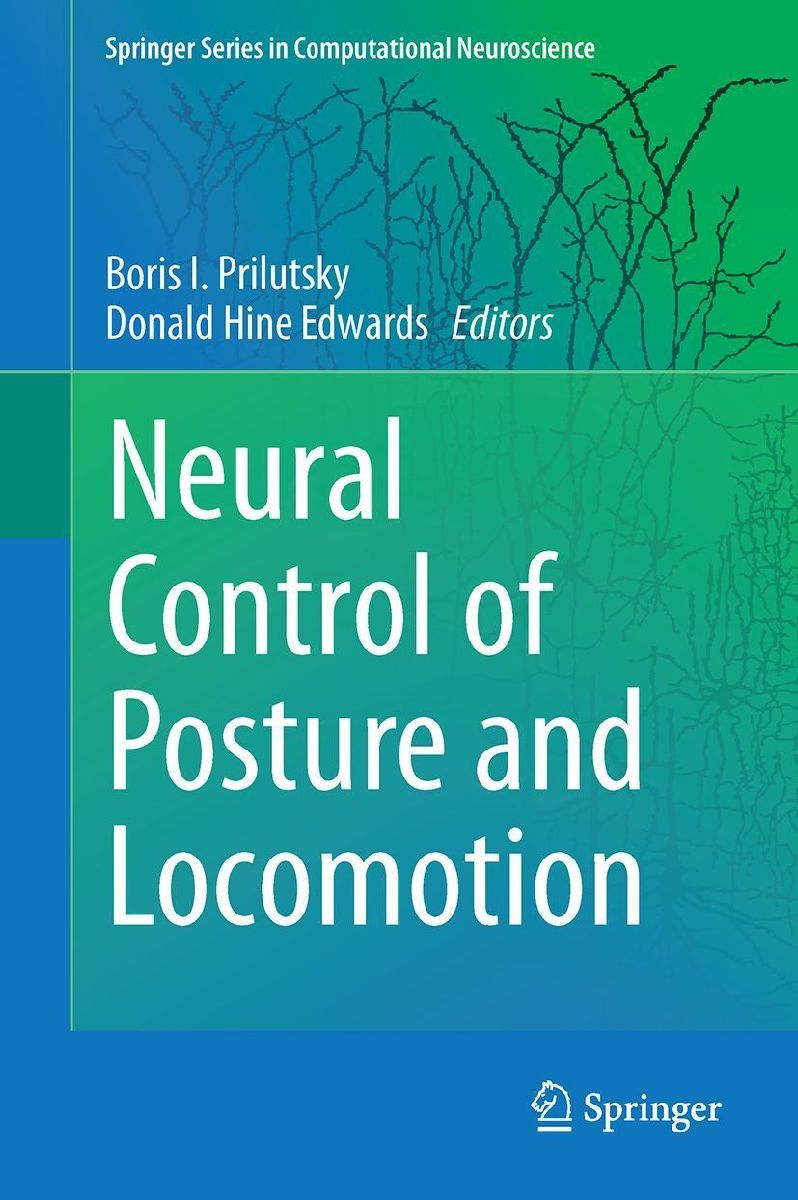
von Boris I. Prilutsky (Hrsg.)
Herausgegeben von: Boris I. Prilutsky, Herausgegeben von: Donald H. Edwards
Aus der Reihe Springer Series in Computational Neuroscience
Neuromechanics is a new, quickly growing field of neuroscience research that merges neurophysiology, biomechanics and motor control and aims at understanding living systems and their elements through interactions between their neural and mechanical dynamic properties.
Although research in Neuromechanics is not limited by computational approaches, neuromechanical modeling is a powerful tool that allows for integration of massive knowledge gained in the past several decades in organization of motion related brain and spinal cord activity, various body sensors and reflex pathways, muscle mechanical and physiological properties and detailed quantitative morphology of musculoskeletal systems.
Recent work in neuromechanical modeling has demonstrated advantages of such an integrative approach and led to discoveries of new emergent properties of neuromechanical systems. Neuromechanical Modeling of Posture and Locomotion will cover a wide range of topics from theoretical studies linking the organization of reflex pathways and central pattern generating circuits with morphology and mechanics of the musculoskeletal system (Burkholder; Nichols; Shevtsova et al.) to detailed neuromechanical models of postural and locomotor control (Bunderson; Edwards, Marking et al., Ting).
Furthermore, uniquely diverse modeling approaches will be presented in the book including a theoretical dynamic analysis of locomotor phase transitions (Spardy and Rubin), a hybrid computational modeling that allows for in vivo interactions between parts of a living organism and a computer model (Edwards et al.), a physical neuromechanical model of the human locomotor system (Lewis), and others.
Boris Prilutsky received his BS degrees in physical education and applied mathematics/ mechanics from Central Institute of Physical Culture in Moscow, Russia and Moscow Institute of Electronic …
Boris Prilutsky received his BS degrees in physical education and applied mathematics/ mechanics from Central Institute of Physical Culture in Moscow, Russia and Moscow Institute of Electronic Engineering, respectively, and a PhD in animal movement biomechanics and physiology from Latvian Research Institute of Traumatology and Orthopedics. He is currently an associate professor in the School of Applied Physiology and director of Biomechanics and Motor Control laboratory at the Georgia Institute of Technology and an adjunct associate professor in the Division of Physical Therapy at Emory University School of Medicine. His research interests are biomechanics and neural control of normal and pathological movement. Donald H. Edwards received a B.S. degree in electrical engineering from the Massachusetts Institute of Technology and a Ph. D. in neurobiology from Yale University. He studied sensori-motor integration as a postdoctoral research associate with Donald Kennedyat Stanford University and with Brian Mulloney at University of California, Davis. He joined the faculty at Georgia State University as Assistant Professor of Biology and is currently Regents' Professor of Neuroscience. His research interests include sensori-motor integration, neuromechanics and the neural control of behavior.
Standardversand: 1 bis 3 Werktage, 3,99 €, kostenlos ab 35 €
Liefergebiet: Deutschland
Rücksendung: 14 Tage Widerrufsrecht. Bei einem Widerruf tragen Sie die Kosten der Rücksendung. Bei einer Falschlieferung oder einem Fehler von uns erstatten wir Ihnen das Rückporto. Den Widerruf erklären Sie über den Knopf „Vertrag widerrufen“ im Fuß der Seite.
Ad Aertsen (Hrsg.)
Kartoniert, Englisch, 2 Ausgaben
ab 165,84 €
Basabdatta Sen Bhattacharya (Hrsg.)
Gebunden, Englisch
106,99 €
James E. Niemeyer (Hrsg.)
Kartoniert, Englisch, 2 Ausgaben
ab 181,89 €
Zu diesem Titel gibt es noch keine Bewertung. Bewerten kann, wer ihn bei uns gekauft hat.