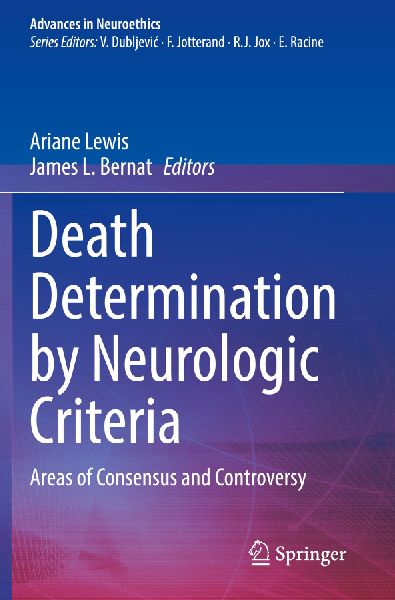
Death Determination by Neurologic Criteria
Areas of Consensus and Controversy
Herausgegeben von: Ariane Lewis, Herausgegeben von: James L. Bernat
Aus der Reihe Advances in Neuroethics
- Einband
- Kartoniert
- Seiten
- 508
- Sprache
- Englisch
- Erschienen
- Januar 2024
- Verlag
- Springer
Buchbeschreibung
This book presents principal controversies over the determination of death by neurologic criteria ("brain death").
The editors and authors are exceedingly well-versed in this subject and are on the forefront of the current debates. The content is divided in the following disciplinary: philosophical (conceptual), medical, scientific, legal, religious, and ethical/social.
Ganze Beschreibung lesenWeniger anzeigen
Many of the topics feature pro-con debates, allowing readers to consider the merits of the arguments and decide their own position.
The work is targeted to clinicians and nurses who treat critically ill and dying patients, organ donation personnel, ethicists and philosophers who write on end-of-life issues, and lawyers and legislative/public policy professionals who draft laws on death determination. It identifies and debates the essential controversies currently raging in academic and public policy circles over the medical adequacy, scientific validity, and conceptual coherence of death determination by neurologic criteria.
Whether a professional or a student, the reader will be given a comprehensive course in the most pressing controversies and areas of consensus in the determination of death by neurologic criteria.
Inhaltsverzeichnis
- Introduction/History of Death Determination by Neurologic Criteria
- Part I: Philosophical/Conceptual
- Arguments Supporting Neurologic Criteria to Determine Death
- Arguments Rejecting Neurologic Criteria to Determine Death
- Arguments Supporting the Whole-Brain Criterion
- Arguments Supporting the Brain Stem Criterion
- Loss of Hypothalamic Function is Required to Determine Death by Neurologic Criteria
- Loss of Hypothalamic Function is not Required to Determine Death by Neurologic Criteria
Ganzes Inhaltsverzeichnis anzeigen (41 Einträge)Weniger anzeigen
- Part II: Medical
- Intra/International Variability in the Determination of Death by Neurologic Criteria
- Controversies in Determining Death by Neurological Criteria in Pediatric Patients
- Arguments in Favor of Requiring the Absence of Brain Circulation to Determine Death by Neurologic Criteria
- Arguments Opposing the Requirement to Demonstrate Absence of Blood Flow to Determine Death by Neurologic Criteria
- Reports of "Recovery" from Death by Neurologic Criteria
- Observation Time Prior to Determination of Death by Neurologic Criteria
- Temperature Considerations in the Determination of Death by Neurologic Criteria
- How Many Evaluations are Required to Determine Death by Neurologic Criteria?
- Part III: Scientific
- Research Questions about Declaration of Death by Neurologic Criteria
- Research on Patients Declared Dead by Neurologic Criteria
- The Impact of Restoring Postmortem Mammalian Brain Circulation and Cellular Functions on the Declaration of Death by Neurologic Criteria
- Part IV: Legal
- The Content of Laws on Declaration of Death by Neurologic Criteria
- Is Consent Required for Physicians' Determination of Death by Neurologic Criteria?
- Legal Response to Religious and Other Objections to Declaration of Death by Neurologic Criteria
- Death by Neurologic Criteria is a Legal Fiction
- Legal Considerations on the Declaration of Death by Neurologic Criteria in the Pregnant Patient
- Part V: Religious
- Christian Perspectives on Death by Neurologic Criteria
- Islamic Perspectives on Death by Neurologic Criteria
- Jewish Perspectives on Death by Neurologic Criteria
- Part VI: Ethical/Social
- Public Views on Death by Neurologic Criteria
- Cultural Considerations in the Declaration of Death by Neurologic Criteria in Asia
- Cultural Considerations in the Declaration of Death by Neurologic Criteria in Africa
- The Argument for Personal Choice in Defining Death
- The distinction Between Death Declaration and Death Determination Using Neurologic
- Criteria
- Why Families Object to Declaration of Death by Neurologic Criteria
- Arguments Favoring Continuation of Organ Support when Families Object to Declaration of Death by Neurologic Criteria
- Arguments Opposing Continuation of Organ Support when Families Object to Declaration of Death by Neurological Criteria
Details
- Erscheinungstermin
- Januar 2024
- Kategorie
- Fremdsprachige Bücher
- Einband
- Kartoniert
- Seiten
- 508
- Sprache
- Englisch
- Verlag
- Springer
- Reihe
- Advances in Neuroethics
- Format
- 23,5 × 15,5 cm
- Dicke
- 2,6 cm
- Gewicht
- 854 g
- EAN / ISBN-13
- 9783031159497
Über Ariane Lewis (Hrsg.)
Dr. Ariane Lewis is Professor of Neurology and Neurosurgery and the Director of Neurocritical Care at NYU Langone Medical Center. She served on the Steering Committee for the World Brain Death Project.
Mehr über Ariane Lewis (Hrsg.)Weniger anzeigen
She was an observer on the Uniform Law Commission Study Committee and Drafting Committee on Updating the Uniform Determination of Death Act and an International Advisor to the Canadian Critical Care Society Definition and Determination of Death Committee. She was Past-Chair of the Neurocritical Care Society Ethics Committee and is a member of the American Academy of Neurology Ethics, Law and Humanities Committee and the American Academy of Neurology Brain Death Working Group. She was recognized as a Fellow of the American Academy of Neurology and a Fellow of the Neurocritical Care Society for her clinical and scholarly leadership in neurology and neurocritical care.
James L. Bernat, M.D. is Professor of Neurology, Active Emeritus at the Dartmouth Geisel School of Medicine where he has been Professor for 33 years. Formerly, he was the Louis and Ruth Frank Professor of Neuroscience at Dartmouth. He is the former Chair of the American Academy of Neurology Ethics, Law & Humanities Committee. He is a fellow of the American College of Physicians, the American Academy of Neurology, the American Neurological Association, and the Hastings Center. He served as an observer on the Uniform Law Commission Study Committee and Drafting Committee to update the Uniform Determination of Death Act. His principal book is Ethical Issues in Neurology, 3rd ed. (Lippincott Williams & Wilkins, 2008). Over the past 40 years, he has authored numerous articles and chapters on death determination by neurological criteria and the definition of death.
Versand und Rückgabe
Standardversand: 1 bis 3 Werktage, 3,99 €, kostenlos ab 35 €
Liefergebiet: Deutschland
Rücksendung: 14 Tage Widerrufsrecht. Bei einem Widerruf tragen Sie die Kosten der Rücksendung. Bei einer Falschlieferung oder einem Fehler von uns erstatten wir Ihnen das Rückporto. Den Widerruf erklären Sie über den Knopf „Vertrag widerrufen“ im Fuß der Seite.
Hersteller und ProduktsicherheitSpringer Nature Customer Service Center GmbH
Springer Nature Customer Service Center GmbH
Europaplatz 3
69115 Heidelberg
Deutschland
ProductSafety@springernature.com
Mehr aus der Reihe Advances in Neuroethics
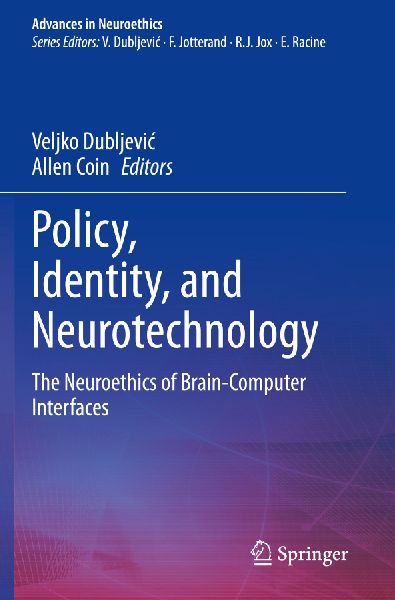
Policy, Identity, and Neurotechnology
Veljko Dubljevi¿ (Hrsg.)
Kartoniert, Englisch, 2 Ausgaben
ab 117,69 €
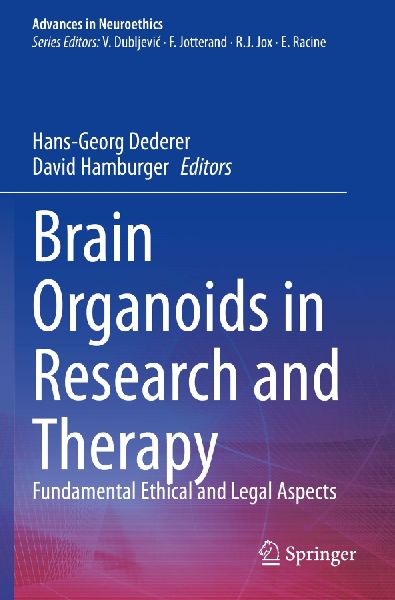
Brain Organoids in Research and Therapy
Hans-Georg Dederer (Hrsg.)
Kartoniert, Englisch, 2 Ausgaben
ab 117,69 €
Ähnliche Titel
A Phenomenological Interpretation of Schizophrenia
Pierluigi Parisi
Kartoniert, Englisch, 2 Ausgaben
ab 85,59 €
Bewertungen
Zu diesem Titel gibt es noch keine Bewertung. Bewerten kann, wer ihn bei uns gekauft hat.
So prüfen wir Bewertungen
Eine Bewertung kann bei uns nur abgeben, wer den Titel über sein Kundenkonto bei uns gekauft hat. Jede Bewertung ist fest mit der zugehörigen Bestellung verknüpft; anders kommt sie technisch gar nicht zustande. Deshalb trägt jede angezeigte Bewertung den Hinweis „Verifizierter Kauf". Wir zeigen positive wie negative Bewertungen und löschen nur bei Rechtsverstößen. Für Bewertungen gibt es keine Gegenleistung.
165,84 €Voraussichtlich 3. bis 7. Dez.