
Buch-OWLOnline-Buchhandel

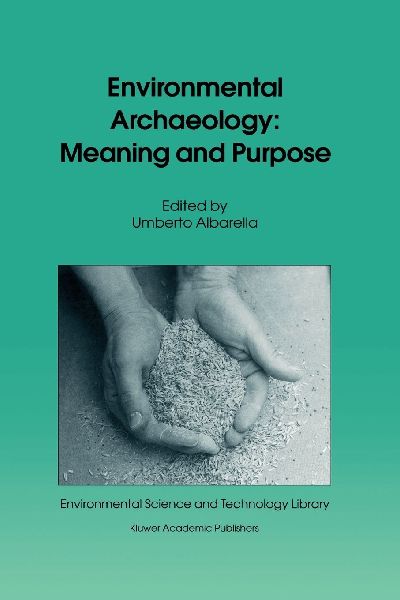
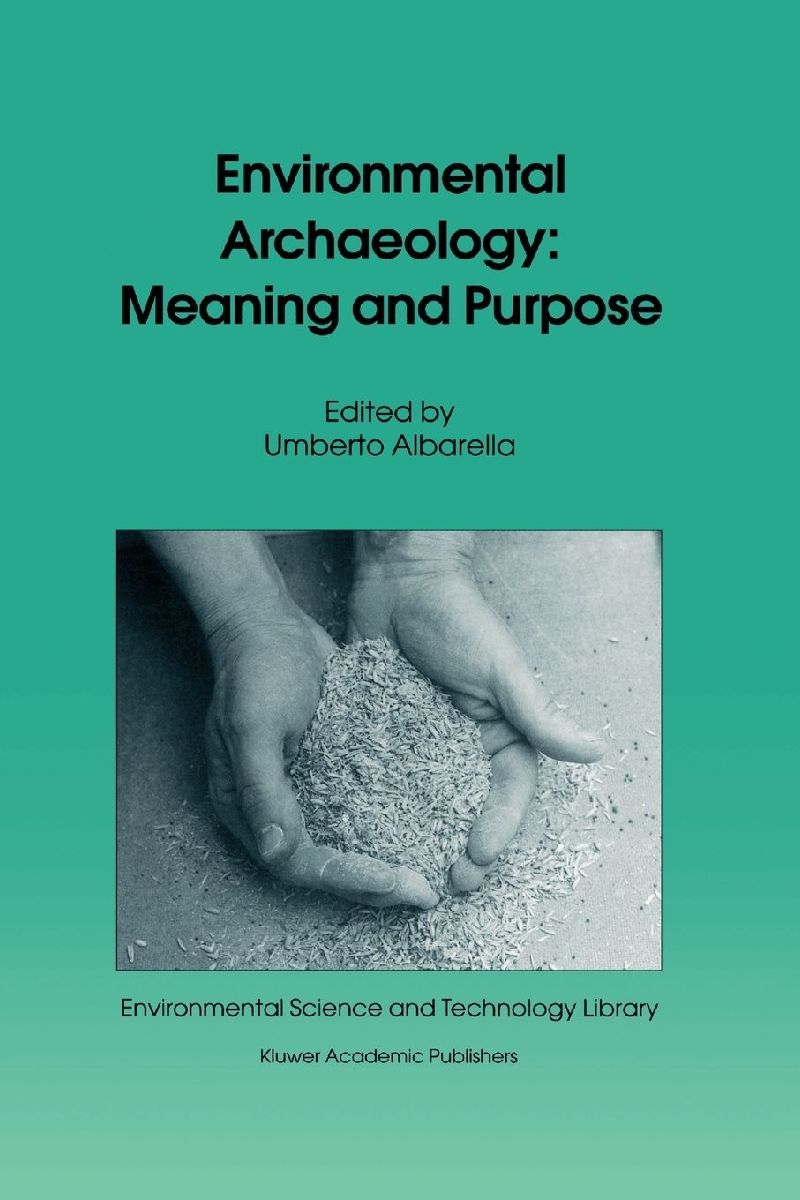
Environmental Archaeology: Meaning and Purpose

von Umberto Albarella (Hrsg.)

Herausgegeben von: Umberto Albarella

Aus der Reihe Environmental Science and Technology Library

Einband
Kartoniert
Seiten
336
Sprache
Englisch
Erschienen
Dezember 2010
Verlag
Springer

Buchbeschreibung

Despite the fact that the human life of the past cannot be understood without taking into account its ecological relationships, environmental studies are often marginalised in archaeology.

This is the first book that, by discussing the meaning and purpose we give to the expression `environmental archaeology', investigates the reasons for such a problem.

Ganze Beschreibung lesenWeniger anzeigen

This is achieved through the use of theoretical considerations and the aid of a number of case studies, which, by taking us from Anglo-Saxon England to pre-Columbian Venezuela, and from Classical Greece to late Antique Egypt, emphasise the potential of an integrated approach.

The book is written by archaeologists with different backgrounds and is addressed to all researchers who care about the past relationship between people and the rest of Nature. Despite the complexity of some of the issues tackled, the book is written in an accessible manner and should be of interest to all students who want to understand the essence of archaeology beyond the boundary of the individual sub-disciplines.

Inhaltsverzeichnis

  • Preface
  • U. Albarella
  • Introduction
  • Exploring the real Nature of environmental archaeology
  • An introduction
  • U. Albarella
  • Meaning and Purpose
  • Economic prehistory or environmental archaeology? On gaining a sense of identity
Ganzes Inhaltsverzeichnis anzeigen (64 Einträge)Weniger anzeigen
  • T. O'Connor
  • Re-inventing environmental archaeology
  • A comment on `Economic prehistory or environmental archaeology? On gaining a sense of identity'
  • Y. Hamilakis
  • Whose dichotomy is it anyway? A reply to Hamilakis
  • T. O'Connor
  • Environmental archaeology is not human palaeoecology
  • J. Driver
  • Environmental archaeology is dead: long live bioarchaeology, geoarchaeology and human palaeoecology
  • A comment on `Environmental archaeology is not human palaeoecology'
  • K. Thomas
  • A reply to Thomas
  • J. Driver
  • The poverty of empiricism and the tyranny of theory
  • S. Roskams, T. Saunders
  • Commercialising the palaeoenvironment
  • Developer funding and environmental archaeology
  • G. Hughes, A. Hammon
  • The responsibilities of archaeologists to nature conservation
  • R. Roseff
  • Sustainability and the rate of change
  • A comment on `The responsibilities of archaeologists to nature conservation'
  • P. Graves-Brown
  • A reply to Graves-Brown
  • R. Roseff
  • What is geoarchaeology? Re-examining the relationship between archaeology and earth sciences
  • M. Canti
  • Is human osteoarchaeology environmental archaeology? J.S. Derevenski
  • Case Studies
  • The rhetoric of people and grains
  • D. Gheorghiu
  • A match made in heaven or a marriage of convenience? The problems and rewards of integrating palaeoecological and archaeological data
  • C. Loveluck, K. Dobney
  • Historical archaeology and new directions in environmental archaeology
  • Examples from Neolithic Scandinavia and Venezuela (400-1400 AD)
  • S. Koerner, R. Gassón
  • Can't seethe wood for the trees
  • Interpreting woodland fire history from microscopic charcoal
  • J. Moore
  • The potential for using religious belief to derive environmental information on past societies, with a case study on the environment of Attica
  • R. Shiel
  • Reconstructing house activity areas
  • H. Smith, P. Marshall, M.P. Pearson
  • Environmental archaeology and the interpretation of social space
  • A comment on `Reconstructing house activity areas'
  • K. Milek
  • When method meets theory
  • The use and misuse of cereal producer/consumer models in archaeobotany
  • W. Smith
  • Producers and consumers in archaeobotany
  • A comment on `When method meets theory: the use and misuse of cereal producer/consumer models in archaeobotany'
  • C. Bakels
  • Conclusions
  • Agendas for environmental archaeology
  • G. Barker
  • Index

Details

Erscheinungstermin
Dezember 2010
Kategorie
Fremdsprachige Bücher
Einband
Kartoniert
Seiten
336
Sprache
Englisch
Verlag
Springer
Reihe
Environmental Science and Technology Library
Format
23,4 × 15,6 cm
Dicke
1,9 cm
Gewicht
512 g
EAN / ISBN-13
9789048156344
Maßstabsgetreu: Deckel und Buchrücken neben einer Hand (18 cm).
Versand und Rückgabe

Standardversand: 1 bis 3 Werktage, 3,99 €, kostenlos ab 35 €

Liefergebiet: Deutschland

Rücksendung: 14 Tage Widerrufsrecht. Bei einem Widerruf tragen Sie die Kosten der Rücksendung. Bei einer Falschlieferung oder einem Fehler von uns erstatten wir Ihnen das Rückporto. Den Widerruf erklären Sie über den Knopf „Vertrag widerrufen“ im Fuß der Seite.

Hersteller und ProduktsicherheitSpringer Nature Customer Service Center GmbH
Springer Nature Customer Service Center GmbH
Europaplatz 3
69115 Heidelberg
Deutschland
ProductSafety@springernature.com

Mehr aus der Reihe Environmental Science and Technology Library

Ähnliche Titel

Bewertungen

Zu diesem Titel gibt es noch keine Bewertung. Bewerten kann, wer ihn bei uns gekauft hat.

So prüfen wir Bewertungen
Eine Bewertung kann bei uns nur abgeben, wer den Titel über sein Kundenkonto bei uns gekauft hat. Jede Bewertung ist fest mit der zugehörigen Bestellung verknüpft; anders kommt sie technisch gar nicht zustande. Deshalb trägt jede angezeigte Bewertung den Hinweis „Verifizierter Kauf". Wir zeigen positive wie negative Bewertungen und löschen nur bei Rechtsverstößen. Für Bewertungen gibt es keine Gegenleistung.
160,49 €Voraussichtlich 1. bis 3. Dez.

Inhalte ab 18

Cover von Titeln für Erwachsene, etwa erotische Romane, Manga oder Comics, bleiben unscharf, bis Sie bestätigen. Die Bestätigung gilt für alle Seiten und Tabs, bis Sie den Browser schließen.

Zurück zum Katalog