Buch-OWLOnline-Buchhandel

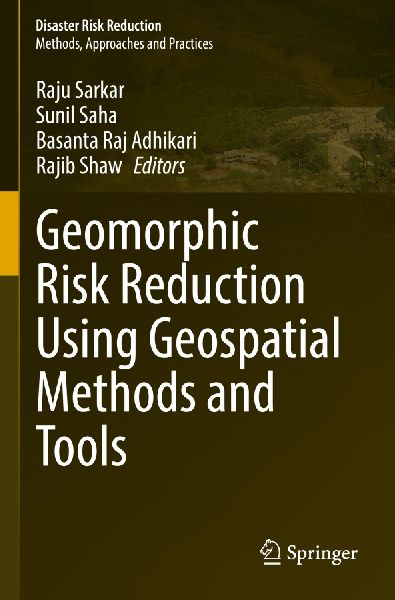
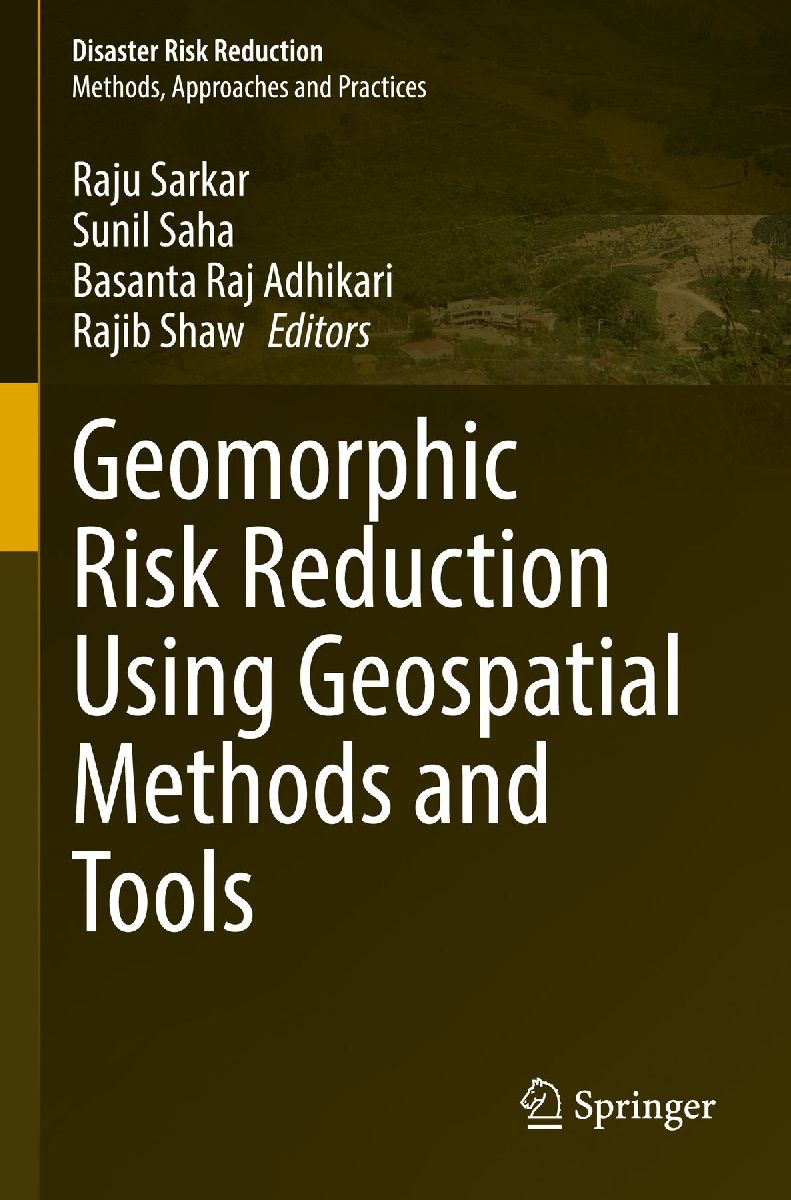
Geomorphic Risk Reduction Using Geospatial Methods and Tools

von Raju Sarkar (Hrsg.)

Herausgegeben von: Raju Sarkar, Herausgegeben von: Sunil Saha, Herausgegeben von: Basanta Raj Adhikari, und weitere

Aus der Reihe Disaster Risk Reduction

Einband
Kartoniert
Seiten
344
Sprache
Englisch
Erschienen
Mai 2025
Verlag
Springer

Buchbeschreibung

This book explores the use of advanced geospatial techniques in geomorphic hazards modelling and risk reduction.

It also compares the accuracy of traditional statistical methods and advanced machine learning methods and addresses the different ways to reduce the impact of geomorphic hazards.

Ganze Beschreibung lesenWeniger anzeigen

In recent years with the development of human infrastructures, geomorphic hazards are gradually increasing, which include landslides, flood and soil erosion, among others. They cause huge loss of human property and lives. Especially in mountainous, coastal, arid and semi-arid regions, these natural hazards are the main barriers for economic development.

Furthermore, human pressure and specific human actions such as deforestation, inappropriate land use and farming have increased the danger of natural disasters and degraded the natural environment, making it more difficult for environmental planners and policymakers to develop appropriate long-term sustainability plans.

The most challenging task is to develop a sophisticated approach for continuous inspection and resolution of environmental problems for researchers and scientists. However, in the past several decades, geospatial technology has undergone dramatic advances, opening up new opportunities for handling environmental challenges in a more comprehensive manner.

With the help of geographic information system (GIS) tools, high and moderate resolution remote sensing information, such as visible imaging, synthetic aperture radar, global navigation satellite systems, light detection and ranging, Quickbird, Worldview 3, LiDAR, SPOT 5, Google Earth Engine and others deliver state-of-the-art investigations in the identification of multiple natural hazards.

For a thorough examination, advanced computer approaches focusing on cutting-edge data processing, machine learning and deep learning may be employed. To detect and manage various geomorphic hazards and their impact, several models with a specific emphasis on natural resources and the environment may be created.

Inhaltsverzeichnis

  • Landslide Susceptibility Assessment Based on Machine Learning Techniques
  • Measuring landslide susceptibility in Jakholi region of Garhwal Himalaya applying novel ensembles of statistical and machine learning algorithms
  • Landslide Susceptibility Mapping using GIS-based Frequency Ratio, Shannon Entropy, Information Value and Weight-of-Evidence approaches in part of Kullu district, Himachal Pradesh, India
  • An advanced hybrid machine learning technique for assessing the susceptibility to landslides in the Meenachil river basin of Kerala, India
  • Novel ensemble of M5P and Deep learning neural network for predicting landslide susceptibility: A cross-validation approach
  • Artificial neural network ensemble with General linear model for modeling the Landslide Susceptibility in Mirik region of West Bengal, India
  • Modeling gully erosion susceptibility using advanced machine learning method in Pathro River Basin, India
  • Quantitative Assessment of Interferometric Synthetic Aperture 2 Radar(INSAR) for Landslide Monitoring and Mitigation
Ganzes Inhaltsverzeichnis anzeigen (16 Einträge)Weniger anzeigen
  • Assessment of Landslide Vulnerability using Statistical and Machine Learning Methods in Bageshwar District of Uttarakhand, India
  • Assessing the shifting of the River Ganga along Malda District of West Bengal, India
  • An ensemble of J48 Decision Tree with AdaBoost, and Bagging for flood susceptibility mapping in the Sundarban of West Bengal, India
  • Assessment of mouza level flood resilience in lower part of Mayurakshi River basin, Eastern India
  • Spatial flashflood modeling in Beas River Basin of Himachal Pradesh, India using GIS-based machine learning algorithms
  • Geospatial study of river shifting and erosion deposition phenomenon along a selected stretch of River Damodar, West Bengal, India
  • An Evaluation of Hydrological Modeling Using CN Method in Ungauged Barsa River Basin of Pasakha, Bhutan
  • The Adoption of Random Forest (RF) and Support Vector Machine (SVM) with Cat Swarm Optimization (CSO) to Predict the Soil Liquefaction

Details

Erscheinungstermin
Mai 2025
Kategorie
Fremdsprachige Bücher
Einband
Kartoniert
Seiten
344
Sprache
Englisch
Verlag
Springer
Reihe
Disaster Risk Reduction
Format
23,5 × 15,5 cm
Dicke
1,9 cm
Gewicht
522 g
EAN / ISBN-13
9789819977093
Maßstabsgetreu: Deckel und Buchrücken neben einer Hand (18 cm).
Versand und Rückgabe

Standardversand: 1 bis 3 Werktage, 3,99 €, kostenlos ab 35 €

Liefergebiet: Deutschland

Rücksendung: 14 Tage Widerrufsrecht. Bei einem Widerruf tragen Sie die Kosten der Rücksendung. Bei einer Falschlieferung oder einem Fehler von uns erstatten wir Ihnen das Rückporto. Den Widerruf erklären Sie über den Knopf „Vertrag widerrufen“ im Fuß der Seite.

Hersteller und ProduktsicherheitSpringer Nature Customer Service Center GmbH
Springer Nature Customer Service Center GmbH
Europaplatz 3
69115 Heidelberg
Deutschland
ProductSafety@springernature.com

Mehr von Raju Sarkar

Mehr aus der Reihe Disaster Risk Reduction

Ähnliche Titel

Bewertungen

Zu diesem Titel gibt es noch keine Bewertung. Bewerten kann, wer ihn bei uns gekauft hat.
So prüfen wir Bewertungen
Eine Bewertung kann bei uns nur abgeben, wer den Titel über sein Kundenkonto bei uns gekauft hat. Jede Bewertung ist fest mit der zugehörigen Bestellung verknüpft; anders kommt sie technisch gar nicht zustande. Deshalb trägt jede angezeigte Bewertung den Hinweis „Verifizierter Kauf". Wir zeigen positive wie negative Bewertungen und löschen nur bei Rechtsverstößen. Für Bewertungen gibt es keine Gegenleistung.
117,69 €Voraussichtlich 1. bis 3. Dez.

Inhalte ab 18

Cover von Titeln für Erwachsene, etwa erotische Romane, Manga oder Comics, bleiben unscharf, bis Sie bestätigen. Die Bestätigung gilt für alle Seiten und Tabs, bis Sie den Browser schließen.

Zurück zum Katalog