Buch-OWLOnline-Buchhandel

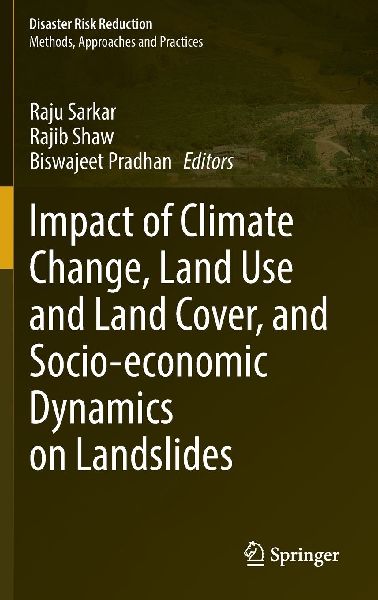
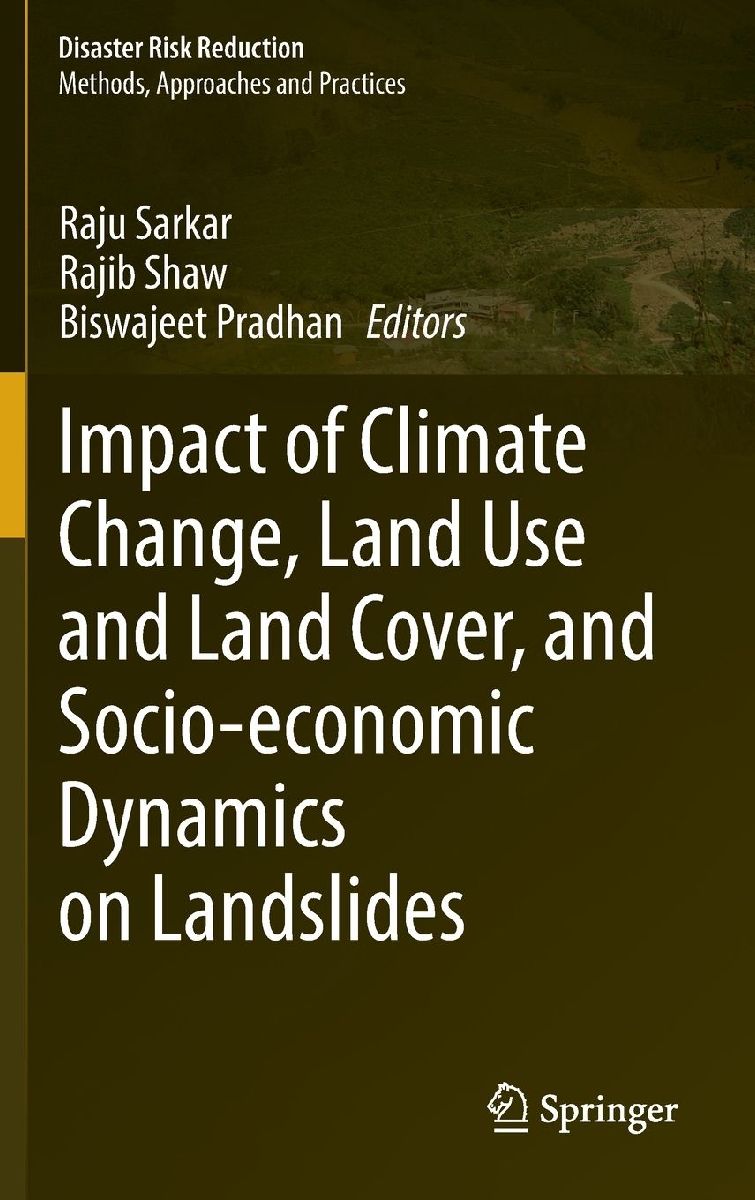
Impact of Climate Change, Land Use and Land Cover, and Socio-economic Dynamics on Landslides

von Raju Sarkar (Hrsg.)

Herausgegeben von: Raju Sarkar, Herausgegeben von: Rajib Shaw, Herausgegeben von: Biswajeet Pradhan

Aus der Reihe Disaster Risk Reduction

Einband
Gebunden
Seiten
512
Sprache
Englisch
Erschienen
Januar 2022
Verlag
Springer

Buchbeschreibung

This book discusses the impact of climate change, land use and land cover, and socio-economic dynamics on landslides in Asian countries.

Scholars recently have brought about a shift in their focus regarding triggering factors for landslides, from rainfall or earthquake to claiming rapid urbanization, extreme population pressure, improper land use planning, illegal hill cutting for settlements and indiscriminate deforestation.

Ganze Beschreibung lesenWeniger anzeigen

This suggests that the occurrence or probabilities of landslides are shaped by both climate-related and non-climate-related anthropogenic factors.

Among these issues, land use and land cover change or improper land use planning is one of the key factors. Further climate change shapes the rainfall pattern and intensity in different parts of the world, and consequently rainfall-triggered landslides have increased. These changes cause socio-economic changes. Conversely, socio-economic and lifestyle changes enhance inappropriate land use and climate change.

All these changes in land use, climate and socio-economic aspects are dynamics in nature and shape landslide risks in Asian countries, where they are given serious attention by governments, disaster management professionals, researchers and academicians.

This book comprises 21 chapters divided into three major sections highlighting the effect of climate change on landslide incidence with the influence on vegetation and socio-economic aspects. The sections address how climate change and extreme events have triggered landslides. The advances in geospatial techniques with the focus on land use and land cover change along with the effect on socio-economic aspects are also explored.

Inhaltsverzeichnis

  • Association of climate change to landslide vulnerability and occurrences in Bhutan
  • A framework for assessing landslide risk in hilly terrains
  • Landslide dam outburst in Myagdi, Nepal: early warning and preparedness key to minimizing disaster
  • Landslide risk along the Sichuan-Tibetan railway
  • Landslide, agricultural vulnerability and community initiatives: a case study in south-east part of Bangladesh
  • Landslide, land-cover and land-use changes and its impacts in Nepal
  • Comparison between two different methods applied to define rainfall thresholds for landslide forecasting in Idukki district of Kerala, India
  • Prediction of amount of rainfall on landslide day using artificial neural network for Bhutan
Ganzes Inhaltsverzeichnis anzeigen (22 Einträge)Weniger anzeigen
  • Measuring landslide susceptibility of Phuentsholling, Bhutan using novel ensemble machine learning methods
  • Application of RBF and MLP neural networks integrating with rotation forest in modelling landslide susceptibility of Sampheling, Bhutan
  • Use of Probabilistically Generated Scenario Earthquakes in Landslide Hazard Zonation: A Semi-Qualitative Approach
  • Predicting the landslide susceptibility using ensembles of Bagging with RF and REP
  • Tree in Logchina, Bhutan
  • Assessing social vulnerability to landslide disasters in Chittagong City, Bangladesh
  • The vulnerability of human population to landslide disaster: A case study of Sikkim Himalayas
  • Integration of Socio-economic dynamics and Communities' Resilience to Landslides in Swat valley, Pakistan
  • Refugee Camps at Landslide Risk: Studying Mitigation Measures
  • Introducing Japanese Landslide Warning System to Sri Lanka: Analyzing the Social Differences for Successful Technology Transfer
  • Land Cover Changes and Landslide Risk in Sri Lanka
  • Urban-rural connectivity for forest management and landslide risk reduction: case of Japan
  • Slope stabilization using soil nails, practice and construction realities: a case study on the construction of soil nailed wall along Phuentsholing-Thimphu highway, Bhutan
  • Cross cutting issues in landslide hazard of Japan: forest management, climate change, demographic change, and aging society

Details

Erscheinungstermin
Januar 2022
Kategorie
Fremdsprachige Bücher
Einband
Gebunden
Seiten
512
Sprache
Englisch
Verlag
Springer
Reihe
Disaster Risk Reduction
Format
24,1 × 16,0 cm
Dicke
3,3 cm
Gewicht
876 g
EAN / ISBN-13
9789811673139
Maßstabsgetreu: Deckel und Buchrücken neben einer Hand (18 cm).
Versand und Rückgabe

Standardversand: 1 bis 3 Werktage, 3,99 €, kostenlos ab 35 €

Liefergebiet: Deutschland

Rücksendung: 14 Tage Widerrufsrecht. Bei einem Widerruf tragen Sie die Kosten der Rücksendung. Bei einer Falschlieferung oder einem Fehler von uns erstatten wir Ihnen das Rückporto. Den Widerruf erklären Sie über den Knopf „Vertrag widerrufen“ im Fuß der Seite.

Hersteller und ProduktsicherheitSpringer Nature Customer Service Center GmbH
Springer Nature Customer Service Center GmbH
Europaplatz 3
69115 Heidelberg
Deutschland
ProductSafety@springernature.com

Mehr von Raju Sarkar

Mehr aus der Reihe Disaster Risk Reduction

Ähnliche Titel

Bewertungen

Zu diesem Titel gibt es noch keine Bewertung. Bewerten kann, wer ihn bei uns gekauft hat.
So prüfen wir Bewertungen
Eine Bewertung kann bei uns nur abgeben, wer den Titel über sein Kundenkonto bei uns gekauft hat. Jede Bewertung ist fest mit der zugehörigen Bestellung verknüpft; anders kommt sie technisch gar nicht zustande. Deshalb trägt jede angezeigte Bewertung den Hinweis „Verifizierter Kauf". Wir zeigen positive wie negative Bewertungen und löschen nur bei Rechtsverstößen. Für Bewertungen gibt es keine Gegenleistung.
160,49 €Voraussichtlich 7. bis 9. Dez.

Inhalte ab 18

Cover von Titeln für Erwachsene, etwa erotische Romane, Manga oder Comics, bleiben unscharf, bis Sie bestätigen. Die Bestätigung gilt für alle Seiten und Tabs, bis Sie den Browser schließen.

Zurück zum Katalog