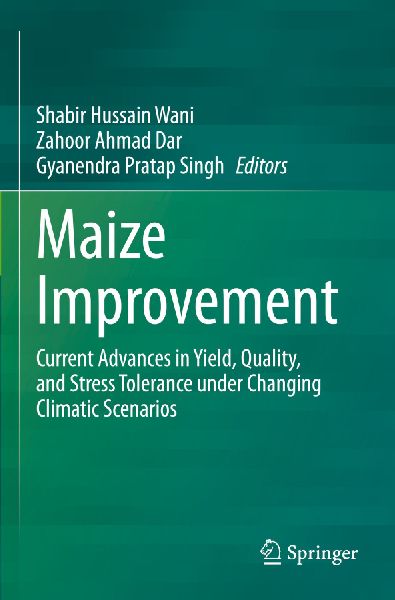
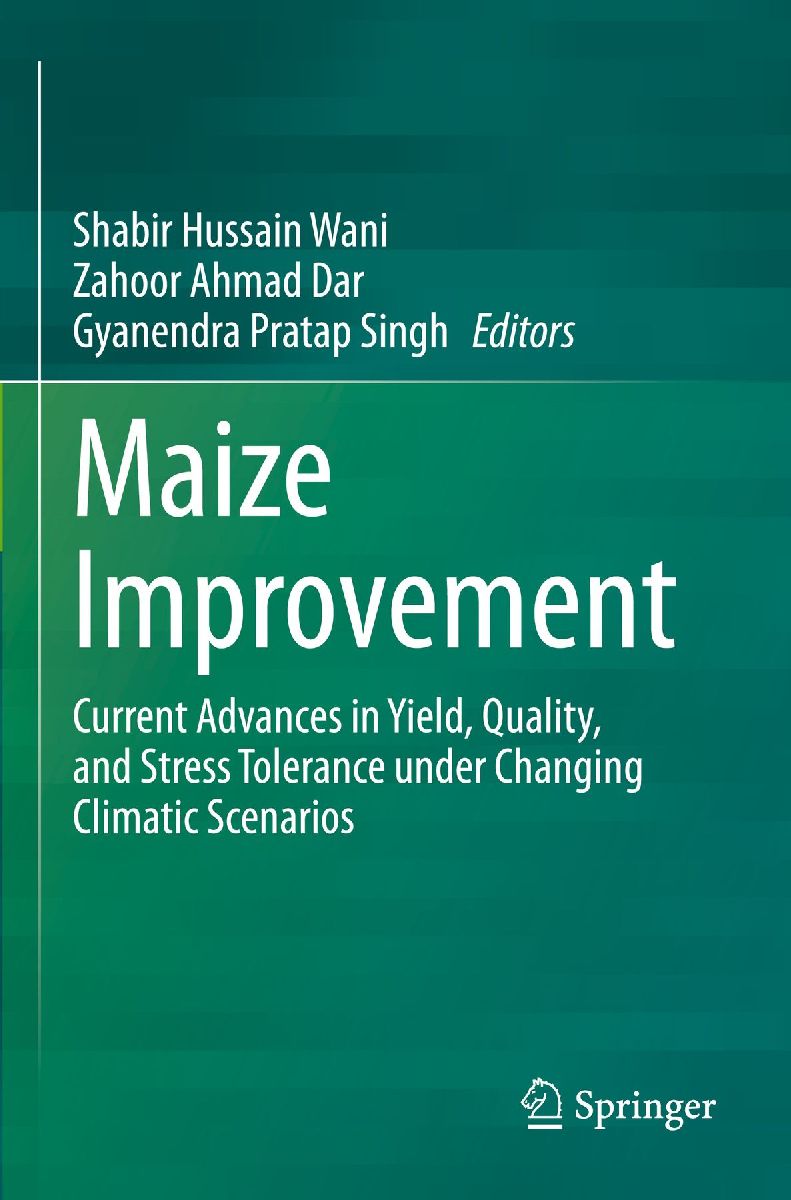
Maize Improvement
Current Advances in Yield, Quality, and Stress Tolerance under Changing Climatic Scenarios
von Shabir Hussain Wani (Hrsg.)
Herausgegeben von: Shabir Hussain Wani, Herausgegeben von: Zahoor Ahmad Dar, Herausgegeben von: Gyanendra Pratap Singh
- Einband
- Kartoniert
- Seiten
- 340
- Sprache
- Englisch
- Erschienen
- März 2024
- Verlag
- Springer
Buchbeschreibung
Maize is one of the most generally grown cereal crops at global level, followed by wheat and rice.
Maize is the major crop in China both in terms of yield and acreage. In 2012, worldwide maize production was about 840 million tons. Maize has long been a staple food of most of the global population (particularly in South America and Africa) and a key nutrient resource for animal feed and for food industrial materials.
Ganze Beschreibung lesenWeniger anzeigen
Maize belts vary from the latitude 58° north to the latitude 40° south, and maize ripens every month of the year. Abiotic and biotic stresses are common in maize belts worldwide. Abiotic stresses (chiefly drought, salinity, and extreme temperatures), together with biotic stresses (primarily fungi, viruses, and pests), negatively affect maize growth, development, production and productivity.
In the recent past, intense droughts, waterlogging, and extreme temperatures have relentlessly affected maize growth and yield. In China, 60% of the maize planting area is prone to drought, and the resultant yield loss is 20%-30% per year; in India, 25%-30% of the maize yield is lost as a result of waterlogging each year.
The biotic stresses on maize are chiefly pathogens (fungal, bacterial, and viral), and the consequential syndromes, like ear/stalk rot, rough dwarf disease, and northern leaf blight, are widespread and result in grave damage. Roughly 10% of the global maize yield is lost each year as a result of biotic stresses.
For example, the European corn borer [ECB, Ostrinianubilalis (Hübner)] causes yield losses of up to 2000 million dollars annually in the USA alone in the northern regions of China, the maize yield loss reaches 50% during years when maize badly affected by northern leaf blight. In addition, abiotic and biotic stresses time and again are present at the same time and rigorously influence maize production.
To fulfill requirements of each maize-growing situation and to tackle the above mentions stresses in an effective way sensibly designed multidisciplinary strategy for developing suitable varieties for each of these stresses has been attempted during the last decade. Genomics is a field of supreme significance for elucidating the genetic architecture of complex quantitative traits and characterizing germplasm collections to achieve precise and specific manipulation of desirable alleles/genes.
Advances in genotyping technologies and high throughput phenomics approaches have resulted in accelerated crop improvement like genomic selection, speed breeding, particularly in maize. Molecular breeding tools like collaborating all omics, has led to the development of maize genotypes having higher yields, improved quality and resilience to biotic and abiotic stresses.
Through this book, we bring into one volume the various important aspects of maize improvement and the recent technological advances in development of maize genotypes with high yield, high quality and resilience to biotic and abiotic stresses
Inhaltsverzeichnis
- 1. Maize Genome Genome diversity in Maize
- 2. Maize biodiversity: state of the art and future perspective for breeding
- 3. European maize landraces made accessible for plant breeding and genome-based studies
- 4.Maize genome analysis to elucidate evolution with time
- 5. QTL mapping for high temperature stress in Maize
- 6. QTL mapping advances for European Corn Borer Resistance in maize
- 7. GWAS for maize yield Improvement
- 8. Transcriptional Factor; a molecular switch to adapt Abiotic Stress mechanism in maize
Ganzes Inhaltsverzeichnis anzeigen (24 Einträge)Weniger anzeigen
- 9. Gene expression Divergence in Maize
- 10. Physiological and Biochemical Responses of Maize under Drought Stress
- 11. Fungal Pathogen Induced Modulation of Structural and Functional Proteins in Zea mays
- 12.Maize improvement using recent Omics approaches
- 13. Molecular Genetic Approaches to Maize Improvement
- 14. Genomic selection in maize improvement
- 15. Genetic engineering for improvement of qualitative and quantitative traits in Maize
- 16. Potential of phenomics in climate resilient maize breeding
- 17. Current Genomic Approaches for biotic stress tolerance in Maize
- 18. Genomics approaches for ascertaining Drought stress responses in Maize
- 19. Genotyping advances for Heat stress Tolerance in Maize
- 20. Biofortification in Maize through Marker Assisted Breeding
- 21. Molecular breeding approaches to improve NUE in Maize
- 22. Molecular breeding (QTL mapping) for Phosphorus Use Efficiency in Maize
- 23. Maize improvement for water use efficiency: Advances in Recent molecular marker technology
- 24. Genome editing Advances for Maize Improvement
Details
- Erscheinungstermin
- März 2024
- Kategorie
- Fremdsprachige Bücher
- Einband
- Kartoniert
- Seiten
- 340
- Sprache
- Englisch
- Verlag
- Springer
- Format
- 23,5 × 15,5 cm
- Dicke
- 1,9 cm
- Gewicht
- 517 g
- EAN / ISBN-13
- 9783031216428
Über Shabir Hussain Wani (Hrsg.)
Dr. Shabir Hussain Wani is senior Assistant professor at Mountain Research Centre for Field Crops, Khudwani -192101, Sher-e-Kashmir University of Agricultural Sciences and Technology of Kashmir, J&K, India.
Mehr über Shabir Hussain Wani (Hrsg.)Weniger anzeigen
He received Ph. D. degree in plant breeding and genetics on "transgenic rice for abiotic stress tolerance" from the Punjab Agricultural University Ludhiana, India. After obtaining his Ph. D. he worked as research associate in the Biotechnology Laboratory, Central Institute of Temperate Horticulture (ICAR), Srinagar, India. He then joined the Krishi Vigyan Kendra (Farm Science Centre) as program coordinator at Senapati, Manipur, India. He teaches courses related to plant breeding, seed science and technology, and stress breeding and has published more than 100 papers/chapters in journals and books of international and national repute. He served as guest editor and reviews editor for journal Frontier in Plant Science (2015-2018). He has also edited several books on current topics in crop improvement for abiotic stress tolerance published by Springer Nature and CRC press USA. His Ph. D. research fetched first prize in the North Zone Competition, at national level, in India. He was awarded Young Scientist Award from the Society for Promotion of Plant Sciences, Jaipur, India, in 2009. He is a fellow of the Society for Plant Research, India. Recently he also received Young Scientist Award (Agriculture) 2015 from Society for Plant Research, Meerut, India. He also served as visiting Scientist at Department of Plant Soil and Microbial Sciences, Michigan State University, USA under the UGC Raman Post Doctoral Fellowship programme. Currently, he is in charge of Wheat improvement programme at MRCFC Khudwani SKAUST Kashmir.
Versand und Rückgabe
Standardversand: 1 bis 3 Werktage, 3,99 €, kostenlos ab 35 €
Liefergebiet: Deutschland
Rücksendung: 14 Tage Widerrufsrecht. Bei einem Widerruf tragen Sie die Kosten der Rücksendung. Bei einer Falschlieferung oder einem Fehler von uns erstatten wir Ihnen das Rückporto. Den Widerruf erklären Sie über den Knopf „Vertrag widerrufen“ im Fuß der Seite.
Hersteller und ProduktsicherheitSpringer Nature Customer Service Center GmbH
Springer Nature Customer Service Center GmbH
Europaplatz 3
69115 Heidelberg
Deutschland
ProductSafety@springernature.com
Mehr von Shabir Hussain Wani
Disease Resistance in Crop Plants
Shabir Hussain Wani (Hrsg.)
Gebunden, Englisch, 2 Ausgaben
ab 181,89 €
Ähnliche Titel
Advances in Research on Potato Production
Shashank Shekhar Solankey (Hrsg.)
Gebunden, Englisch, 2 Ausgaben
ab 171,19 €
Insecticides Design Using Advanced Technologies
Isaac Ishaaya (Hrsg.)
Gebunden, Englisch, 2 Ausgaben
ab 160,49 €
Nutrient Use Efficiency: from Basics to Advances
Amitava Rakshit (Hrsg.)
Gebunden, Englisch, 2 Ausgaben
ab 160,49 €
Bewertungen
Zu diesem Titel gibt es noch keine Bewertung. Bewerten kann, wer ihn bei uns gekauft hat.
So prüfen wir Bewertungen
Eine Bewertung kann bei uns nur abgeben, wer den Titel über sein Kundenkonto bei uns gekauft hat. Jede Bewertung ist fest mit der zugehörigen Bestellung verknüpft; anders kommt sie technisch gar nicht zustande. Deshalb trägt jede angezeigte Bewertung den Hinweis „Verifizierter Kauf". Wir zeigen positive wie negative Bewertungen und löschen nur bei Rechtsverstößen. Für Bewertungen gibt es keine Gegenleistung.
192,59 €Voraussichtlich 1. bis 3. Dez.