How Research Can Stimulate the Development of Commercial Biological Control Against Plant Diseases
Antonieta de Cal (Hrsg.)
Gebunden, Englisch, 2 Ausgaben
ab 160,49 €
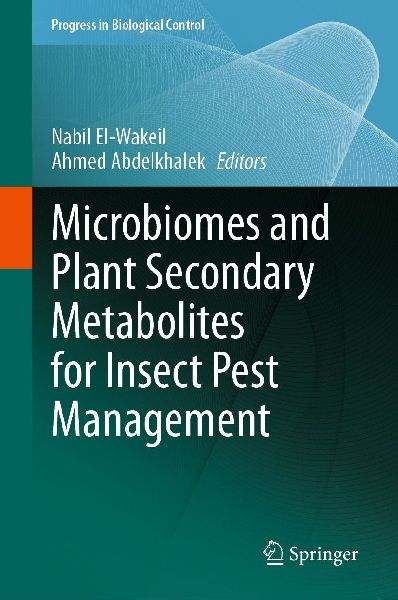
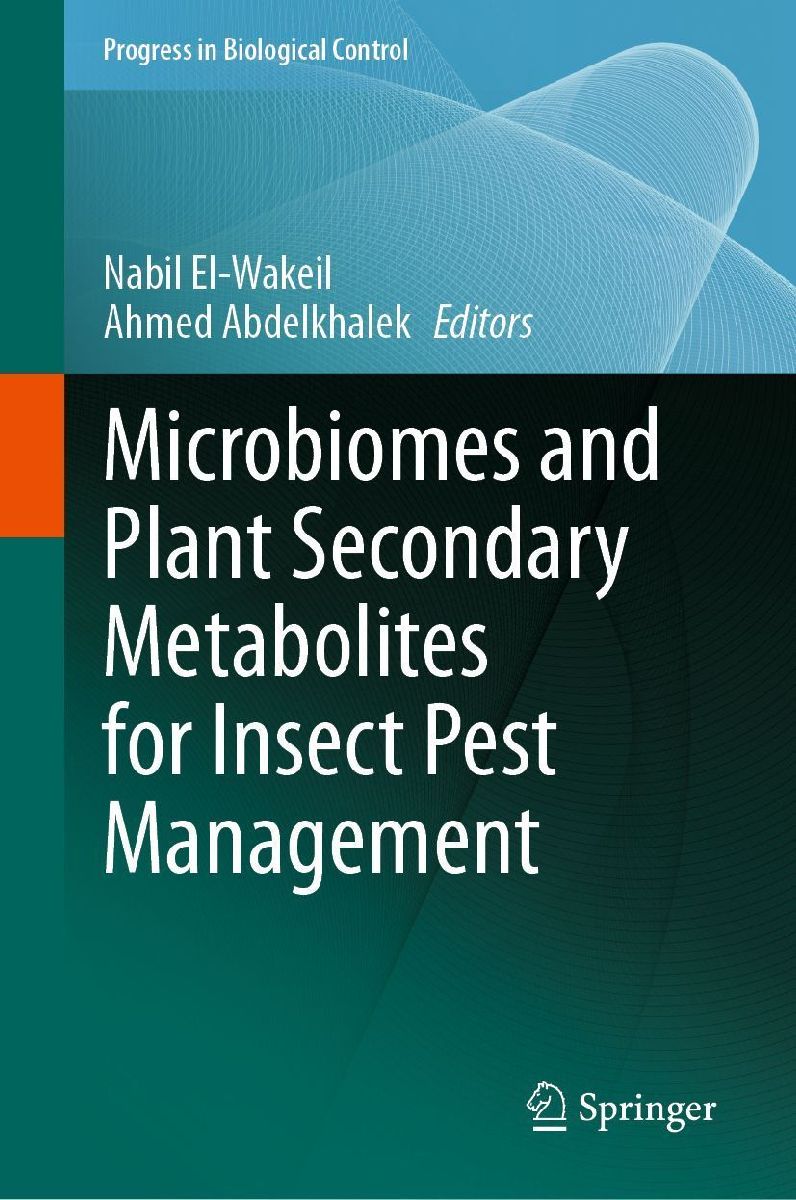
Herausgegeben von: Nabil El-Wakeil, Herausgegeben von: Ahmed Abdelkhalek
Aus der Reihe Progress in Biological Control
This comprehensive volume explores sustainable crop protection through the intricate relationships between plants, their chemistry, and microbial communities.
It presents advances in understanding plant defense mechanisms against insect pests, offering a roadmap toward reducing chemical pesticide dependence.
The book examines the dual defense systems plants employ against insect pests. It explores how secondary metabolites, including alkaloids, terpenoids, and flavonoids, function as natural deterrents while attracting beneficial organisms like parasitoids and pollinators.
It also investigates herbivore-associated bacteria in plant-insect interactions, revealing how host plants shape gut bacterial communities of damaging insects such as aphids, beetles, weevils, and bugs.
Unlike conventional texts treating plant chemistry and microbiology separately, this volume integrates both perspectives for a holistic understanding of crop immunity. It bridges fundamental plant science and practical applications, demonstrating how specialized metabolism and phytomicrobiomes work together to create resilient agricultural systems.
The focus on symbiotic relationships and their manipulation for pest suppression represents a paradigm shift in sustainable agriculture.
Readers will discover how secondary metabolic compounds provide natural protection against serious insect pests and the mechanisms by which plants influence insect gut bacteria. The book presents strategies for enhancing crop resistance through manipulation of plant secondary metabolism, along with practical applications of phytomicrobiomes for improving soil health, plant vigor, and pest suppression. It also addresses the ecological roles of beneficial organisms in creating balanced agricultural ecosystems.
This reference serves academics and researchers in entomology, plant science, and agricultural biotechnology seeking cutting-edge knowledge for sustainable pest management. Educators will find it valuable for teaching advanced concepts in plant defense mechanisms, chemical ecology, and integrated pest management at graduate and postgraduate levels.
Agricultural practitioners, extension specialists, and policymakers will discover evidence-based approaches to reducing pesticide side effects while maintaining productive farming systems that protect human health, animals, and beneficial insects like bees.
Prof. Dr. Nabil El-Wakeil, he is currently working as Professor of Biological Control of Insects in King Faisal University in Saudi Arabia. He has over 35 years of experience in the field of Entomology and Biological Control.
He began his professional career at the National Research Centre in Cairo in 1993. He obtained his Ph. D. in Agricultural Sciences (Biological Control of Insects) from Georg August- Göttingen University in Germany in 2003 and has been working as a Professor of Biological Control of insect pests since June 2013. Dr. El-Wakeil has extensive research and academic experience, including work and teaching at significant international universities such as Martin Luther University in Germany and the Texas A&M University - USA. He is currently working as a Professor of Entomology and Biological Control at King Faisal University in the Kingdom of Saudi Arabia. He has participated in international projects in the field of biological control and studying the impact of genetically engineered crops on natural enemies. His distinguished scientific contributions include nearly 60 research papers published in international journals, and he has co-authored 10 books on integrated pest management for strategic crops such as cotton, wheat, corn, grapes, and potatoes.
His Most Prominent Areas of Expertise Include:
Mass rearing and production of natural enemies (especially the parasitoid Trichogramma).
Studying the behavior of insect parasitoids and their interaction with plant hosts.
Studying the impact of genetically engineered plants on insects and natural enemies.
Using predators (such as lady beetle and aphid lions), parasitoids, and entomopathogenic nematodes in biological control.
Studying the effect of plant morphological and chemical characteristics on the behavior of natural enemies.
Prof. Dr. Ahmed Abdelkhalek is Professor of Molecular Plant Pathology at the City of Scientific Research and Technological Applications (SRTA-City), Egypt. His research focuses on plant virology, molecular biology, biotechnology, and biological control, particularly plant–microbe interactions and sustainable management of plant pathogens. His work includes antiviral strategies, green nanotechnology, microbial biocontrol, and plant defense mechanisms. He has published more than 100 peer-reviewed papers and has led and contributed to funded projects on antiviral compounds, rhizobial interactions, and eco-friendly biocontrol of plant pathogens. He has held postdoctoral appointments in India, Slovakia, and Poland. In 2020, he received the State Incentive Award in Advanced Technological Sciences (Agricultural Sciences) and was included in Stanford University’s list of the world’s top 2% scientists in 2023, 2024, and 2025.
Standardversand: 1 bis 3 Werktage, 3,99 €, kostenlos ab 35 €
Liefergebiet: Deutschland
Rücksendung: 14 Tage Widerrufsrecht. Bei einem Widerruf tragen Sie die Kosten der Rücksendung. Bei einer Falschlieferung oder einem Fehler von uns erstatten wir Ihnen das Rückporto. Den Widerruf erklären Sie über den Knopf „Vertrag widerrufen“ im Fuß der Seite.
Antonieta de Cal (Hrsg.)
Gebunden, Englisch, 2 Ausgaben
ab 160,49 €
Javad Karimi (Hrsg.)
Gebunden, Englisch, 2 Ausgaben
ab 106,99 €
Jean-Michel Mérillon (Hrsg.)
Gebunden, Englisch, 2 Ausgaben
ab 192,59 €
Shashank Shekhar Solankey (Hrsg.)
Gebunden, Englisch, 2 Ausgaben
ab 171,19 €
Isaac Ishaaya (Hrsg.)
Gebunden, Englisch, 2 Ausgaben
ab 160,49 €
Amitava Rakshit (Hrsg.)
Gebunden, Englisch, 2 Ausgaben
ab 160,49 €
Zu diesem Titel gibt es noch keine Bewertung. Bewerten kann, wer ihn bei uns gekauft hat.