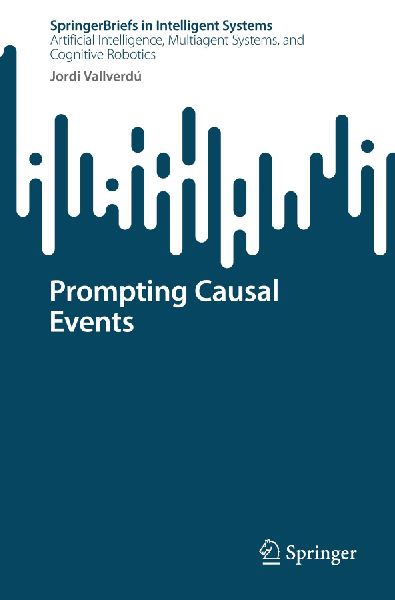
Prompting Causal Events
von Jordi Vallverdú
Aus der Reihe SpringerBriefs in Intelligent Systems
- Einband
- Kartoniert
- Seiten
- 128
- Sprache
- Englisch
- Erschienen
- August 2025
- Verlag
- Springer
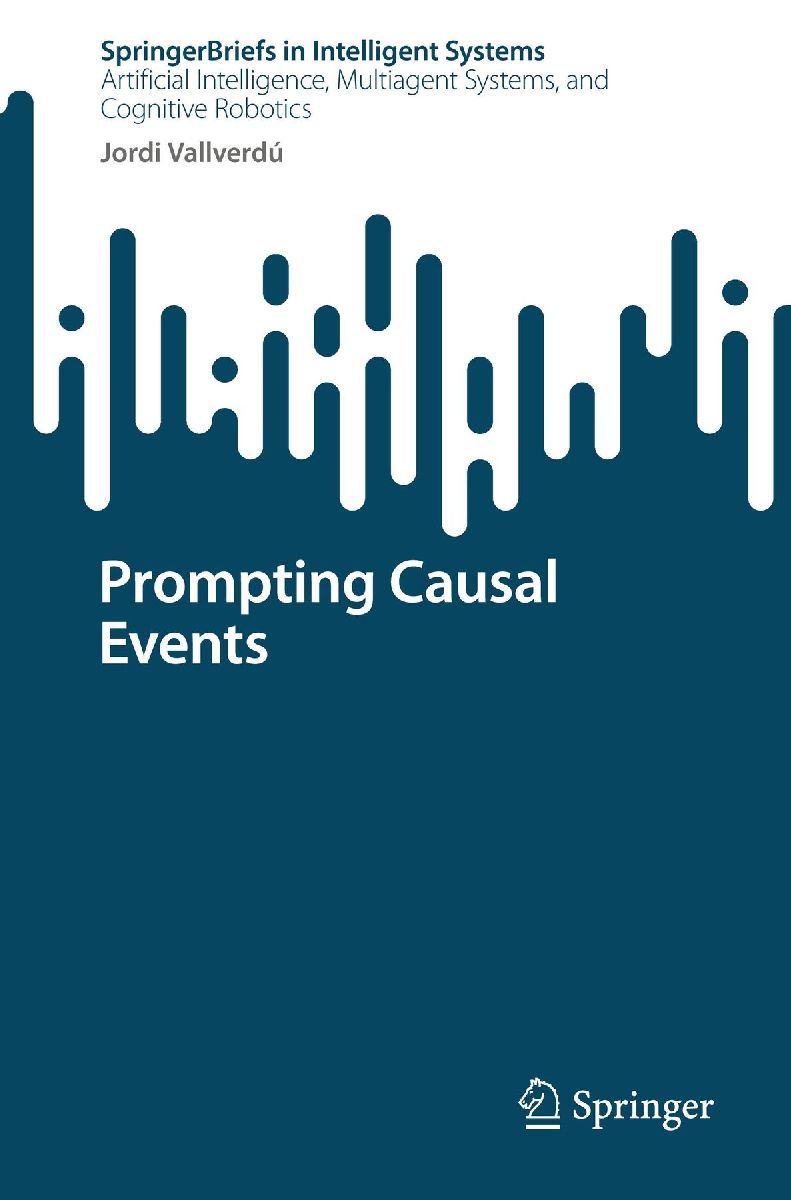
Buchbeschreibung
Prompting marks a paradigmatic shift in how we engage with artificial intelligence—transforming static interfaces into dynamic conversations, reshaping the relationship between user intent, system behavior, and knowledge production. This book invites readers into that frontier, tracing the contours of prompting as a methodology for causal understanding across diverse academic and applied domains.
Ganze Beschreibung lesenWeniger anzeigen
At its heart, prompting democratizes computational reasoning. It lowers the threshold of expertise required to interrogate complex systems, analyze data, and simulate outcomes. Where once deep technical skill was necessary to extract insights from models or datasets, prompting enables a new kind of user—one who crafts queries, scenarios, and simulations with natural language, guided by discipline-specific rigor and cognitive intent.
This transformation is especially urgent in the realm of causality, a concept as contested as it is essential. Across centuries, philosophers, scientists, statisticians, and legal scholars have debated its meaning, its measurement, and its manifestations.
This book does not aim to resolve those disputes; instead, it offers a set of practical strategies to work with them—mobilizing the capabilities of generative AI to support causal reasoning tailored to disciplinary norms and constraints. Generative AI can engage in multimodal causal inference—connecting language with images, charts, simulations, and numerical data.
This ability to traverse modes of representation opens new pathways for inquiry, particularly in science, education, and design. Prompting, therefore, is not simply a communication layer. It is a new medium for causal thought. The future of causality may not belong to machines or humans alone. It will belong to those who master the art of asking better questions.
The author will guide the readers through the full spectrum of prompting techniques—from role simulation and reasoning chains to creative generation and ethical constraints. Whether you are a researcher, educator, policymaker, or student, this book is designed to enhance your fluency in a language we are all still learning to speak: the language of generative epistemics.
Inhaltsverzeichnis
- Dedication
- Preface
- Acknowledgments
- 1. A Technical Introduction to Prompting
- 2. The Language of Causality
- 3. Goal-Oriented Prompting
- 4. Role-Based Prompting
- 5. Structure-Based Prompting
Ganzes Inhaltsverzeichnis anzeigen (20 Einträge)Weniger anzeigen
- 6. Tool- and Function-Based Prompting.-7. Memory and Contextual Prompting
- 8. Reasoning-Based Prompting
- Chapter 9. Self-Improving Prompting
- 10. Evaluation-Based Prompting
- 11. Workflow Prompting
- Chapter 12. Creative Prompting
- 13. Ethical Prompting
- 14. Causal Prompting in Practice
- 15. Conclusion: The Art and Theory of Prompting
- Appendix 1. Prompting Techniques Taxonomy.-Appendix 2. Comparative Atlas of Prompting Techniques by Causal Function
- Appendix 3. Glossary
- Appendix 4: The Causal Prompt Canvas
Details
- Erscheinungstermin
- August 2025
- Kategorie
- Fremdsprachige Bücher
- Einband
- Kartoniert
- Seiten
- 128
- Sprache
- Englisch
- Verlag
- Springer
- Reihe
- SpringerBriefs in Intelligent Systems
- Format
- 23,5 × 15,5 cm
- Dicke
- 0,8 cm
- Gewicht
- 207 g
- EAN / ISBN-13
- 9783032035929
Über Jordi Vallverdú
Prof. Dr. Jordi Vallverdú is Tenure Professor (Accredited Full Professor) at the Universitat Autònoma de Barcelona (Catalonia, Spain), where he teaches Philosophy and History of Science and Computing.
Mehr über Jordi VallverdúWeniger anzeigen
His research centers on the cognitive and epistemic dimensions of AI, the philosophy of computing and science, with a special focus on emotional modeling, neurodiverse computing, and the epistemology of deep learning. He currently leads an ICREA-funded project on causality in deep learning, and a MINECO project on Generative AI and Philosophy. He has has been a visiting researcher in Japan, Germany, and the United States. Professor Vallverdú has authored or edited around 20 books and more than 150 academic publications. His current work includes investigations into quantum computing, biomimetic cognitive architectures, and multi-cognitive systems.
Versand und Rückgabe
Standardversand: 1 bis 3 Werktage, 3,99 €, kostenlos ab 35 €
Liefergebiet: Deutschland
Rücksendung: 14 Tage Widerrufsrecht. Bei einem Widerruf tragen Sie die Kosten der Rücksendung. Bei einer Falschlieferung oder einem Fehler von uns erstatten wir Ihnen das Rückporto. Den Widerruf erklären Sie über den Knopf „Vertrag widerrufen“ im Fuß der Seite.
Hersteller und ProduktsicherheitSpringer Nature Customer Service Center GmbH
Springer Nature Customer Service Center GmbH
Europaplatz 3
69115 Heidelberg
Deutschland
ProductSafety@springernature.com
Mehr von Jordi Vallverdú
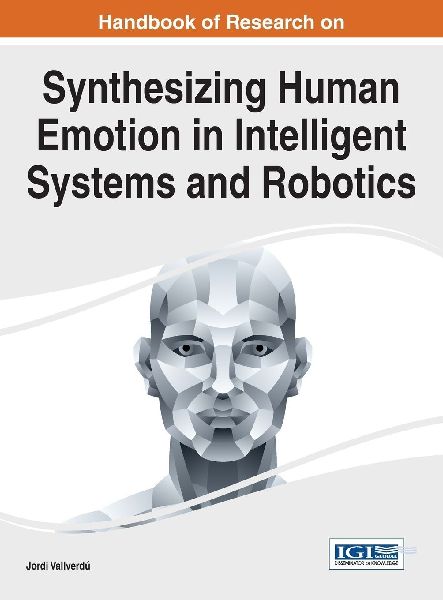
Handbook of Research on Synthesizing Human Emotion in Intelligent Systems and Robotics
Jordi Vallverdú (Hrsg.)
Gebunden, Englisch
246,30 €
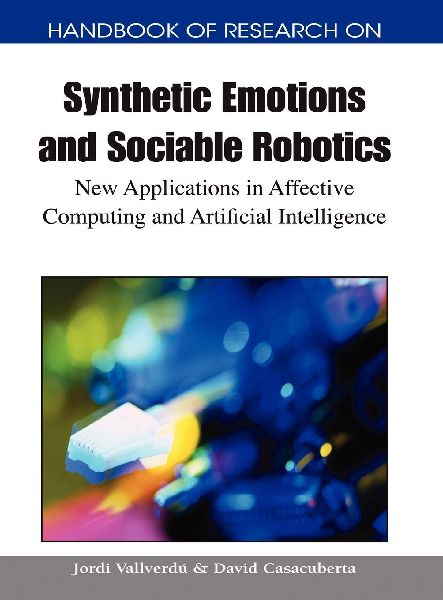
Handbook of Research on Synthetic Emotions and Sociable Robotics
Jordi Vallverdú (Hrsg.)
Gebunden, Englisch
268,10 €
Mehr aus der Reihe SpringerBriefs in Intelligent Systems

Ähnliche Titel
Bewertungen
Zu diesem Titel gibt es noch keine Bewertung. Bewerten kann, wer ihn bei uns gekauft hat.
So prüfen wir Bewertungen
Eine Bewertung kann bei uns nur abgeben, wer den Titel über sein Kundenkonto bei uns gekauft hat. Jede Bewertung ist fest mit der zugehörigen Bestellung verknüpft; anders kommt sie technisch gar nicht zustande. Deshalb trägt jede angezeigte Bewertung den Hinweis „Verifizierter Kauf". Wir zeigen positive wie negative Bewertungen und löschen nur bei Rechtsverstößen. Für Bewertungen gibt es keine Gegenleistung.
48,14 €Voraussichtlich 1. bis 3. Dez.