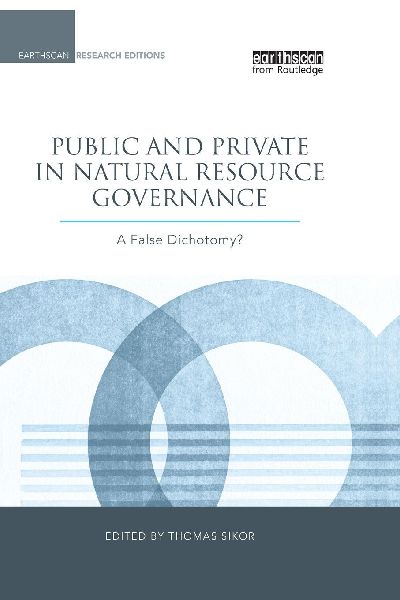
Public and Private in Natural Resource Governance
A False Dichotomy?
Herausgegeben von: Thomas Sikor
- Einband
- Kartoniert
- Seiten
- 254
- Sprache
- Englisch
- Erschienen
- Mai 2016
- Verlag
- Routledge
Buchbeschreibung
¿This volume develops the rich conceptual and empirical content of public-private relationships, increasingly acknowledged as the dominant realm of natural resource governance.
Ten wonderful studies from around the world illuminate opportunities for advancing the theory, analysis and effective formation of sustainable systems of resource use. The book is excellent for courses in governance and public policy in any resource and environmental field.
Ganze Beschreibung lesenWeniger anzeigen
JEFF ROMM, PROFESSOR FOR RESOURCE POLICY, UNIVERSITY OF CALIFORNIA AT BERKELEY, US¿The book addresses the theoretically and politically most important division of social organization into public and private. The authors bring an exciting, multidisciplinary perspective to bear on changing and multiple publics and the strength of relationships connecting these two spheres in rural development and natural resource governance.
The contributions range from consumer health and food safety, soil science, forestry and water management to sociological and economic aspects of natural resource property and governance.
FRANZ VON BENDA-BECKMANN, MAX PLANCK INSTITUTE FOR SOCIAL ANTHROPOLOGY, GERMANY
Natural resources have historically been considered as being governed in public or private spheres - that is, by the state on behalf of the people, or by companies or individuals driven by the market. This dichotomy between private and public is now recognized as overly simplistic, and it is clear that ¿publics¿ and ¿privates¿ operate at a range of levels and with differing degrees of separation or overlap.
Bringing together a group of internationally respected researchers, this book provides a new perspective on prominent issues in resource governance, including the state, NGOs, civil society, communities, participation, devolution, privatization and hybrid institutions, highlighting the three-dimensional nature of relations between ¿public¿ and ¿private¿.
It builds on empirical analyses from six fields of natural resource governance - agri-environment, biodiversity, bioenergy, food quality and safety, forestry and rural water - and employs a comparative approach that goes beyond the specifi cities of individual policy fields, recognizing shared elements and allowing for a greater understanding of the dynamics underlying governance processes.
Introductions to the volume and to each section summarize the key debates and highlight linkages between chapters. This is essential reading for academics, students and policy experts in natural resource governance, development and environmental policy.
Inhaltsverzeichnis
- Foreword * Introduction: Public-Private Relations and Key Policy Issues in Natural Resource Governance * Part I: Publics * Introduction to Part I * Locating Social Choice in Forest Comanagement and Local Governance: The Politics of Public Decision Making and Interests * Devolution in Bulgaria's Irrigation System: Contesting the Public * Water Service Provision in the Algarve, Portugal: From Local to National Publics * Part II: Public-Private Hybrids * Introduction to Part II * Governing Austrian Landscapes: Shifts Along
- the Private-Public Divide * Biodiversity Governance: Adjusting Local Costs and Global Benefits * The Media in Forestry: Government, Governance and Social Visibility * Part III: Privates * Introduction to Part III * Bioenergy Clusters in Austria and Germany: From Public Goals to Private Action * Marketing Safe Food by Labelling: The Pros and Cons of State
- Regulation * Part IV: Visions for a Sustainable Future * Introduction to Part IV * Food Safety Through Risk Analysis: The Role of Private and Public Governance * Connecting Ecosystem Services to Biodiversity: Designing Sustainable Landscapes by Linking the Public and Private Sectors in Common Cause * Outlook: New Publics and Property Rights * Index
Details
- Erscheinungstermin
- Mai 2016
- Kategorie
- Fremdsprachige Bücher
- Einband
- Kartoniert
- Seiten
- 254
- Sprache
- Englisch
- Verlag
- Routledge
- Format
- 23,4 × 15,6 cm
- Dicke
- 1,4 cm
- Gewicht
- 392 g
- EAN / ISBN-13
- 9781138996960
Über Thomas Sikor (Hrsg.)
Thomas Sikor is senior lecturer in development studies at the University of East Anglia, UK, and former head of a research group on natural resource governance at Humboldt University Berlin, Germany.
Mehr über Thomas Sikor (Hrsg.)Weniger anzeigen
He is a social scientist studying environmental problems and developing new institutional approaches for solving those problems in developing and transitional societies.
Versand und Rückgabe
Standardversand: 1 bis 3 Werktage, 3,99 €, kostenlos ab 35 €
Liefergebiet: Deutschland
Rücksendung: 14 Tage Widerrufsrecht. Bei einem Widerruf tragen Sie die Kosten der Rücksendung. Bei einer Falschlieferung oder einem Fehler von uns erstatten wir Ihnen das Rückporto. Den Widerruf erklären Sie über den Knopf „Vertrag widerrufen“ im Fuß der Seite.
Hersteller und ProduktsicherheitRoutledge
Routledge
Europaallee 1
36244 Bad Hersfeld
Deutschland
gpsr@libri.de
Verantwortliche Person in der EU
Libri GmbHEuropaallee 1
36244 Bad Hersfeld
Deutschland
gpsr@libri.de
Mehr von Thomas Sikor
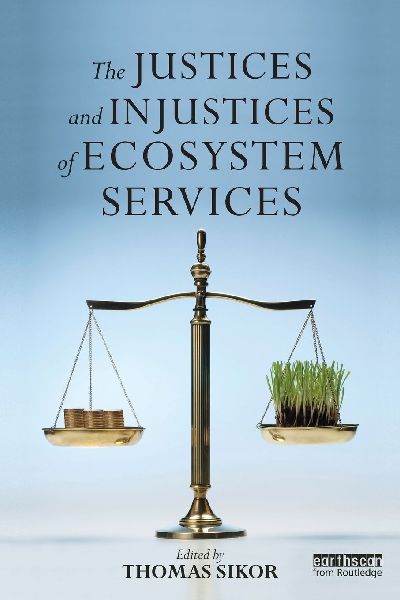
The Justices and Injustices of Ecosystem Services
Thomas Sikor (Hrsg.)
Kartoniert, Englisch, 2 Ausgaben
ab 80,80 €
Ähnliche Titel
Governance, Natural Resources and Post-Conflict Peacebuilding
Carl Bruch (Hrsg.)
Kartoniert, Englisch, 2 Ausgaben
ab 140,90 €
Federalism, Preemption, and the Nationalization of American Wildlife Management
Lowell E. Baier
Kartoniert, Englisch, 2 Ausgaben
ab 49,70 €
Economics and Contemporary Land Use Policy
Robert J. Johnston (Hrsg.)
Kartoniert, Englisch, 2 Ausgaben
ab 84,30 €
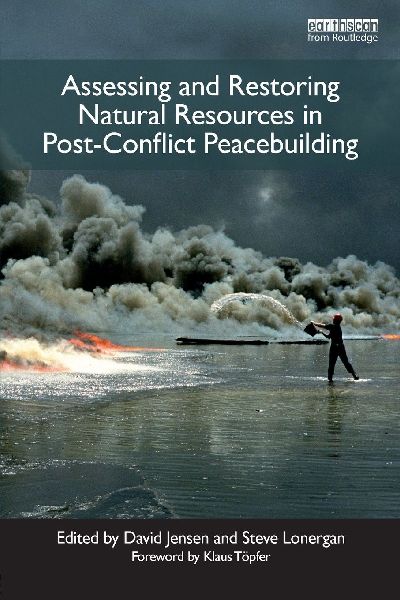
Assessing and Restoring Natural Resources In Post-Conflict Peacebuilding
David Jensen (Hrsg.)
Kartoniert, Englisch, 2 Ausgaben
ab 137,20 €
Bewertungen
Zu diesem Titel gibt es noch keine Bewertung. Bewerten kann, wer ihn bei uns gekauft hat.
So prüfen wir Bewertungen
Eine Bewertung kann bei uns nur abgeben, wer den Titel über sein Kundenkonto bei uns gekauft hat. Jede Bewertung ist fest mit der zugehörigen Bestellung verknüpft; anders kommt sie technisch gar nicht zustande. Deshalb trägt jede angezeigte Bewertung den Hinweis „Verifizierter Kauf". Wir zeigen positive wie negative Bewertungen und löschen nur bei Rechtsverstößen. Für Bewertungen gibt es keine Gegenleistung.
54,20 €Voraussichtlich 2. bis 4. Dez.