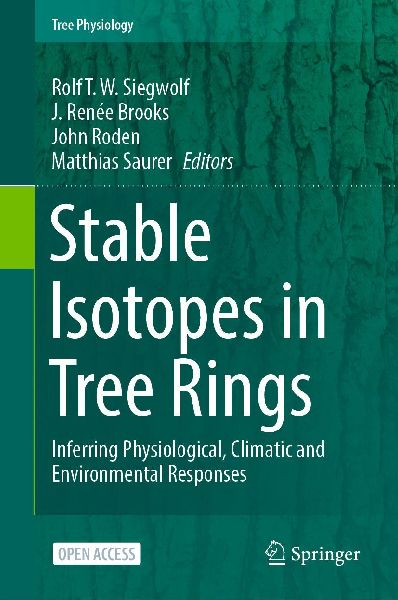
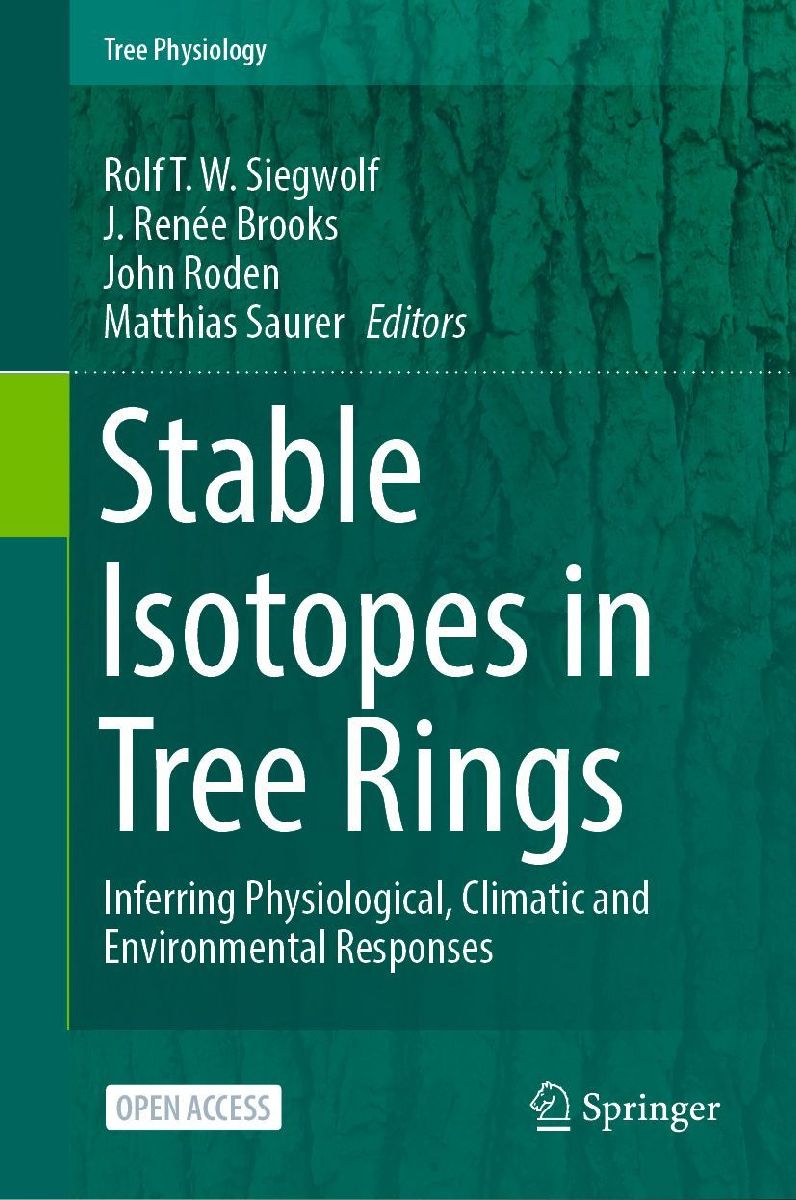
Stable Isotopes in Tree Rings
Inferring Physiological, Climatic and Environmental Responses
von Rolf T. W. Siegwolf (Hrsg.)
Herausgegeben von: Rolf T. W. Siegwolf, Herausgegeben von: J. Renée Brooks, Herausgegeben von: John Roden, und weitere
Aus der Reihe Tree Physiology
- Einband
- Gebunden
- Seiten
- 796
- Sprache
- Englisch
- Erschienen
- Juni 2022
- Verlag
- Springer
Buchbeschreibung
This Open Access volume highlights how tree ring stable isotopes have been used to address a range of environmental issues from paleoclimatology to forest management, and anthropogenic impacts on forest growth.
It will further evaluate weaknesses and strengths of isotope applications in tree rings.
Ganze Beschreibung lesenWeniger anzeigen
In contrast to older tree ring studies, which predominantly applied a pure statistical approach this book will focus on physiological mechanisms that influence isotopic signals and reflect environmental impacts.
Focusing on connections between physiological responses and drivers of isotope variation will also clarify why environmental impacts are not linearly reflected in isotope ratios and tree ring widths. This volume will be of interest to any researcher and educator who uses tree rings (and other organic matter proxies) to reconstruct paleoclimate as well as to understand contemporary functional processes and anthropogenic influences on native ecosystems.
The use of stable isotopes in biogeochemical studies has expanded greatly in recent years, making this volume a valuable resource to a growing and vibrant community of researchers.
Inhaltsverzeichnis
- PART I INTRODUCTION: 1. Isotope Dendrochronology: Historical Perspective
- 2. Dendrochronology: Fundamentals and Innovations
- 3. Anatomical, developmental and physiological bases of tree-ring formation in relation to environmental factors
- PART II METHODS: 4. Sample collection and preparation for annual and intra-annual tree-ring isotope chronologies
- 5. Stable isotope signatures of wood, its constituents and methods of cellulose extraction
- 6. Tree-Ring Stable Isotope Measurements: The Role of Quality Assurance and Quality Control to Ensure High Quality Data
- 7. Newer Developments in Tree-Ring Stable Isotope Methods
- PART III: ISOTOPIC FRACTIONATIONS FROM SOURCE TO WOOD: 8. Isotopes - terminology, definitions and properties
Ganzes Inhaltsverzeichnis anzeigen (25 Einträge)Weniger anzeigen
- 9. Carbon isotope effects in relation to CO2 assimilation by tree canopies
- 10. Environmental, physiological and biochemical processes determining the oxygen isotope ratio of tree-ring cellulose
- 11. The stable hydrogen isotopic signature: From source water to tree rings
- 12. Nitrogen isotopes in tree rings - Challenges and prospects.-13. Postphotosynthetic fractionation in leaves, phloem and stem
- PART IV PHYSIOLOGICAL INTERPRETATIONS: 14. Environmental fingerprints in tree-ring stable isotopes: Limits and strengths in mirroring environmental impacts
- 15. Post-photosynthetic carbon, oxygen and hydrogen isotope signal transfer to tree rings - how timing of cell formations and turnover of stored carbohydrates affect intra-annual isotope variations
- 16. Probing tree physiology using the dual-isotope approach
- 17. Intrinsic water-use efficiency derived from stable carbon isotopes of tree-rings
- PART V: ENVIRONMENTAL FACTORS IMPACTING THE ISOTOPIC FRACTIONATION:18. Spatial and temporal variations in plant source water: O and H isotoperatiosfrom precipitation to xylem water
- 19. Climate signals in stable isotope tree ring records
- 20. Stable isotopes in tree rings of Boreal Forests
- 21. Stable isotopes in tree rings of Mediterranean Forests
- 22. Stable isotopes in tree rings of Tropical forests
- 23. Forest Management and Tree-Ring Isotopes
- 24. Impact of increasing CO2, and air pollutants (NOx, SO2, O3) on the stable isotope ratios in tree rings
- 25. Insect and pathogen influences on tree-ring stable isotopes
- 26. Process-based ecophysiological models of tree-ring stable isotopes
Details
- Erscheinungstermin
- Juni 2022
- Kategorie
- Fremdsprachige Bücher
- Einband
- Gebunden
- Seiten
- 796
- Sprache
- Englisch
- Verlag
- Springer
- Reihe
- Tree Physiology
- Format
- 24,1 × 16,0 cm
- Dicke
- 4,5 cm
- Gewicht
- 1.437 g
- EAN / ISBN-13
- 9783030926977
Versand und Rückgabe
Standardversand: 1 bis 3 Werktage, 3,99 €, kostenlos ab 35 €
Liefergebiet: Deutschland
Rücksendung: 14 Tage Widerrufsrecht. Bei einem Widerruf tragen Sie die Kosten der Rücksendung. Bei einer Falschlieferung oder einem Fehler von uns erstatten wir Ihnen das Rückporto. Den Widerruf erklären Sie über den Knopf „Vertrag widerrufen“ im Fuß der Seite.
Hersteller und ProduktsicherheitSpringer Nature Customer Service Center GmbH
Springer Nature Customer Service Center GmbH
Europaplatz 3
69115 Heidelberg
Deutschland
ProductSafety@springernature.com
Mehr aus der Reihe Tree Physiology

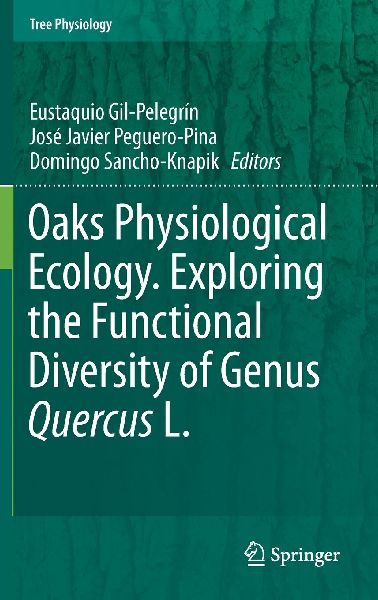
Oaks Physiological Ecology. Exploring the Functional Diversity of Genus Quercus L.
Eustaquio Gil-Pelegrín (Hrsg.)
Gebunden, Englisch, 2 Ausgaben
ab 353,09 €

Size- and Age-Related Changes in Tree Structure and Function
Frederick C. Meinzer (Hrsg.)
Gebunden, Englisch, 2 Ausgaben
ab 299,59 €
Ähnliche Titel


Photosynthesis in Bryophytes and Early Land Plants
David T. Hanson (Hrsg.)
Gebunden, Englisch, 2 Ausgaben
ab 213,99 €

Bewertungen
Zu diesem Titel gibt es noch keine Bewertung. Bewerten kann, wer ihn bei uns gekauft hat.
So prüfen wir Bewertungen
Eine Bewertung kann bei uns nur abgeben, wer den Titel über sein Kundenkonto bei uns gekauft hat. Jede Bewertung ist fest mit der zugehörigen Bestellung verknüpft; anders kommt sie technisch gar nicht zustande. Deshalb trägt jede angezeigte Bewertung den Hinweis „Verifizierter Kauf". Wir zeigen positive wie negative Bewertungen und löschen nur bei Rechtsverstößen. Für Bewertungen gibt es keine Gegenleistung.
53,49 €Voraussichtlich 4. bis 8. Dez.