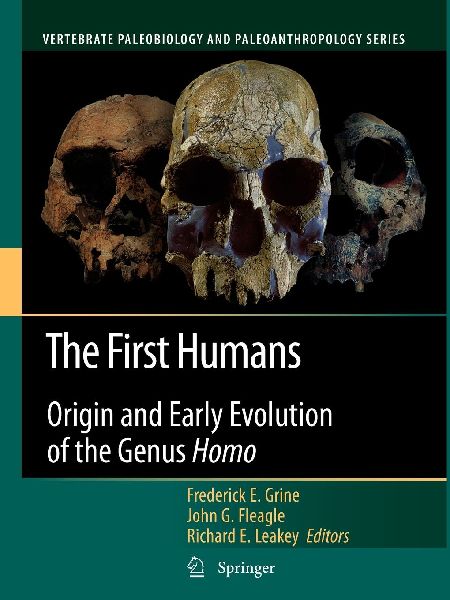
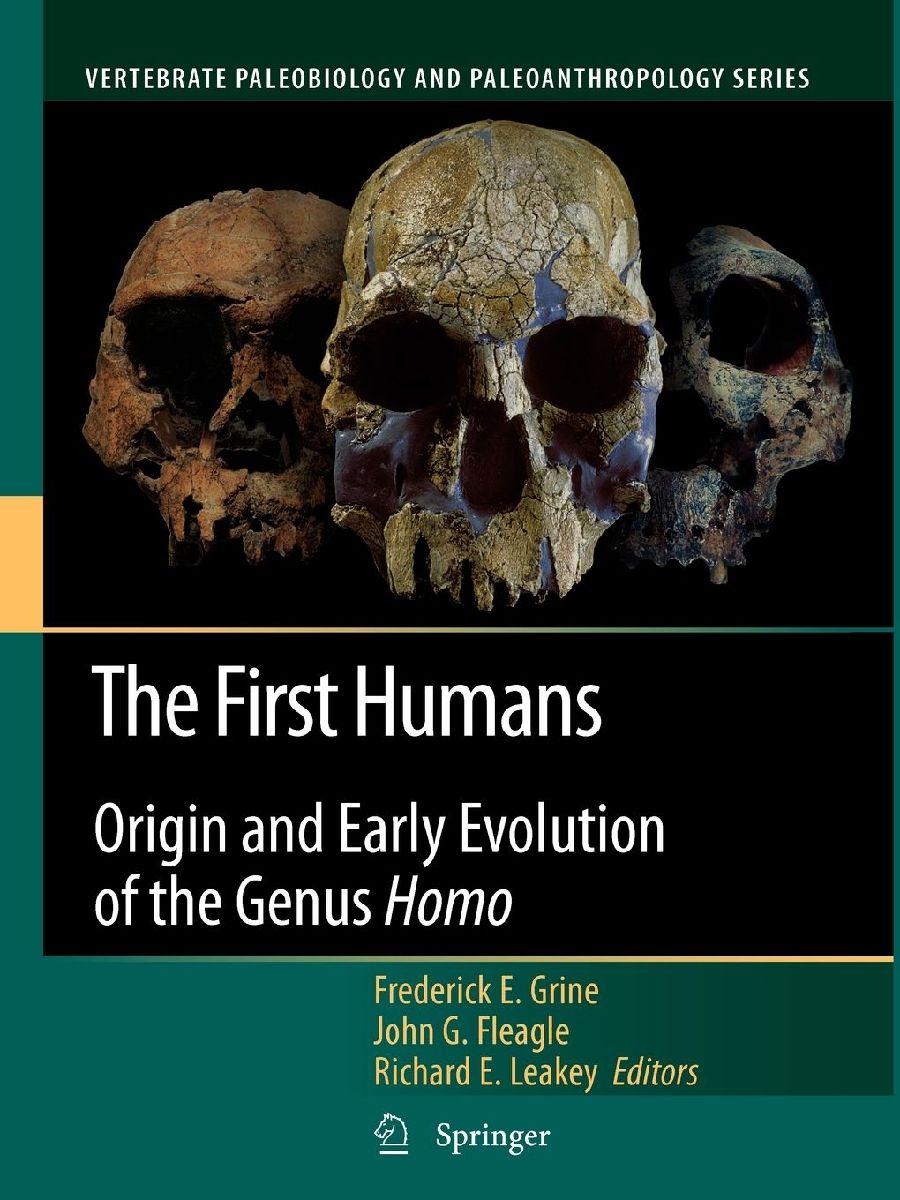
The First Humans
Origin and Early Evolution of the Genus Homo
von Frederick E. Grine (Hrsg.)
Herausgegeben von: Frederick E. Grine, Herausgegeben von: John G Fleagle, Herausgegeben von: Richard E. Leakey
Aus der Reihe Vertebrate Paleobiology and Paleoanthropology
- Einband
- Kartoniert
- Seiten
- 232
- Sprache
- Englisch
- Erschienen
- Oktober 2010
- Verlag
- Springer
Buchbeschreibung
There are some issues in human paleontology that seem to be timeless.
Most deal with the origin and early evolution of our own genus - something about which we should care. Some of these issues pertain to taxonomy and systematics. How many species of Homo were there in the Pliocene and Pleistocene? How do we identify the earliest members the genus Homo? If there is more than one Plio-Pleistocene species, how do they relate to one another, and where and when did they evolve?
Ganze Beschreibung lesenWeniger anzeigen
Other issues relate to questions about body size, proportions and the functional adaptations of the locomotor skeleton. When did the human postcranial "Bauplan" evolve, and for what reasons? What behaviors (and what behavioral limitations) can be inferred from the postcranial bones that have been attributed to Homo habilis and Homo erectus?
Still other issues relate to growth, development and life history strategies, and the biological and archeological evidence for diet and behavior in early Homo. It is often argued that dietary change played an important role in the origin and early evolution of our genus, with stone tools opening up scavenging and hunting opportunities that would have added meat protein to the diet of Homo. Still other issues relate to the environmental and climatic context in which this genus evolved.
Inhaltsverzeichnis
- Part I. Retrospectives and Theoretical Perspectives
- 1. Early humans: of whom do we speak? Richard E. Leakey
- 2. Homo habilis - a premature discovery: remembered by one of its founding fathers, 42 years later
- Phillip V. Tobia
- 3. Where does the genus Homo begin, and how would we know? Bernard Wood
- Part II. Craniodental Perspectives on Taxonomy and Systematics
- 4. The origin of Homo William H. Kimbel
- 5. Comparisons of Early Pleistocene skulls from East Africa and the Georgian Caucasus: evidence bearing on the origin and systematics of genus HomoG
Ganzes Inhaltsverzeichnis anzeigen (32 Einträge)Weniger anzeigen
- Philip Rightmire and David Lordkipanidze
- 6. Phenetic affinities of Plio-Pleistocene Homo fossils from South Africa: molar cusp proportions
- Frederick E. Grine, Heather F. Smith, Christopher P. Heesy and Emma J. Smith
- Part III. Postcranial Perspectives on Locomotion and Adaptation
- 7. Evolution of the hominin shoulder: early Homo Susan G. Larson
- 8. Brains, brawn, and the evolution of human endurance running capabilities Daniel E. Lieberman, Dennis M. Bramble, David A. Raichlen and John J. Shea
- 9. Interlimb proportions in humans and fossil hominins: variability and scaling
- William L. Jungers
- Part IV. Perspectives on Development, Diet and Behavior
- 10. Growth and development of the Nariokotome youth, KNM-WT 15000M. Christopher Dean and B. Holly Smith
- 11. Dental evidence for diets of early Homo Peter S. Ungar and Robert S. Scott
- 12. Origins and adaptations of early Homo: what archaeology tells us Hélène Roche, Robert J. Blumenschine and John J. Shea Part V. Environmental and Ecological Perspectives
- 13. Plio-Pleistocene East
- African pulsed climate variability and its influence on early human evolution
- Mark A. Maslin and Martin H. Trauth
- 14. Tracking ecological change in relation to the emergence of Homo near the Plio-Pleistocene boundary
- Kaye E. Reed and Samantha M. Russak
- 15. Ecology of Plio-Pleistocene mammals in the Omo-Turkana Basin and the emergence of Homo
- René Bobe and Meave G. Leakey
- 16. Biogeochemical evidence for the environments of early Homo in South Africa
- Matt Sponheimer and Julia Lee-Thorp
- Part VI. Summary Perspective on the Workshop
- 17. The first humans: a summary perspective on the origin and early evolution of the genus Homo
- Frederick E. Grine and John G. Fleagle
Details
- Erscheinungstermin
- Oktober 2010
- Kategorie
- Fremdsprachige Bücher
- Einband
- Kartoniert
- Seiten
- 232
- Sprache
- Englisch
- Verlag
- Springer
- Reihe
- Vertebrate Paleobiology and Paleoanthropology
- Format
- 27,9 × 21,0 cm
- Dicke
- 1,5 cm
- Gewicht
- 645 g
- EAN / ISBN-13
- 9789048182336
Über Frederick E. Grine (Hrsg.)
Frederick E. GrineFred Grine is Professor of Anthropology and of Anatomical Sciences at Stony Brook University.
Mehr über Frederick E. Grine (Hrsg.)Weniger anzeigen
He has published over 100 articles in scientific journals dealing with the subject of human evolution, and his work on the Late Pleistocene human fossil from Hofmeyr, South Africa, was named by Time Magazine as one of the top ten science stories of 2007. He edited Evolutionary History of the `Robust¿ Australopithecines (1988, Aldine de Gruyter), and is author of Regional Human Anatomy: a Laboratory Workbook (2002, 2005, 2007, McGraw-Hill).John G. FleagleJohn Fleagle is Distinguished Professor of Anatomical Sciences at Stony Brook University. He has conducted paleontological field work in many parts of the world, including Argentina, Egypt, Kenya, Ethiopia and India. He is the author of the textbook Primate Adaptation and Evolution (1988, 1999, Elsevier), co-editor of the Human Evolution Sourcebook (1993, 2006, Prentice Hall), and editor of the journal Evolutionary Anthropology.
Richard E. LeakeyRichard Leakey is Professor of Anthropology at Stony Brook University and former Director of the Kenya National Museums and the Kenya Wildlife Service. His field work around Lake Turkana, Kenya, has yielded a treasure trove of hominin fossils that has provided much of the paleontological record on which our understanding of human evolution is based. He has authored a number of books, including Origins, and most recently, The Sixth Extinction: Patterns of Life and The Future of Humankind. He is Chairman of the Board of the Turkana Basin Institute at Stony Brook University.
Versand und Rückgabe
Standardversand: 1 bis 3 Werktage, 3,99 €, kostenlos ab 35 €
Liefergebiet: Deutschland
Rücksendung: 14 Tage Widerrufsrecht. Bei einem Widerruf tragen Sie die Kosten der Rücksendung. Bei einer Falschlieferung oder einem Fehler von uns erstatten wir Ihnen das Rückporto. Den Widerruf erklären Sie über den Knopf „Vertrag widerrufen“ im Fuß der Seite.
Hersteller und ProduktsicherheitSpringer Nature Customer Service Center GmbH
Springer Nature Customer Service Center GmbH
Europaplatz 3
69115 Heidelberg
Deutschland
ProductSafety@springernature.com
Mehr von Frederick E. Grine
Evolutionary History of the Robust Australopithecines
Frederick E. Grine
Kartoniert, Englisch, 2 Ausgaben
ab 85,70 €
Mehr aus der Reihe Vertebrate Paleobiology and Paleoanthropology

Evolution of Cenozoic Land Mammal Faunas and Ecosystems
Isaac Casanovas-Vilar (Hrsg.)
Gebunden, Englisch, 2 Ausgaben
ab 128,39 €

Biological Consequences of Plate Tectonics
Guntupalli V. R. Prasad (Hrsg.)
Gebunden, Englisch, 2 Ausgaben
ab 128,39 €
Ähnliche Titel



Information sharing and psychological support during the COVID-19 pandemic
Vinodhini Yallagandala
Kartoniert, Englisch
12,99 €

Bewertungen
Zu diesem Titel gibt es noch keine Bewertung. Bewerten kann, wer ihn bei uns gekauft hat.
So prüfen wir Bewertungen
Eine Bewertung kann bei uns nur abgeben, wer den Titel über sein Kundenkonto bei uns gekauft hat. Jede Bewertung ist fest mit der zugehörigen Bestellung verknüpft; anders kommt sie technisch gar nicht zustande. Deshalb trägt jede angezeigte Bewertung den Hinweis „Verifizierter Kauf". Wir zeigen positive wie negative Bewertungen und löschen nur bei Rechtsverstößen. Für Bewertungen gibt es keine Gegenleistung.
149,79 €Voraussichtlich 1. bis 3. Dez.